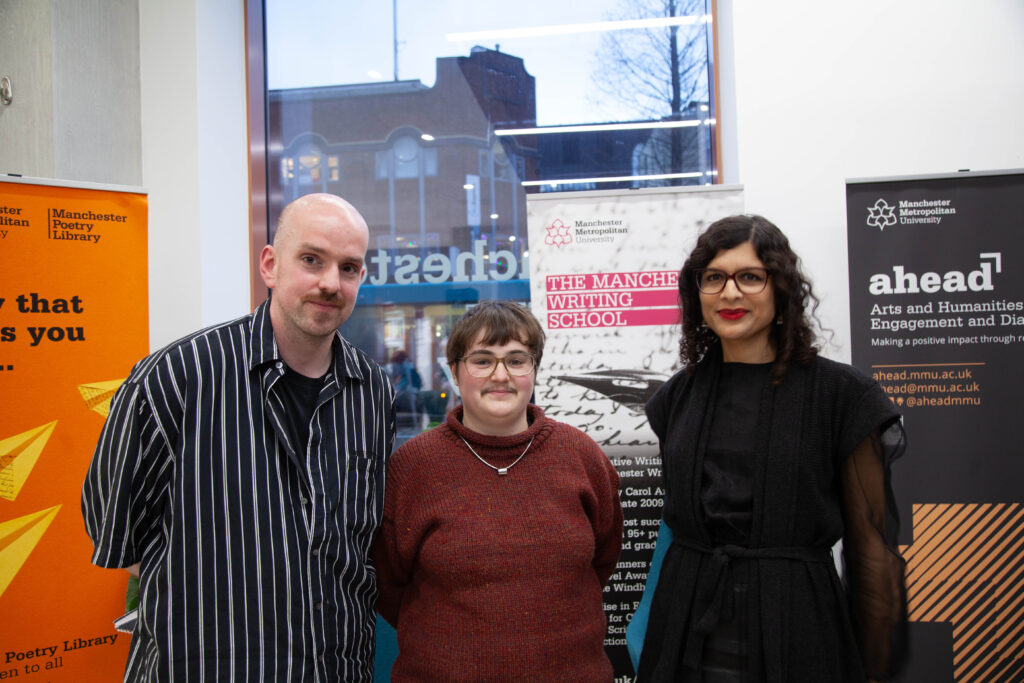
Award-winning poet Roma Havers and activist-scholar Nat Raha held an afternoon of poetry focusing on the queer experience, the body and radical joy as part of Manchester Metropolitan University’s 16 Days of Activism Against Gender Based Violence Festival. The performance challenged traditional views on poetry and explored the ways language and sound can reshape societal perceptions.
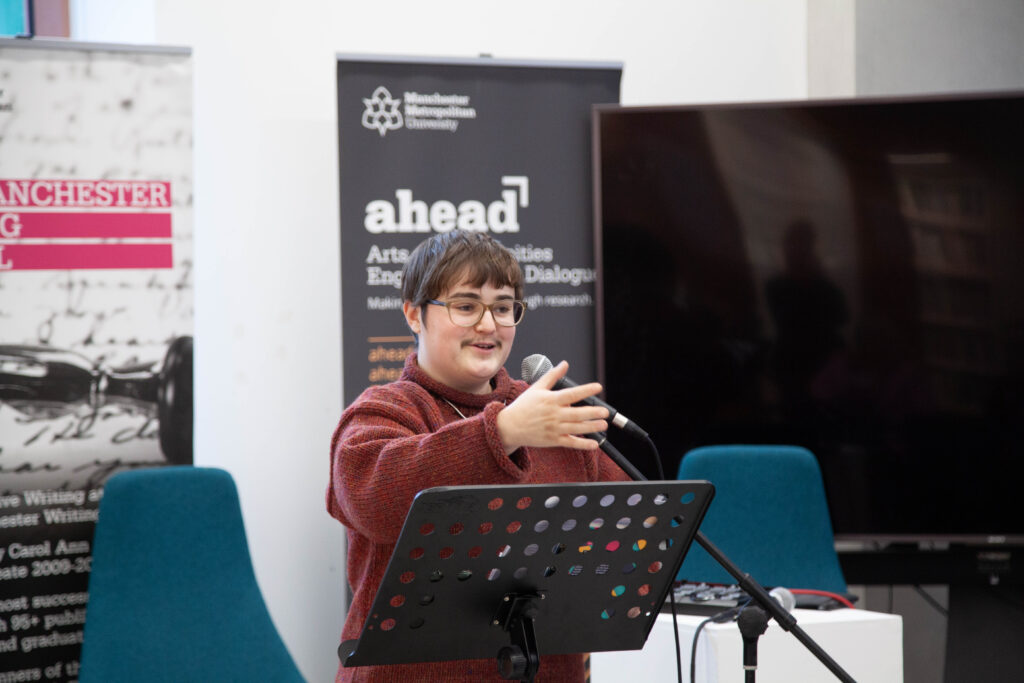
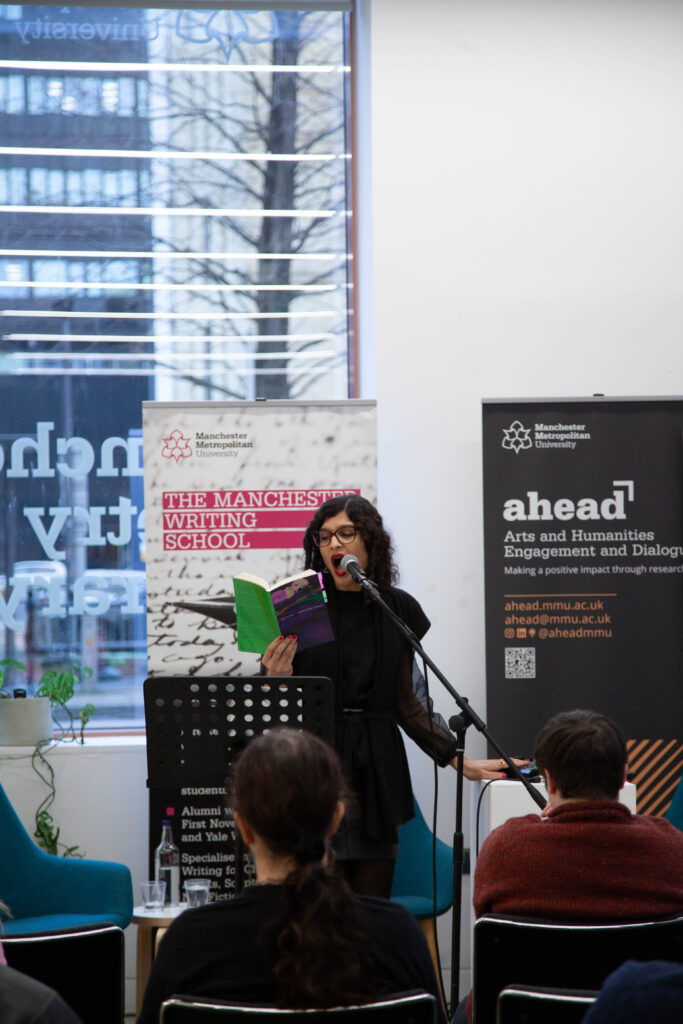
Havers began with a reading from a screenplay in progress which centres around the experience of teenage theatre in high school. The reading was both unique, identifiable and humorous. The audience applauded Havers fervently after each reading, warming to their interesting examination of the different forms of words.
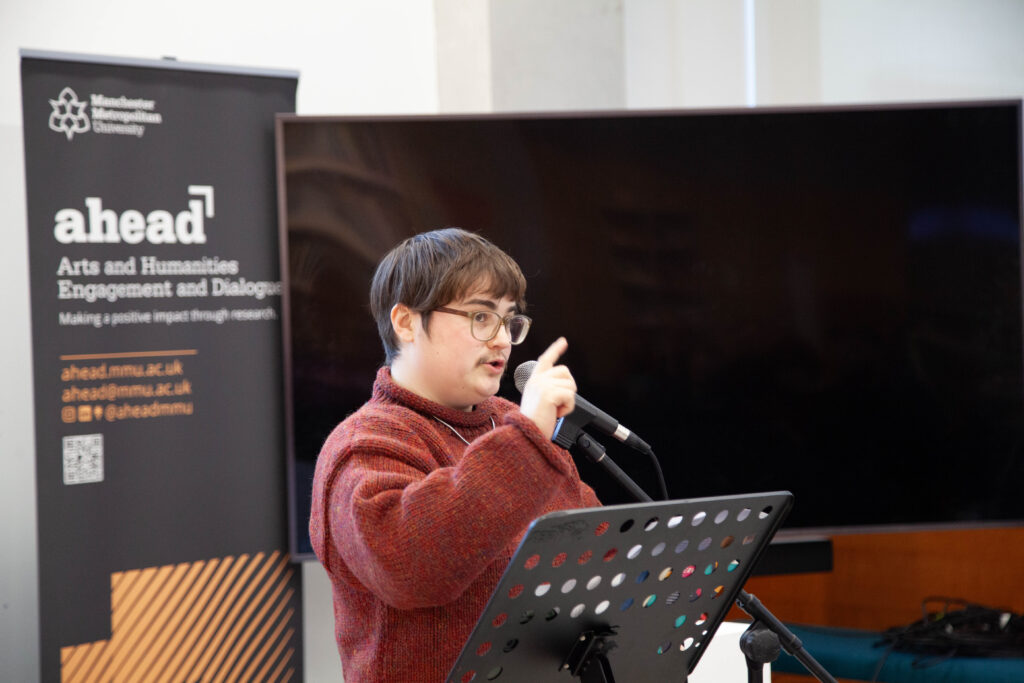
“There is a lot of pressure on poems to produce empathy,” said Havers, exposing the an unhealthy expectation of poetry and imploring the audience to examine their expectations of poetry, citing a lack of general empathy in society today as one of the causes of hate in the modern world.
Havers second reading showcased a string of poetry rooted in etymology, utilising literal definitions as a foundation for creative expression. “I’m interested in how much you can fit into a poem,” Havers noted, highlighting the potential of poetry to convey complex and multifaceted ideas.
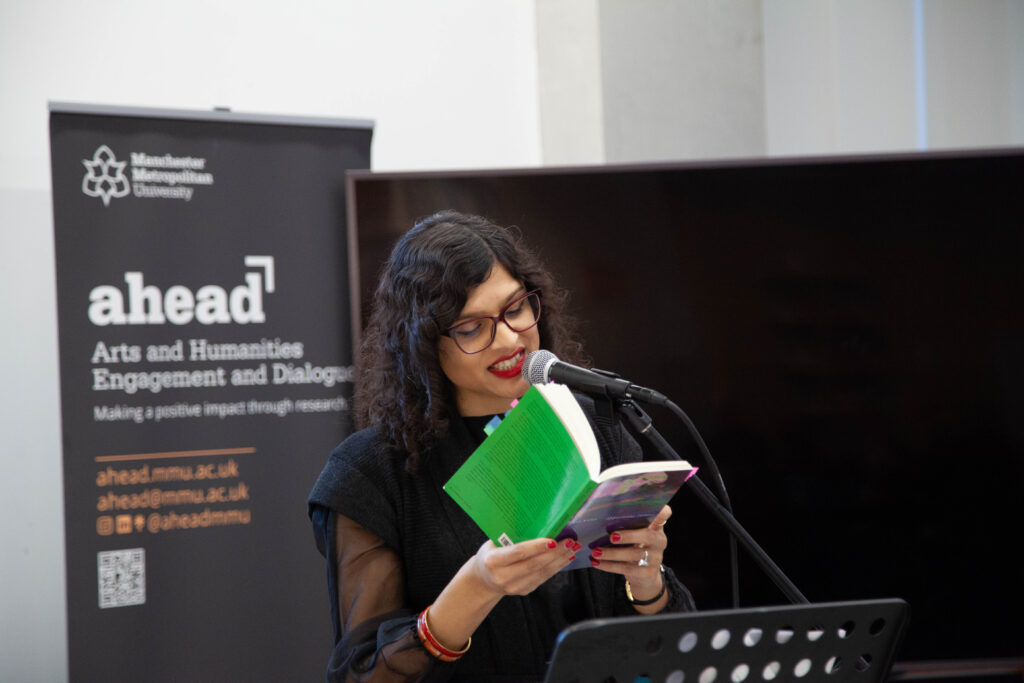
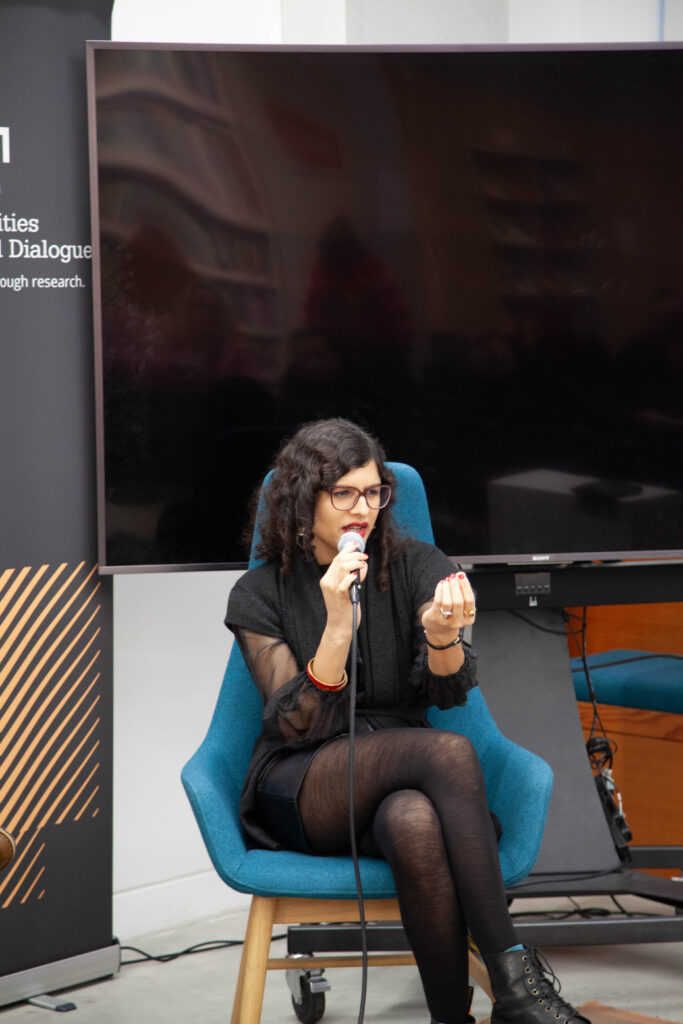
Nat Raha followed with selections from her recent collection Apparitions, a series of poems in the niner form – nine lines with nine syllables each. Raha’s breath work was completely captivating and forced the audience to listen to each syllable of the lines as she deconstructed the words vocally.
“Give yourself over to hearing, not searching for what the poem is saying, listen to the sound,” said Havers, commenting about the unique sounds of Raha’s work.
Havers concluded their performance by experimenting with live audio layering, recording and remixing their voice to build a textured soundscape. This approach added a new dimension to the reading, creating a dynamic interplay of words and sound that intrigued the audience.
“The reading sounded so unique,” one attendee commented. “I was worried about retaining the words and interpreting the meanings but then when [Raha] told us not to listen to what the poem was saying, but listen to the sounds, I felt like I understood.”
Raha’s annunciation was striking and led the listener on an exploration of the poetic form, while she discussed the topic of retribution from the perspective of an abolitionist who doesn’t agree with violence. The onomatopoeic sense of the reading added to the story Raha was trying to tell.
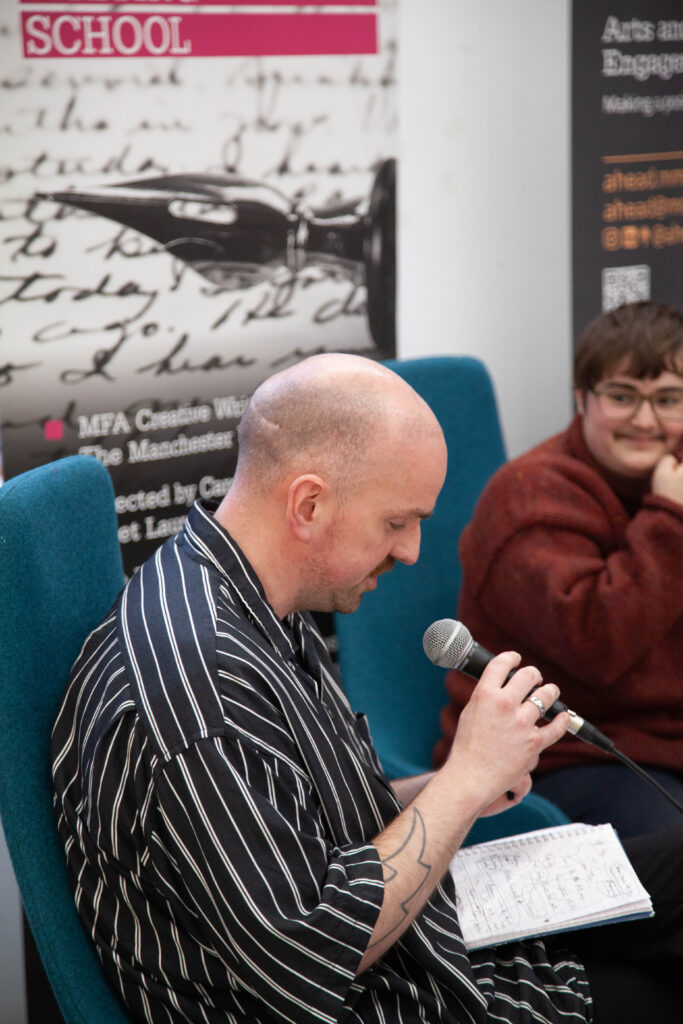
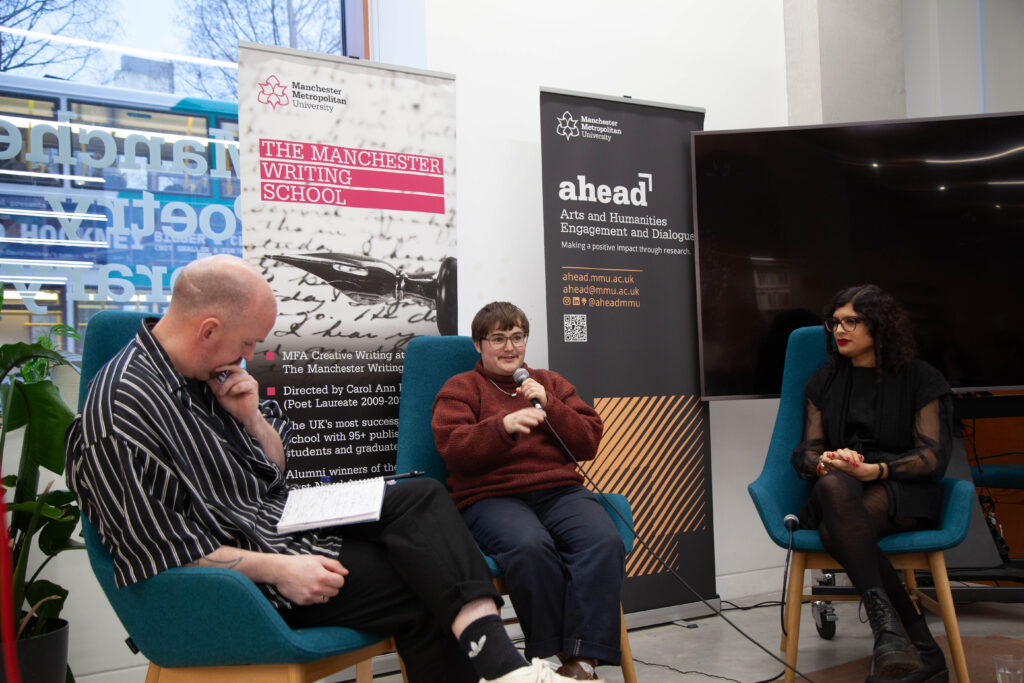
After these pioneering readings, the event opened up into a Q&A led by poet and lecturer Andrew McMillan. inviting questions from the audience. Raha addressed her specific language choices, particularly her use of pronouns in poetry. While she employs ‘I’ and ‘you’ frequently, her use of ‘we’ intrigued the audience.
“‘We’ is an invitation to identify with the position the poem takes,” said Raha, seeing poetry as a means of encouraging self-reflection and exploration of personal viewpoints.
Raha also discussed her rebellious style of writing that breaks traditional poetic form, noting that breaking traditional structures mirrors the queer experience of challenging societal binaries. “Asking questions about perceived forms we live in and what breaking poetic form can do for that” reflected her ethos of resistance through art.
Havers shared their interest in “play, masking and trying on different things” in poetry. They highlighted the genre’s freedom, describing it as an opportunity to “try on several different things”. Their approach to “linguistic play” earned praise during the Q&A.
“How do poems encourage us to live differently?” Raha asked, concluding a discussion about poetry’s power, particularly in the context of the 16 Days of Activism campaign. She returned to the idea of poetry “[producing] empathy,” offering it as a vehicle for personal and societal transformation.
The 16 Days of Activism Against Gender-Based Violence Festival runs from 25th November to 10th December, 2024. For more information and tickets, visit mmu.ac.uk/news-and-events.
Featured image: Press The gates have finally opened for Truck Festival 2026, and for the third-year running, the weather could not be more perfect. Beneath clear blue skies at Hill Farm, Oxfordshire, the iconic Ferris wheel is spinning once again, the Truck Monster is roaming the fields, and thousands of festival-goers waste no time filling…
Featured image: Paramount Pictures Jackass: Best and Last is a send-off and memorial to the legacy of Jackass and all its relatives, celebrating its radical history and recapping some of its most memorable moments in a nostalgic reel that has audiences as gripped as they ever were. Whether you have been here since the days…
Featured image: Thomas Holloway Leeds Festival returns to the fields of Bramham Park this August with one of its strongest line-ups yet, celebrating genre-spanning British talent. Rebuilt from the ground up under a new “2.0” moniker, 2026 marks the next chapter in the festival’s evolution, bringing together generational pop stars, guitar music and grime for…
Featured image: Bloodstock Bloodstock returns for its 25th anniversary with a star-studded lineup of the metal genre’s finest. One of the UK’s largest heavy festivals is set to return this year to celebrate its 25th anniversary, with a stacked weekend of metal royalty. Hosted at Derbyshire’s Catton Park from 6th-9th August, fans can expect to be treated…




Leave a reply