You are here:Home / Literature / News / 16 Days of Activism – Day 10: Prof Khatidja Chantler reveals scale of femicide in the UK and debunks victim-blaming myths
By Immy Burgess Featured image and gallery: Jack Oliver
Manchester Metropolitan University’s 16-Days of Activism Against Gender-Based Violence Festival continued with an engaging discussion and reading featuring Professor of Gender, Equalities and Communities at Manchester Met, Khatidja Chantler, and Forward Prize-winning poet and senior lecturer, Kim Moore.
This session combined research and art to illuminate the urgent issue of gender-based violence. Chantler, a leading researcher on domestic homicide, shared findings from the largest-ever study of its kind, while Moore’s poetry brought raw narratives of abuse to life, offering a visceral connection to the subject.
Chantler has spent two decades researching gender-based violence, leading impactful projects like the HALT study, which reviewed 302 domestic homicide cases to identify systemic failures. Her work has shaped national policy and taken her to the United Nations, where she has shared strategies to combat femicide.
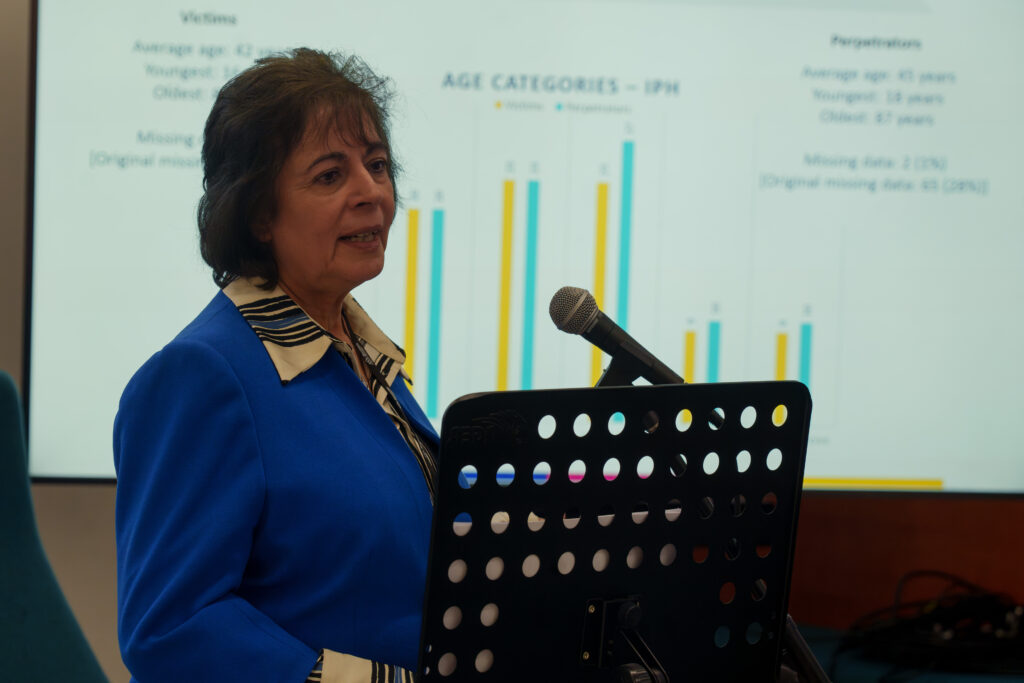
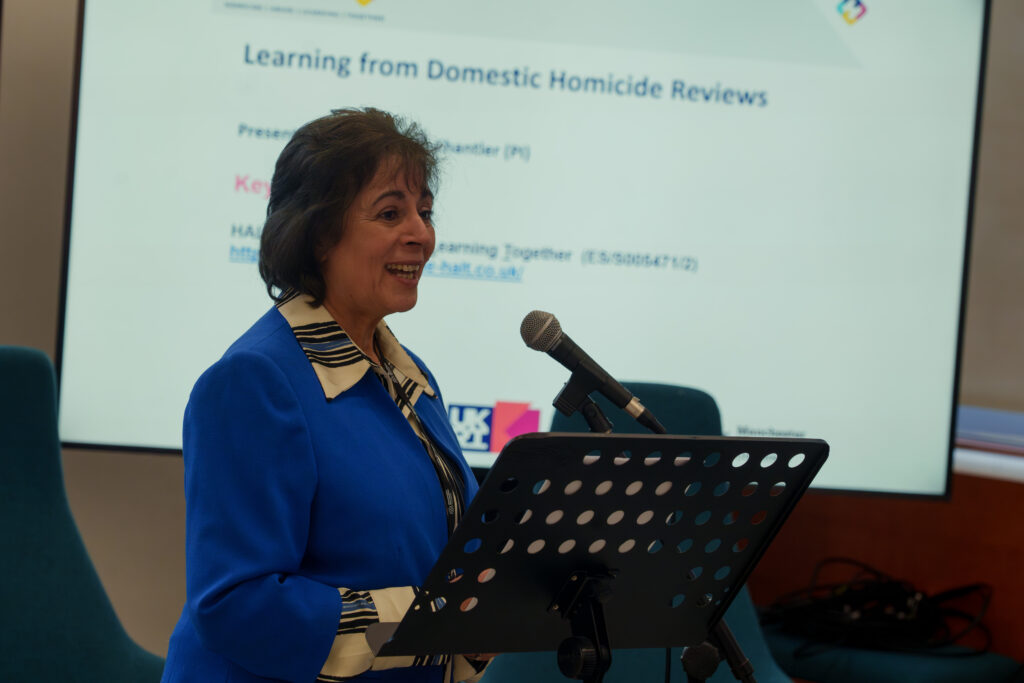
At the Manchester Poetry Library, Chantler delivered a sobering overview of her findings, interspersing hard-hitting statistics with moving accounts from victims and their families. Her research highlights the disproportionate impact of domestic homicide on ethnic minority women, emphasising the need for intersectional approaches to prevention.
Chantler revealed that only 43% of domestic homicide cases had a risk assessment – and even among those, just a third were flagged as high risk. Tragically, every one of these cases ended in murder. She also challenged widespread victim-blaming narratives, pointing out that the risk of homicide actually spikes during the first six months after a separation.
“There is a misconception that leaving a dangerous situation saves an individual,” said Chantler, debunking the idea that escape alone ensures safety.
Chantler’s findings, which make up the largest ever study of domestic homicide, span some 302 cases. Moving between impactful statistics like gender’s impact on the rates of domestic homicide to personal accounts from both victims and the families of victims, she stressed the importance of intersectionality when it comes to domestic violence. The research revealed the startling disproportional impact domestic homicide has on ethnic minorities, in particular women of colour.
Chantler explained the rigorous process her team went through to analyse each of the 302 cases, from plot readings to assessing the socio-cultural practices embedded in the speakers and how those behaviours often connote a culture of self-blame and a lack of education and language for domestic homicide.
The audience was visibly moved by a short documentary clip telling the story of a domestic homicide victim, described as “to be married and murdered in 40 days.” Narrated by the victim’s brother, the film exposed how coercive control, manipulation of religious beliefs, and systemic failures led to the tragedy.
In one poignant moment, the brother shared how he found closure by inviting a previous victim of the perpetrator to witness his sentencing, finally watching his sister’s murderer and abuser sentenced behind bars.
“Poems provide meaning to people outside of academia,” Chantler reflected, praising its power to transform even the most hardened hearts. “I’ve seen the most hardened people changed [through poetry].” Poet Kim Moore added: “Poetry is an empathy generating machine.”
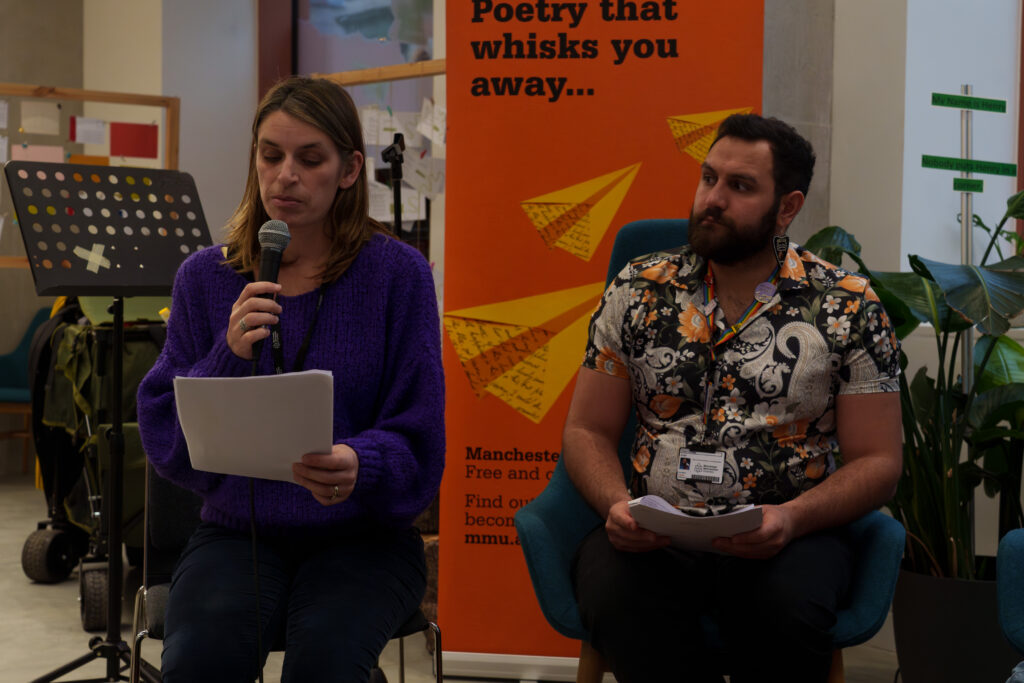
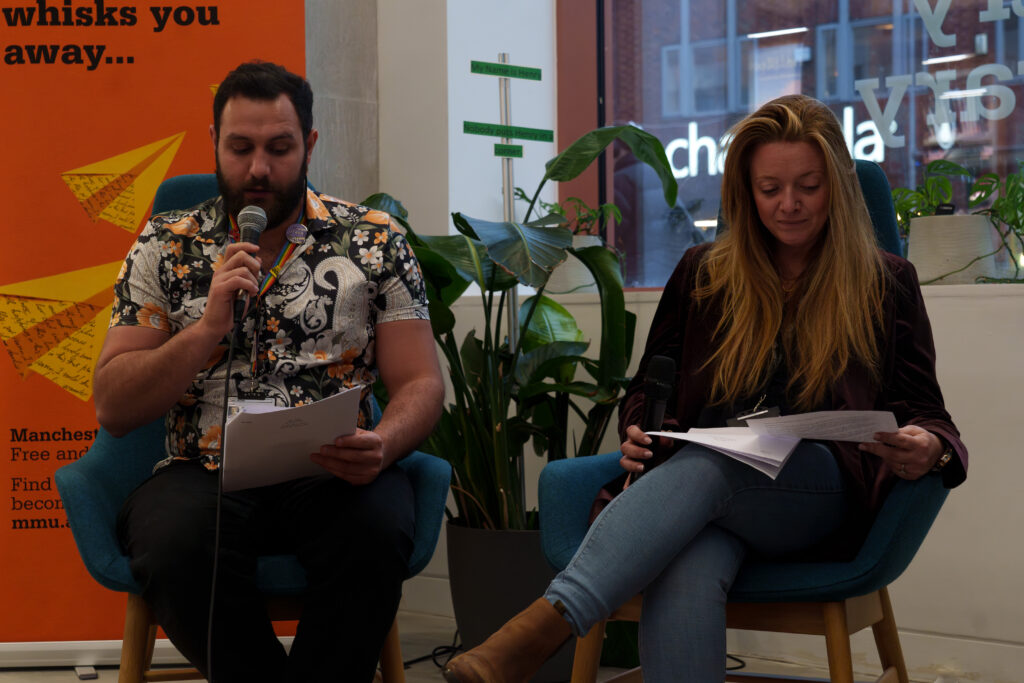
Moore then read from her i-poems collection, formed from sentences beginning with ‘I’ taken from the domestic homicide reports. The poems form a harrowing and raw narrative, stripping away the language humans use to minimise their trauma to the very heart of the abuse.
“It’s like the perpetrators went to the same school to learn how to be an abuser,” Moore said, discussing the patterns within domestic violence cases.
The poems were recited by festival co-organiser and academic Frazer Heritage and poet Claire Shaw, as well as HALT personnel member Elaine Craig, who interviewed the victims whose words Moore had used within the poems.
The event concluded with a Q&A, where Chantler instilled hope despite the heartbreaking subject of her work. Attendees expressed a feeling of thanks for Chantler and her team for the life changing work they conduct and mentioned being personally moved by the reading.
The 16 Days of Activism Against Gender-Based Violence Festival runs from 25th November to 10th December, 2024. For more information and tickets, visit mmu.ac.uk/news-and-events.
Featured image: Press The gates have finally opened for Truck Festival 2026, and for the third-year running, the weather could not be more perfect. Beneath clear blue skies at Hill Farm, Oxfordshire, the iconic Ferris wheel is spinning once again, the Truck Monster is roaming the fields, and thousands of festival-goers waste no time filling…
Featured image: Paramount Pictures Jackass: Best and Last is a send-off and memorial to the legacy of Jackass and all its relatives, celebrating its radical history and recapping some of its most memorable moments in a nostalgic reel that has audiences as gripped as they ever were. Whether you have been here since the days…
Featured image: Thomas Holloway Leeds Festival returns to the fields of Bramham Park this August with one of its strongest line-ups yet, celebrating genre-spanning British talent. Rebuilt from the ground up under a new “2.0” moniker, 2026 marks the next chapter in the festival’s evolution, bringing together generational pop stars, guitar music and grime for…
Featured image: Bloodstock Bloodstock returns for its 25th anniversary with a star-studded lineup of the metal genre’s finest. One of the UK’s largest heavy festivals is set to return this year to celebrate its 25th anniversary, with a stacked weekend of metal royalty. Hosted at Derbyshire’s Catton Park from 6th-9th August, fans can expect to be treated…




Leave a reply