By Annya Pabial
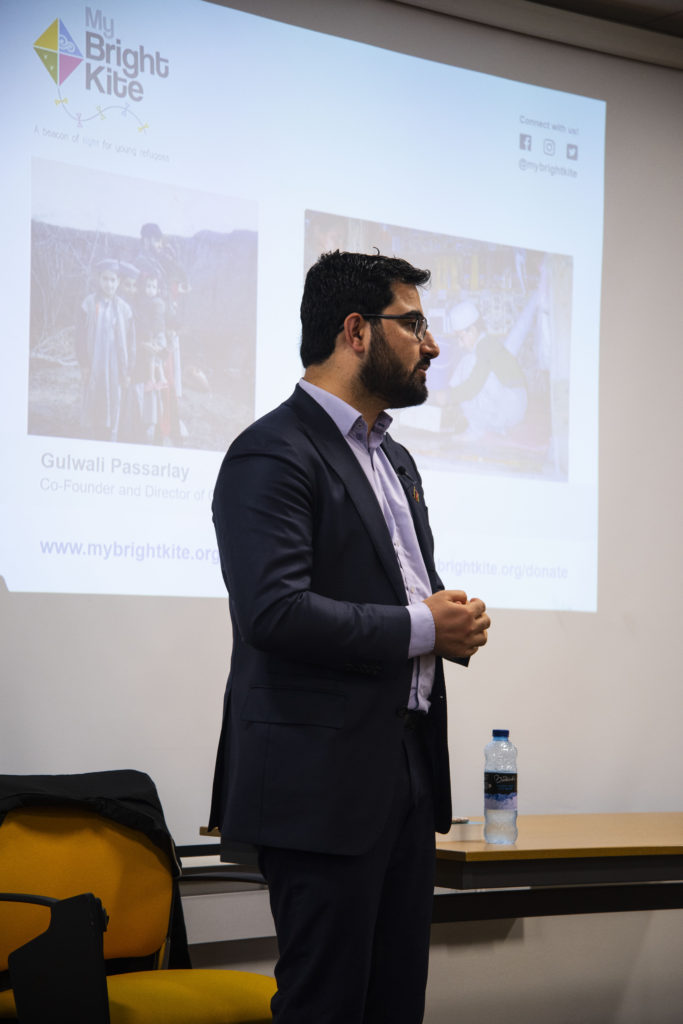
Manchester Metropolitan University welcomes Afghan refugee and author Gulwali Passarlay for a Met Talk, as part of The Home Festival.
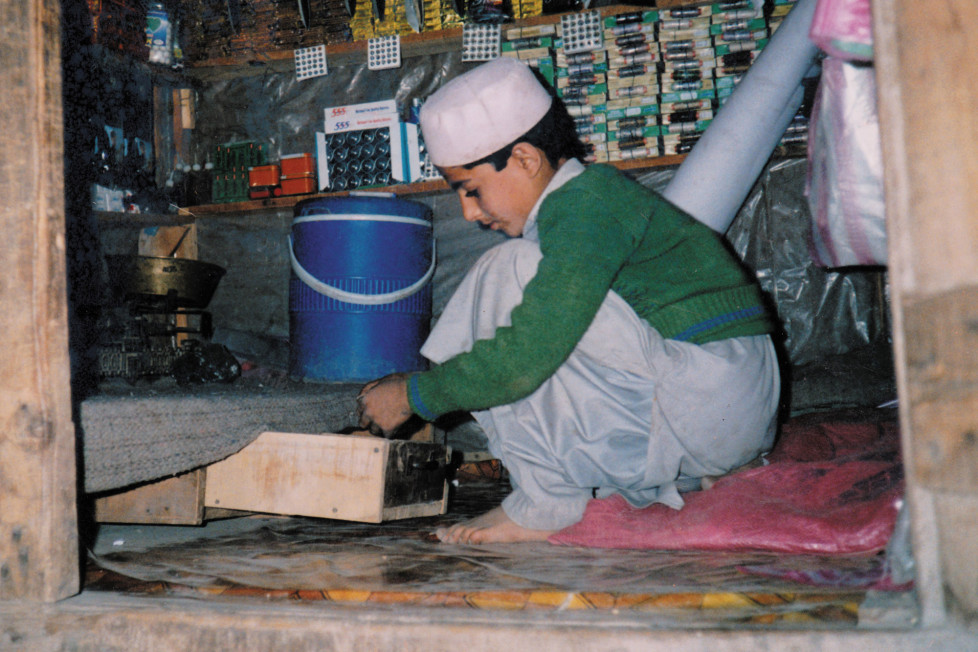
In 2006, aged 12-years-old, Gulwali made the perilous journey from Afghanistan to England after his mother paid smugglers to take him and his brother across Europe.
At the beginning of the talk, he summarised his book A Lightless Sky, published in 2015, in which he discusses his journey, the war that made him flee his home, his reunion with his brother and his education in England.
In his second year of education in Afghanistan, the U.S. led an invasion into the Middle East.
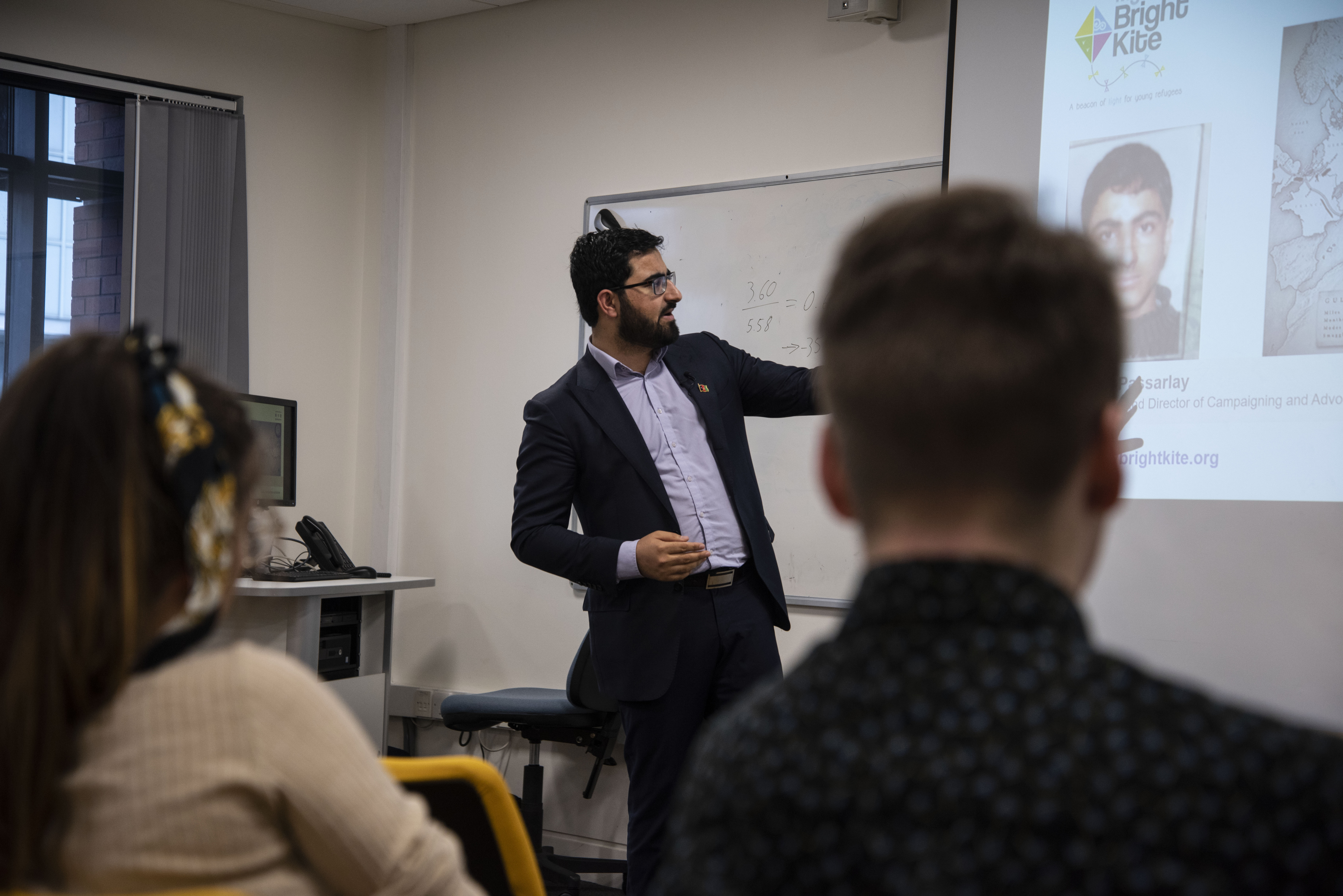
“My home, my country, became a war-zone,” he explained. “I literally lived in fear of being killed.”
His father and grandfather were both killed by U.S. armed forces, which prompted the Taliban to attempt to coerce Gulwali and his brother into becoming retaliatory suicide bomber.
Gulwali relayed the unfortunate truth of how Afghans become part of the Taliban and fight against U.S. and British armed forces. “They have lost their family members […] and there was no mechanism or way of getting justice because if the U.S. kills your family, there is nothing you can do because they could label you as a terrorist or a Taliban sympathiser […] and just wash their hands of any responsibility.”
This is what forced Gulwali and his brother to leave Afghanistan. Almost immediately after their departure, however, the brothers were split up and left to travel alone.
On three separate occasions, Gulwali was incarcerated in prisons with dire conditions. He recalled not being able to shower, starving for days on end and not knowing whether he would make it out alive.
While escaping from an Iranian prison, Gulwali narrowly escaped death – guards opened fire on him and two other men after they had made it to the border on horseback. Were it not for the fact that the horse he was riding sat down just as a bullet aimed at his head was fired, he likely would not have survived.
From Iran, Gulwali travelled by boat to Greece. He was stuffed into such a small space that his body fell asleep for most of the fifty-hour voyage. He explained that articles about refugees drowning at sea and being washed up on European shores remind him of how their boat broke down, and how easily that could have been him.
Gulwali explained: “That happens on a daily, if not at least a weekly basis. So in the last five or four years, about fifteen-thousand or so people have lost their lives in the Mediterranean, and those are people just like you and me. They are people with hopes and dreams and ambitions and they have left their family and everything they love in search for a better future and in search for safety.”
He also reiterated that England, along with other European countries, are not doing enough to help these vulnerable and defenceless people.
“We let them down in such a way, and when I say ‘we’ I mean the government, the establishment, the European Union. The UK navy used to actually rescue people in the Mediterranean.”
After being told to leave the country by Greek officials, Gulwali and the few survivors who remained with him were taken to a refugee camp just outside of Athens, but escaped soon thereafter, as they had to leave Greece within a month. In Patras, Gulwali received news about his brother for the first time in months; he was travelling to the UK completely alone for the first time over the course of his journey, he then made his way to Italy, where he was met by police who, for the first time, didn’t arrest or assault him, but actually cared for him. He then travelled to Rome, Calais and eventually England, where “another journey began”.
“It was going through the asylum process. It took me a long time to get my head around it but the best way I could describe it to you is the asylum system we have in the UK is basically you are guilty and you have to prove yourself as innocent.
“The system sees you as a criminal, as a liar, as a suspect rather than giving you the benefit of a doubt.”
It took Gulwali two years to convince social services of his age and name.
He was then adopted by a family in Bolton, where he went on to receive ten GCSEs and good A-level grades, and finally attended the University of Manchester to complete his politics degree. Just a few weeks ago, Gulwali also completed his Masters degree at the University of Coventry.
Gulwali’s story was truly eye-opening for many in attendance; he shed a light on the cruel way refugees are treated by authorities and how dehumanising it is to be perceived as a criminal rather than someone in need of help.
Moved by the unfathomable scenes he had described, the student audience thanked him profusely for sharing his experiences and insight.




Leave a reply