Featured image: Ciara Reynolds and Charle Mooney
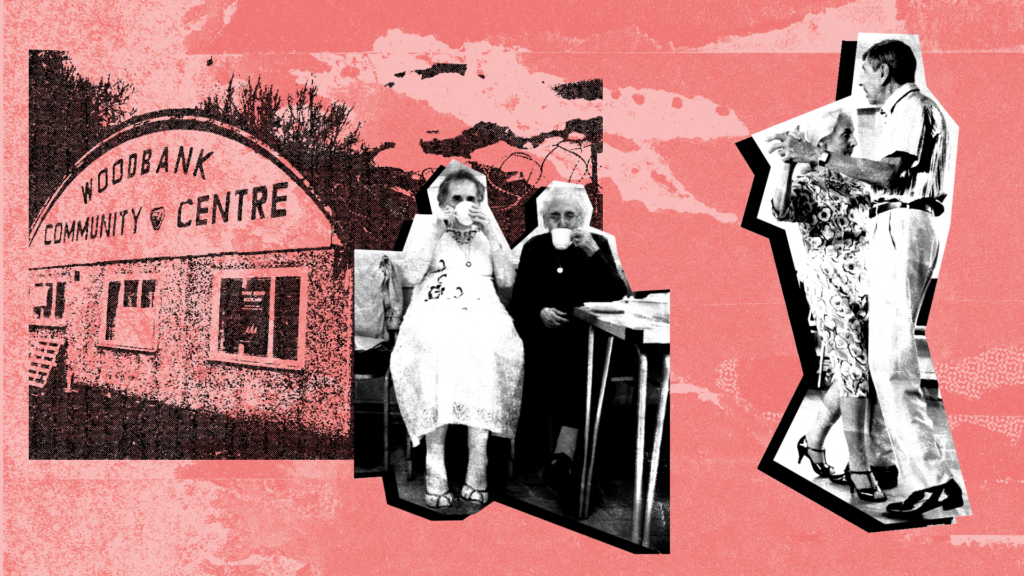
Every Tuesday, 91-year-old Joan walks from her flat to Turncroft Lane in Stockport to set up for the weekly ballroom dancing. Joan, a dedicated member of Woodbank Community Centre, has been attending ballroom classes for more than 20 years – and she has no plans to slow down anytime soon.
The dancers arrive promptly at 1pm, paying £2.50 entry which covers a cup of tea during the break. They begin by sitting in rows along each side of the room, with regular dancers in the same chair every week – an etiquette I learned the hard way.
For Stockport’s elderly community, this has become their weekly tradition. People come from far and wide over to dance with their friends and partners every week, a routine in some cases stretching back decades.
However, this kind of local community is rare among younger generations, and today, Woodbank Community Centre acts as a sort of time capsule which may, unfortunately, disappear with this generation.
Urban sociologist Ray Oldenburg coined this type of socialising as the ‘third space’: a public space on ‘neutral ground’ that is separate from home and work, where people can meet and connect. Oldenburg identified these spaces as essential for wellbeing, offering a place for people to put aside their day-to-day worries and engage with others.
Our generation has seen a huge decline in third spaces. Research conducted by Unison in 2024 revealed that funding cuts have led to the closure of more than two-thirds of council-run youth centres in England and Wales since 2010. The spaces that are left for young people are often inadequate. One play area in Stockport has been labelled ‘a dog toilet’ by locals in an article by the Manchester Evening News, exposing the so-called ‘playground’ as nothing more than a circle of tarmac. Hardly a welcoming space for young people.
There’s no doubt that Gen Z has generated its own version of community through online connections made possible by social media. However, this is no replacement for third spaces. It comes as no surprise that the continual loss of these spaces has had a negative impact on our generation, which is now one of the loneliest yet.
A 2023 study by Cigna found that 73% of workers aged 18-22 report sometimes or always feeling alone, with this number even greater in those who use social media frequently.
Woodbank has stood the test of time due to the goodwill of its members. People like Joan, Betty, Joyce and Dennis turn up every week and enjoy each other’s company. But there is a legitimate concern that younger generations will live lives that exist exclusively between home and work, with any social outing beyond that being accompanied by the expense of a £6 pint or a £4 flat white.
No matter how connected we are virtually, through TikTok, Instagram and other social platforms, these often parasocial relationships are no replacement for real, face-to-face communication and connection. If the social networks of previous generations dwindle or die as government money dries up, who knows what ‘community’ will look like for us in our old age?
Fingers crossed it ends up being more than just a group chat.





Leave a reply