
The LEGACY Issue: The Manchester poets laying down a more inclusive legacy
Featured image: Laura Rooney-Harbottle
Manchester has always been a city where literature has evolved. Famous names such as Lemn Sissay, Isabella Banks and Anthony Burgess are like landmarks along the Manchester Poetry Library’s shelves. Their works are some of the best examples of the city’s poetic output, classic and contemporary.
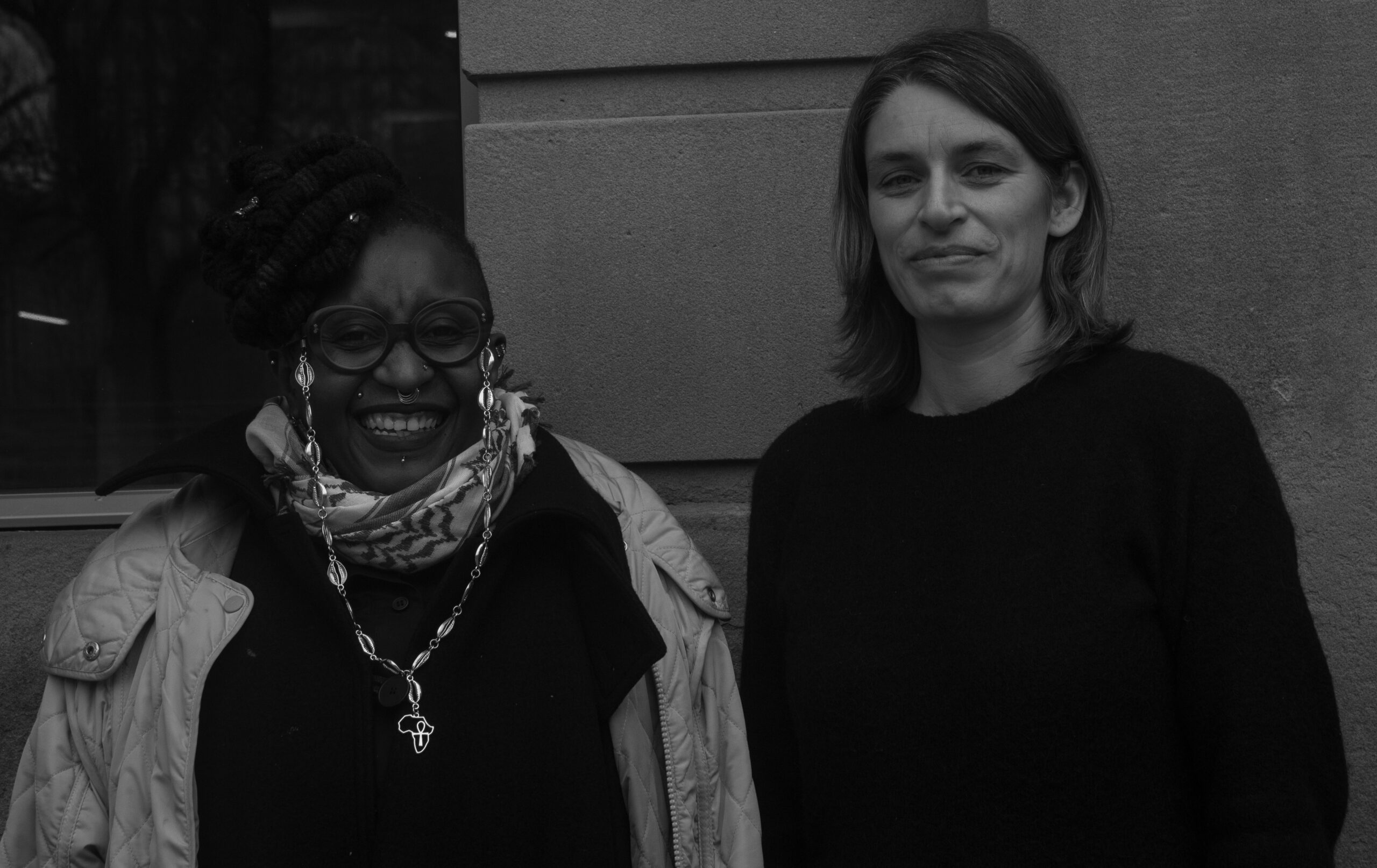
Malika Booker and Kim Moore are two of this city’s modern day poetry stars, success stories in Manchester’s flourishing literary scene. Moore says she had a fairly traditional route into publishing, building up publications in magazines and then pulling together a manuscript. She attended a writing group called Fourth Monday Poets where she was encouraged to start writing poetry, especially by poet Jennifer Copley.
“I eventually compiled a pamphlet manuscript and entered it into the Poetry Business pamphlet competition,” she says. “I got nowhere twice and won it the third time! Amy Wack, the Poetry Editor at Seren, went on to publish my first full-length collection The Art of Falling. Getting published is a really important way of being in conversation with other poets and writers.”
Malika Booker shares Moore’s enthusiasm about what getting her work published means to her. “It’s really validating for someone to call you and ask for work after seeing you reading,” she says. Her own debut as a published poet came this way. “Karen McCarthy Woolf was doing an anthology of Black women poets for the Women’s Press called Bittersweet and she also asked me for a poem. After this, Lemn Sissay called me and asked me to contribute a poem to his collection The Fire People.”
Writing is no easy feat and women have historically been underrepresented and erased from literature. In 2019 Bernadine Evaristo, author and recipient of over 76 literary awards and nominations, initiated a report into the publishing industry. She discovered less than 1% of poets of colour were being published.
“There are many poets, including myself, who knew mainstream publishers would not publish us,” says Booker. To counter this statistic, Booker set up a writing group for Black and marginalised writers called Malika’s Poetry Kitchen, which acts as a space to challenge the existing poetry landscape.
Booker says: “Women were ostracised and it was mostly white middle-class men who were seen as the poets. We’re now seeing a more diverse and inclusive landscape. It’s tenuous and we must be vigilant. I’m talking as both a person of colour and a woman.”
Booker was the first woman to win the Forward Prize twice, in 2020 and 2022, making literary history for women and Caribbean writers. Booker’s modesty is evident as she describes the exhilaration of being shortlisted for such a monumental poetry prize. “Even when I’m shortlisted, I feel like I’ve won,” she says.
The 2020 Forward Prize is one of her favourite poetic victories, Booker says. “‘Little Miracles’ is a poem that was written about my mum having a stroke. It felt like me and my mum won that prize.”
Booker has also won the Cholmondeley Award for outstanding contributions to poetry, the Poetry Business Pamphlet Competition and the Geoffrey Faber Memorial Prize. She was elected a Royal Society of Literature Fellow in 2022. That, she says, “is an award for all the work I’ve done mentoring people and working with people in the literary sector.”
She adds, “Every award feels special and they often give you things you don’t expect. Winning the Pamphlet Competition for If We Could Speak Like Wolves really did change my life. Winning the Forward Prize in 2022 for All the Men I Never Married still feels like a dream.
“I had resigned myself to not winning as so many of my poetry heroes were on the shortlist with me. It felt extra special to win because the award ceremony was in Manchester for the first time and my daughter, who was two at the time, was there with me.”
Both Moore and Booker offer praise and respect to their fellow poets who make up the Manchester Writing School. “I admire them hugely,” says Moore. “It feels like the poetry dream team!”
Booker pays tribute to poets who inspired her. “Ntozake Shange wrote For Coloured Girls Who Have Considered Suicide / When the Rainbow Is Enuf. It was revolutionary and profound at a time where you weren’t hearing Black women’s stories. And I’m a disciple of Sharon Olds.”
Both urge aspiring poets to seek out community. Booker says: “Find your community kin, who will be honest with you about your work and help you develop it.” Moore stresses the performative aspect of poetry. “Go to live readings,” she says. “I think it’s important to see people perform poetry, as well as just reading it.”
Another aspect of developing as a writer is the positive impact the community at the university has had on students and staff alike. Malika Booker worked with Carol Ann Duffy, Poet Laureate from 2009 to 2019. “I’m now a judge of the Manchester Poetry Prize,” she says. “I took that role over from Carol Ann – and she started that prize.”
The Manchester Writing School is a place where she feels she belongs, she says. “I don’t think there’s a writing school like this one. We have a big office full of writers. We read one another’s work and attend each others’ book launches. Hopefully this support goes down to the students too.”
Moore’s enthusiasm at being part of the university’s 200-year legacy is tangible. “MMU has been a huge part of my life since 2010. I did a part-time MA in Creative Writing and researched for a PhD here,” she says.
“University education is transformational and can be life-changing. That’s what MMU has been for me. So I’m really happy to be working here fourteen years later, and to be part of this big anniversary!”