By Cheri Dermott and Sumayyah Mussa
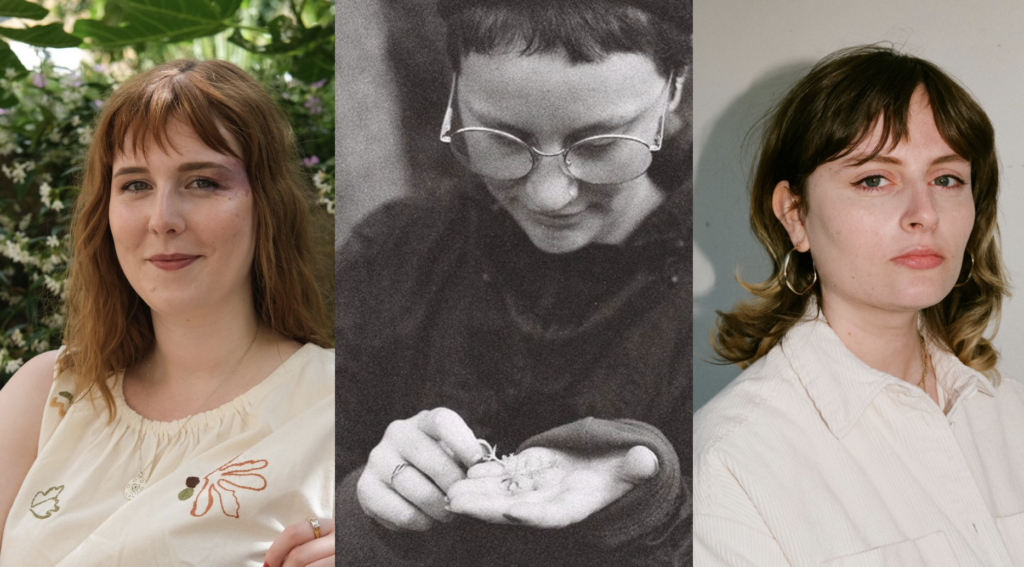
As Manchester Met’s 16 Days of Activism Against Gender-Based Violence campaign continued, writers and researchers hosted a compelling panel discussion explored how gender biases influence the understanding and treatment of illness. Char Heather, Charlotte Shevchenko Knight and Naomi Morris delved into the intersection of health, gender and creative critique, using literary work to unpack systemic inequalities.
Char Heather opened the event with a reading from Our Ungovernable Bodies: On Waves Not Arcs, a creative-critical exploration of illness and the female body. Heather challenged the traditional “arc” of illness narratives, questioning whether stories of chronic conditions must conform to resolutions like recovery or death to be deemed worthy: “Where is the arc? Are we lacking because our stories do not build to peaks of tension, resolving in well-again-ness or death? Are we the protagonists of a series of tedious, unwatchable films? Are our arc-less lives not worth telling? Are we bad at literature?”
She reflected on personal experiences with ME and CPTSD, describing her body as a site of both conflict and fascination as she continued the reading: “I have ME and CPTSD, clashing waters of autoimmunity and anxiety, fracturing drifts into diagnosed and undiagnosed places of this body/mind. It is sloshing, overflowing with exhaustion and unendingly interesting to me.” Heather’s work emphasised how poetry becomes a transformative tool to express the often-marginalised realities of chronic illness.
Forward Prize-shortlisted poet Charlotte Shevchenko Knight followed with excerpts from her PhD research, The Inexpressible, examining how language fails to capture the experiences of disordered eating.
Her reading included ‘Knowing Joan’, a piece inspired by Joan of Arc, which connected themes of defiance, vulnerability and embodied experience. This highlighted the raw vulnerability that poetry can facilitate, demonstrating a careful balance between public disclosure and the intimate truth.
The event concluded with a lively Q&A, where the speakers offered insights into navigating personal and challenging topics through their work. Shevchenko Knight underscored the importance of community, recommending online workshops focused on chronic illness as spaces for shared understanding.
She said: “I get to work on this for my PHD, so I have the privilege to drop an email if I’m struggling, but I think finding that sense of community is so important. There are online workshops which surface on chronic illness which are amazing spaces where you can feel a sense of community from your own home.”
Heather highlighted the value of reading works like J. Logan Smilges’ Crip Negativity, which explores how to hold onto rage while maintaining hope: “We can be angry and full of rage while still keeping a glimmer of hope for change.”
When asked how to end writing that reflects ongoing experiences, Heather and Shevchenko Knight reflected on the limitations of conventional narrative structures. Heather remarked on the pressure to include resolutions, whether a cure or diagnosis, in illness narratives: “It’s a really interesting point to approach to writing – thinking about entity logical responses of this idea of how do you write about something that isn’t fully formed by its ending. A lot of illness and disability narratives focus on a resolution like a point of cure, or diagnosis. How do you make a piece of writing feel like it will take you on a journey without the end point of being a conclusion?”
Shevchenko Knight emphasised that the absence of a definitive conclusion mirrors the lived reality of chronic conditions: “There is no technical resolution. I am still living this life and so how do I capture that experience and its in a form that doesn’t have a particular moment where it concludes?”
The discussion highlighted the often-overlooked and misunderstood reality of chronic illness and their readings challenged standard narratives, focusing on how poetry and creative writing can help to portray these experiences.
The 16 Days of Activism Against Gender-Based Violence Festival runs until 10 December 2024. For more information and tickets, visit mmu.ac.uk/news-and-events.





Leave a reply