To celebrate the return of the Manchester Writing Competition, Jenna Muiderman speaks to 2014 Manchester Fiction Prize winner Martin MacInnes
Martin MacInnes is the author of In Ascension, which was longlisted for the Booker Prize 2023. An author and essayist based in Scotland, MacInnes has been longlisted for the Saltire Award for his debut novel, Infinite Ground, which also won the Somerset Maugham award. In 2020, MacInnes was named by the National Centre for Writing as one of the ten UK writers ‘asking the questions that will shape our future’.
In 2014, MacInnes won the Manchester Writing Competition for his short story Our Disorder. The Competition is the UK’s biggest prize for unpublished work, and is run by the Manchester Writing School at Manchester Metropolitan University.
We caught up with MacInnes ahead of this year’s Manchester Writing Competition to find out his thoughts on the prize, advice for writers considering entering the international competition this year, and how ecology influences his writing.
Congratulations on being longlisted for the Booker Prize 2023! How does it feel, and what would winning the prize mean to you?
It feels a little surreal. I’m very fortunate, as it’s given me more exposure than I’ve ever had before, and more readers are coming to my work.
How did winning the Manchester Fiction Prize affect how you thought about your career and your writing?
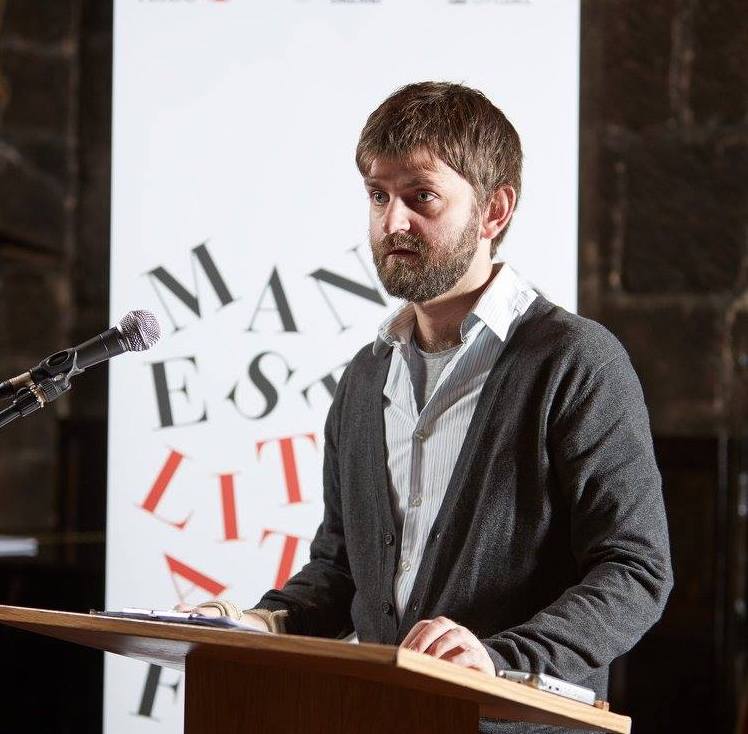
I’d say winning the prize was probably the most significant moment in my life. I can remember every detail of that night, from nervously rehearsing my reading in the hotel beforehand, to my shock when [Manchester Writing School manager] James Draper read out my name from the golden envelope, then walking onto the stage as an out of body experience. I’m incredibly grateful for the generosity of the prize, and the trust the judges put in me. I felt a duty to vindicate the decision, to show that the judges’ confidence in me was earned. I knew that the win had given me a platform and an opportunity, and I wanted to make the most of that. I remember saying to Nicholas Royle that ‘I will write novels with this,’ and thankfully I was able to do that.
You described your work as ‘not necessarily the easiest sell’, how did you gain confidence to put your unique voice out there?
I’ve always thought that what I was writing had value – I wouldn’t have written it otherwise – it’s just that it wasn’t necessarily ‘trendy’ or whatever. And if I wanted my work to be read, which I did, then sending it to agents and publishers was a necessary step. The worst they could do was say no – nothing really bad could happen, so having the confidence to do this was never an issue.
What advice would you have for writers who are thinking of applying to the Manchester Fiction Prize this year?
When I submitted Our Disorder, I didn’t think for a minute it would be longlisted, but I knew it was a good story and so it was worth entering. I have never had much money, and the cost of entering was probably more than I’d spend in a week on food, but it seemed worthwhile to me just to have the tiniest chance of succeeding, because the benefits would be worth so much.
Ecology and biology are recurring themes throughout your novels, what draws you to these topics and how does writing about the non-human affect how you think about the story?
It’s essential to how I see the world, and something that I rarely see in English language fiction, which is too often myopically and parochially human-centred. (There are some great exceptions, of course, such as Daisy Hildyard’s writing.) Being interested in the more-than-human doesn’t mean you are not interested in the human – rather the opposite. For me the moral as well as aesthetic possibilities of writing in a more ecologically-mindful way are almost endless. Ecology, after all, is basically the premise that everything is connected.
In Ascension by Martin MacInnes is out now from Atlantic Books.
The 2023 Manchester Writing Competition is open to entries until 5 pm on September 1, 2023. Entries cost £18 per submission for either the poetry or fiction prize. The Competition is organised by Manchester Metropolitan University.
For more information, visit mmu.ac.uk/writingcompetition, join the mailing list, and follow @McrWritingSchl on Twitter.






Leave a reply