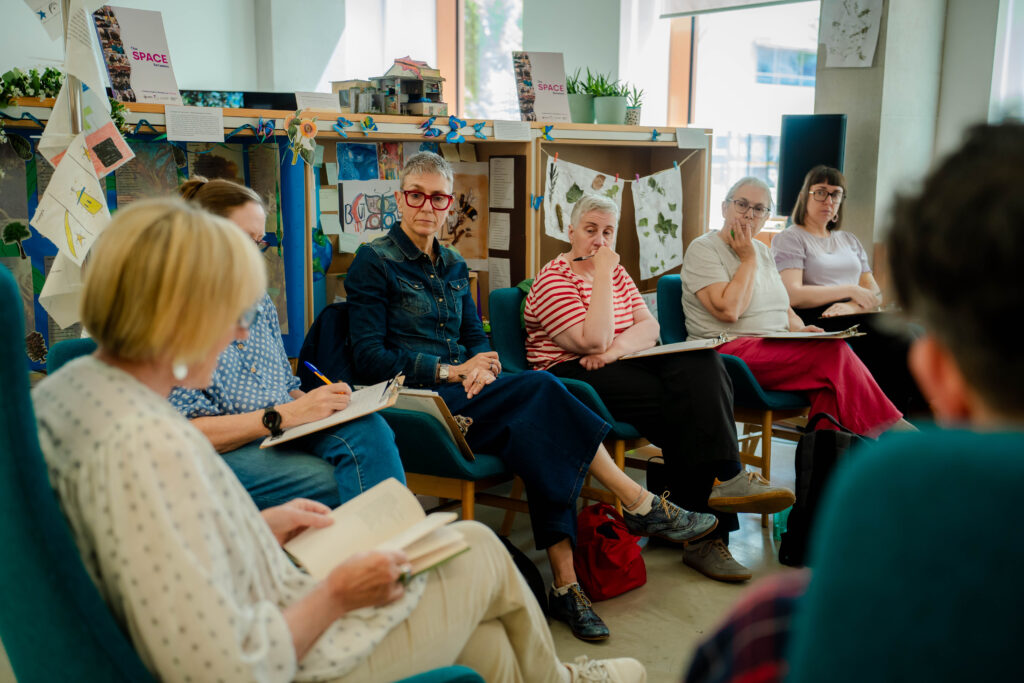
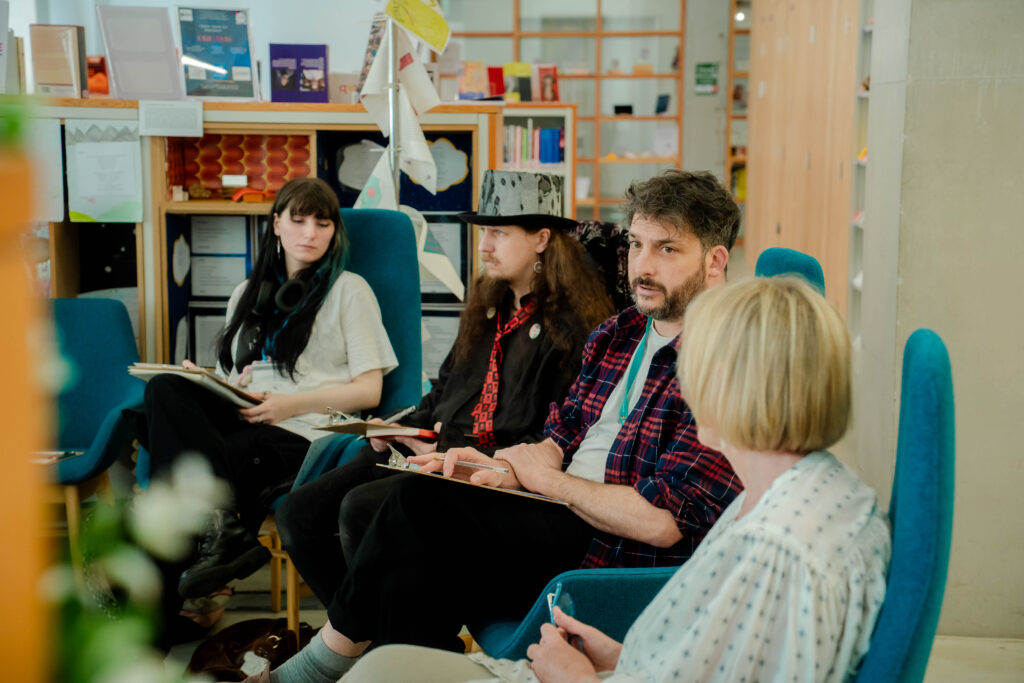
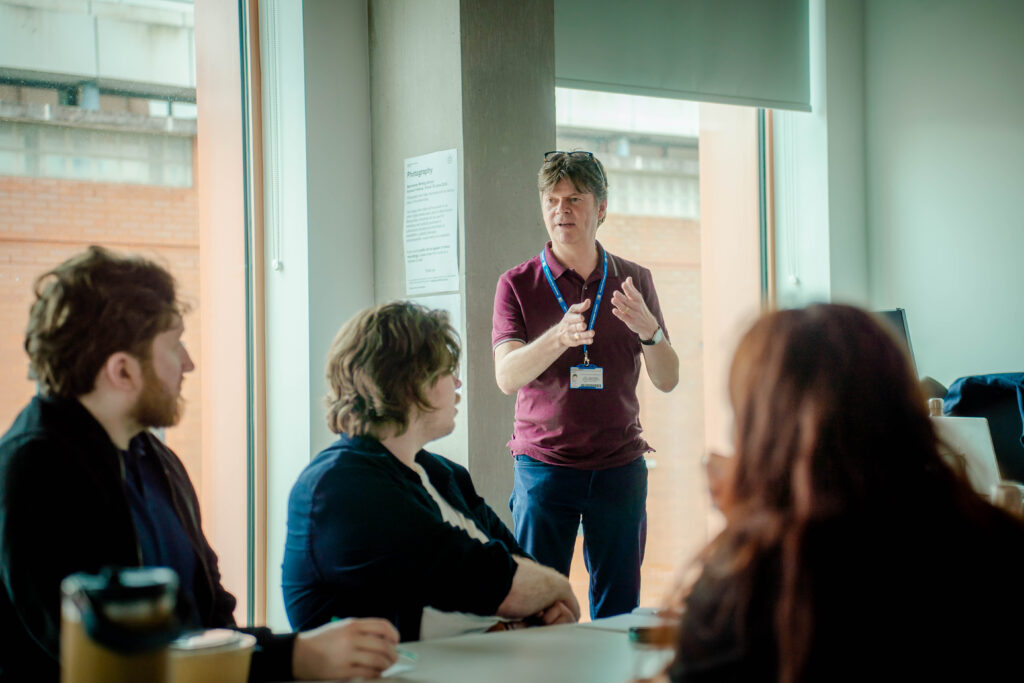
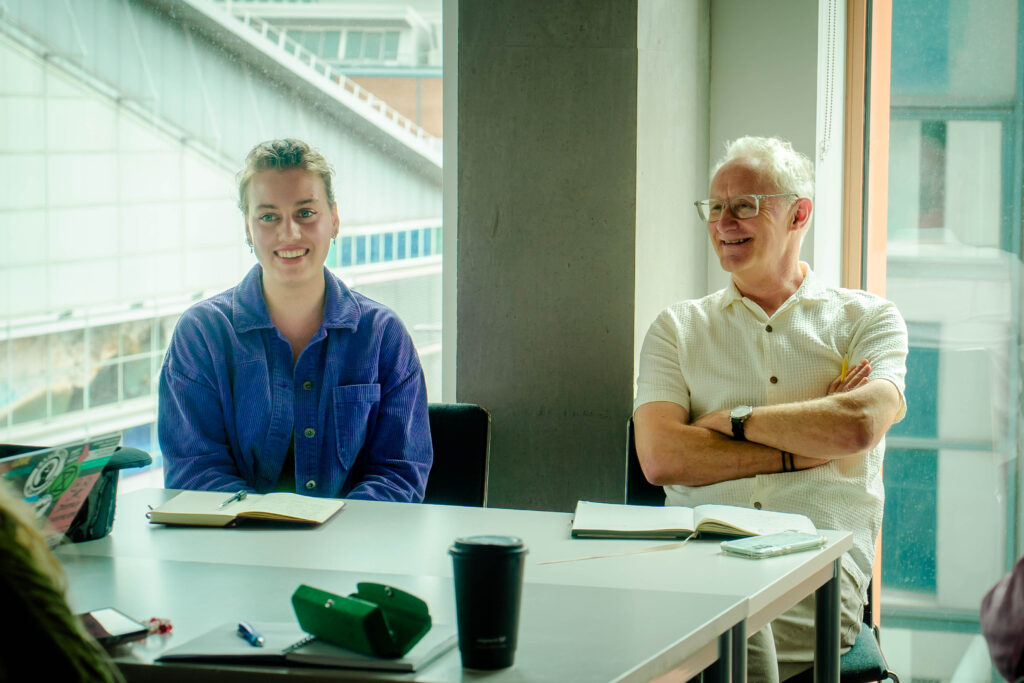
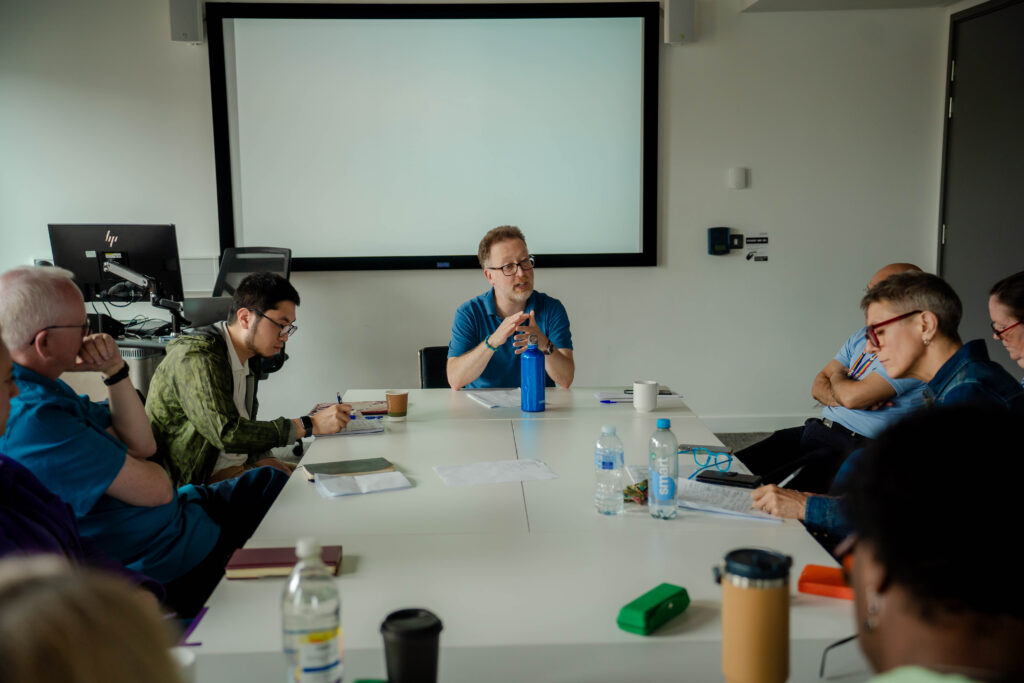
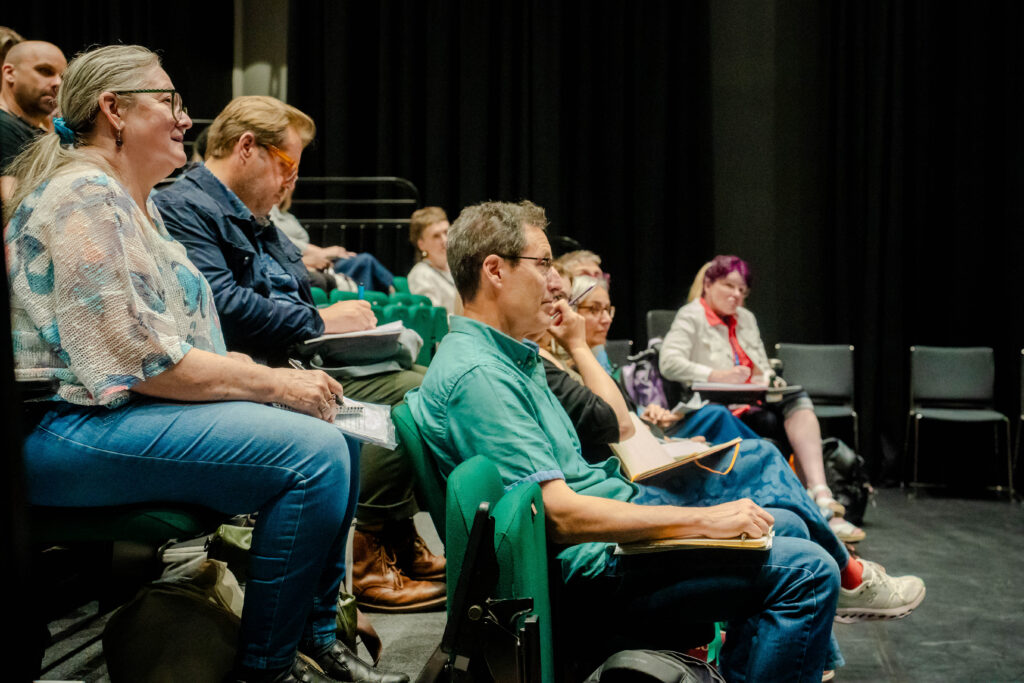
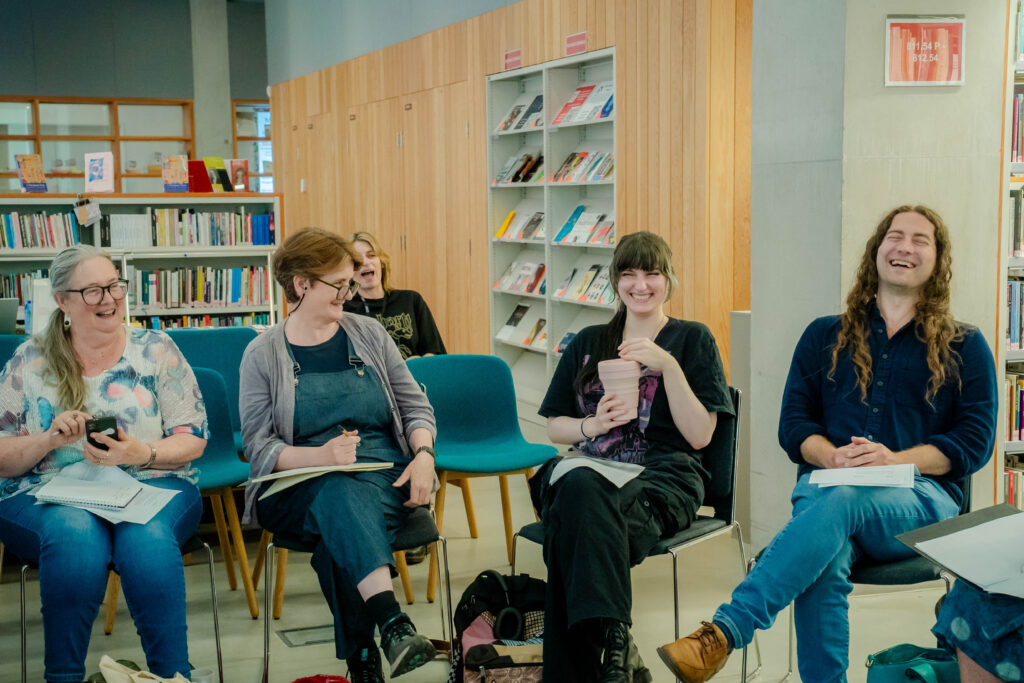
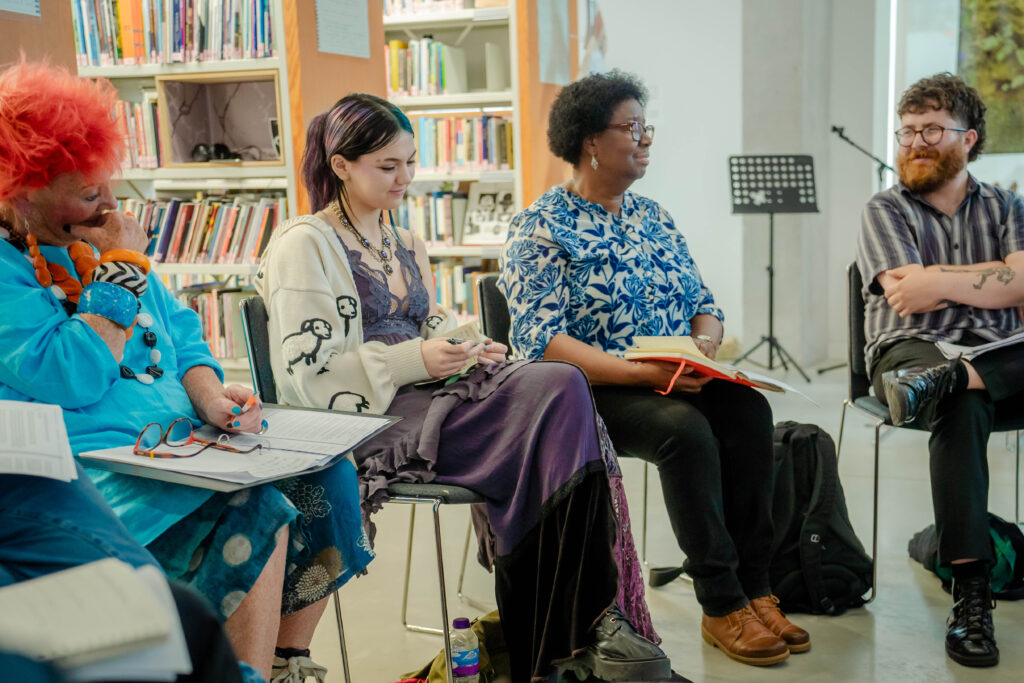
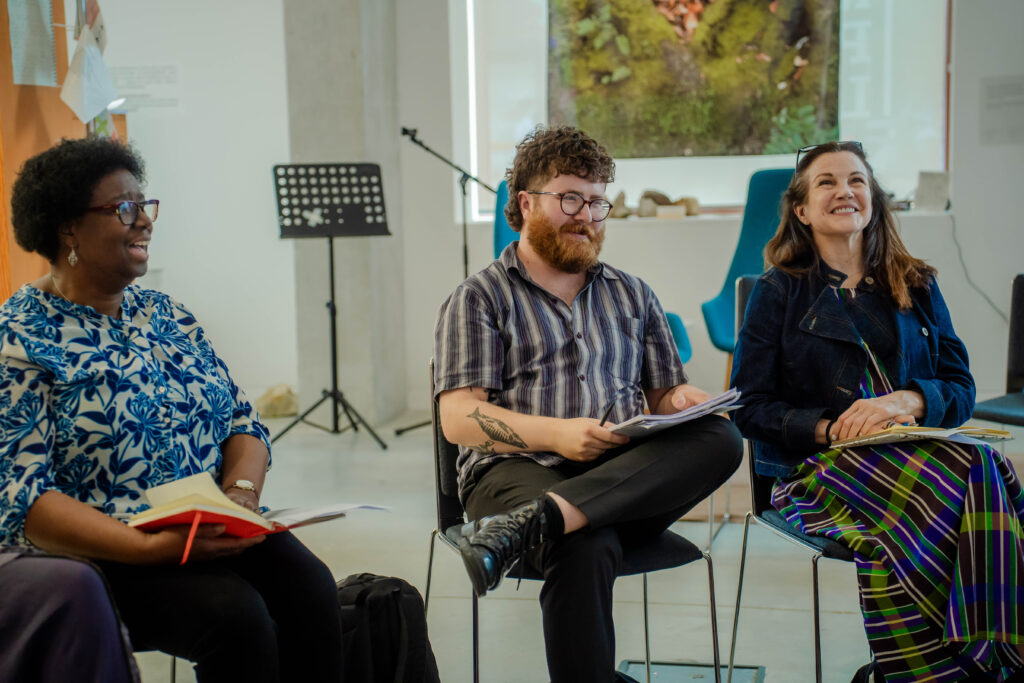
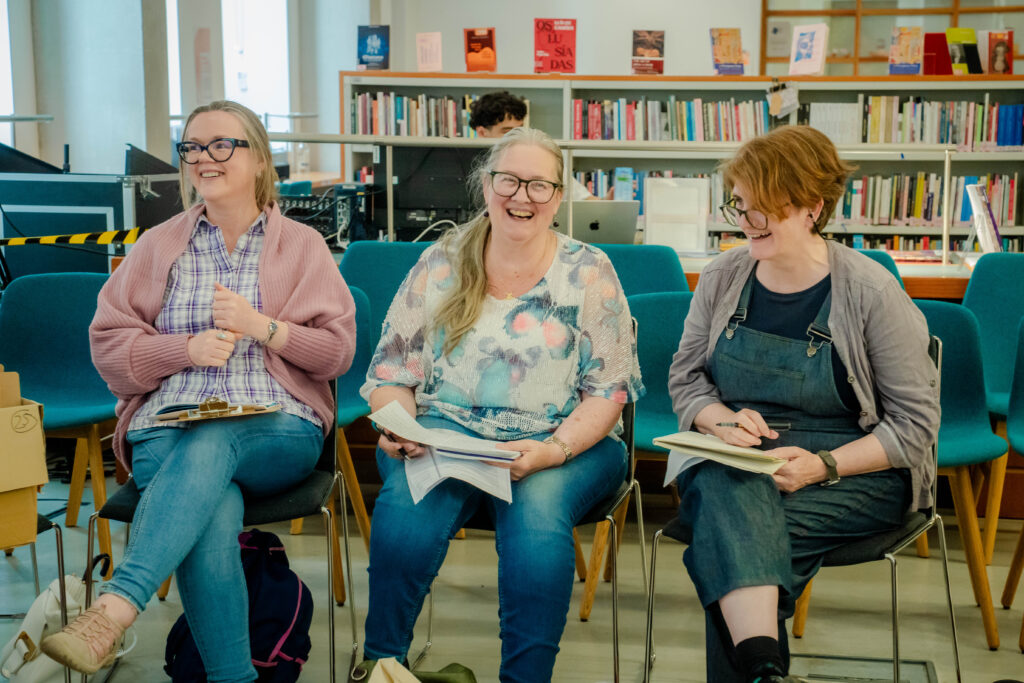
Notebooks were carried from one workshop to another. Writers from different generations sat around tables, sharing manuscripts and listening to each other. Outdoors, small groups strolled along Oxford Road, pausing before buildings steeped in literary history.
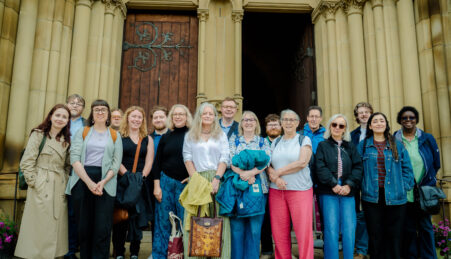
This was the scene during the Manchester Writing School Summer Festival 2026, held in June at Manchester Metropolitan University.
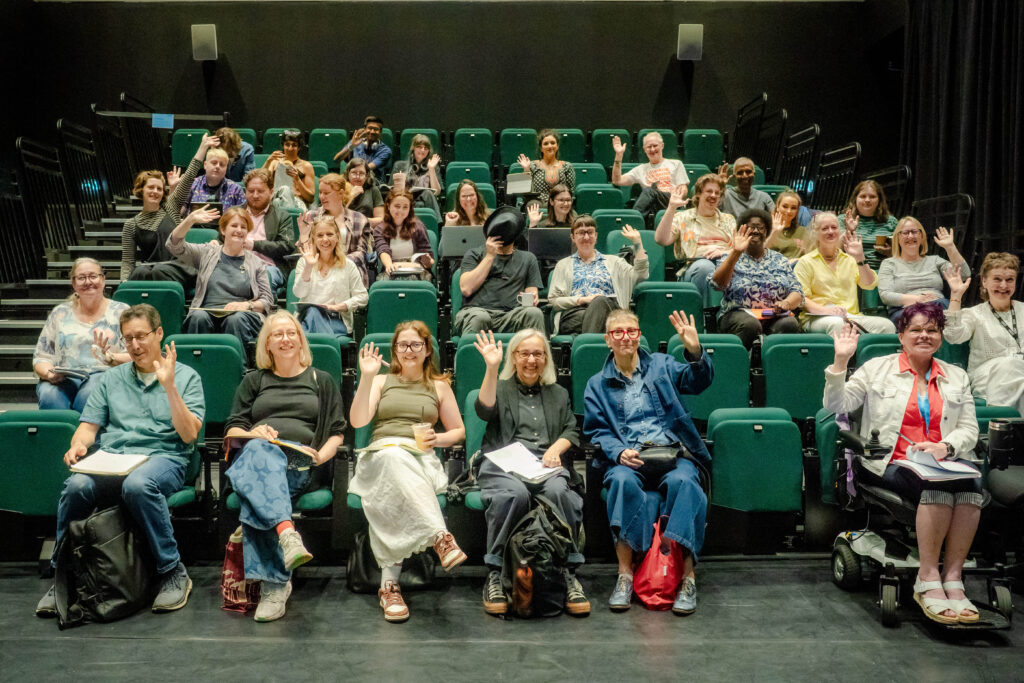
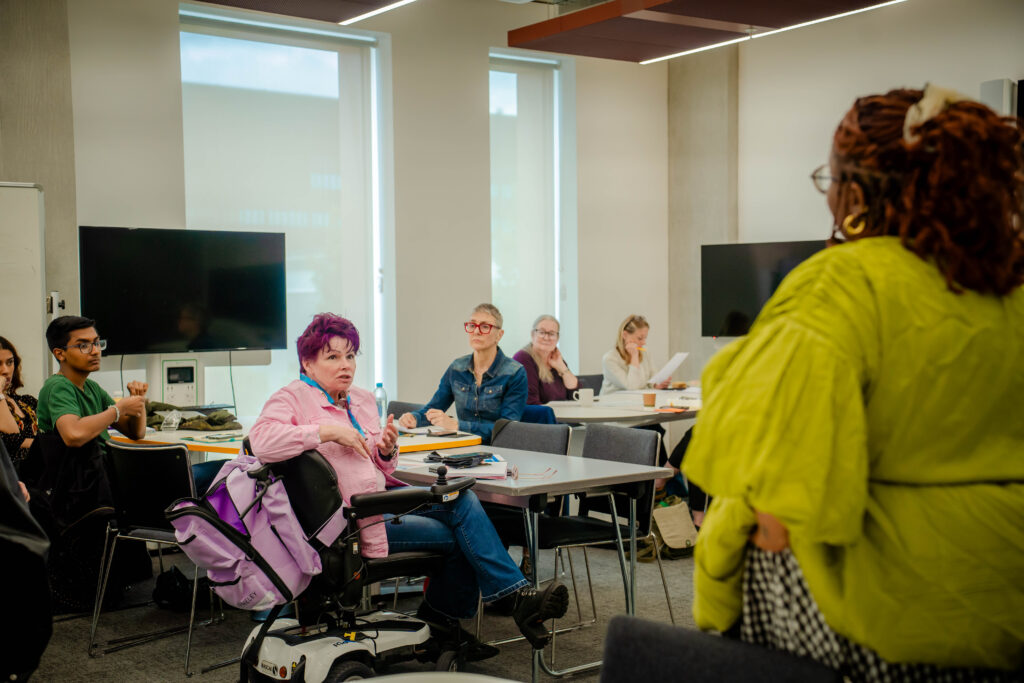
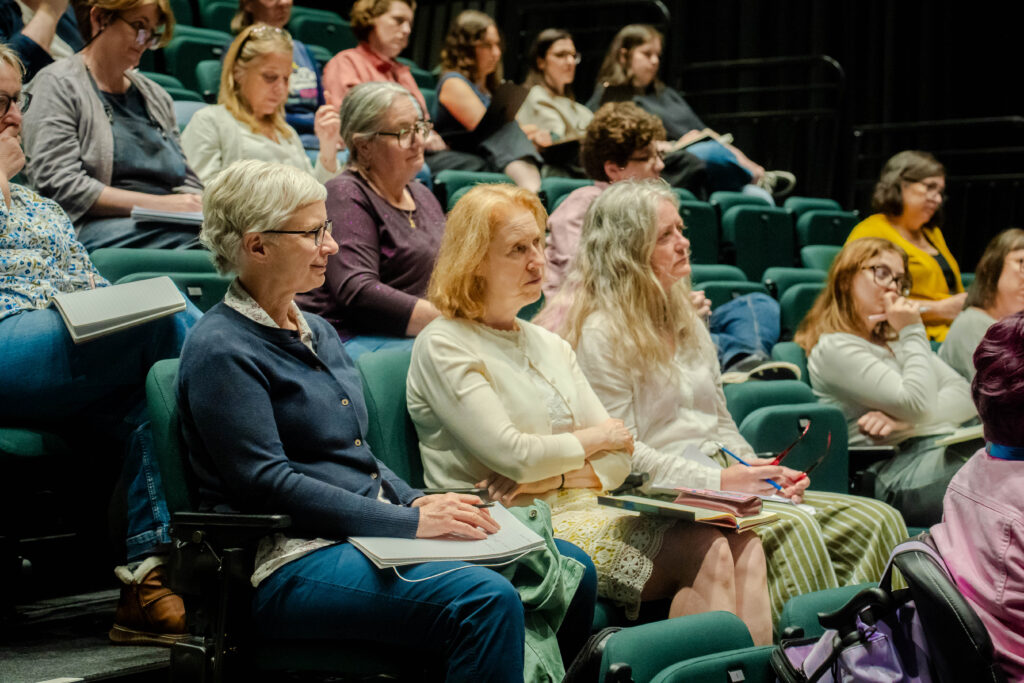
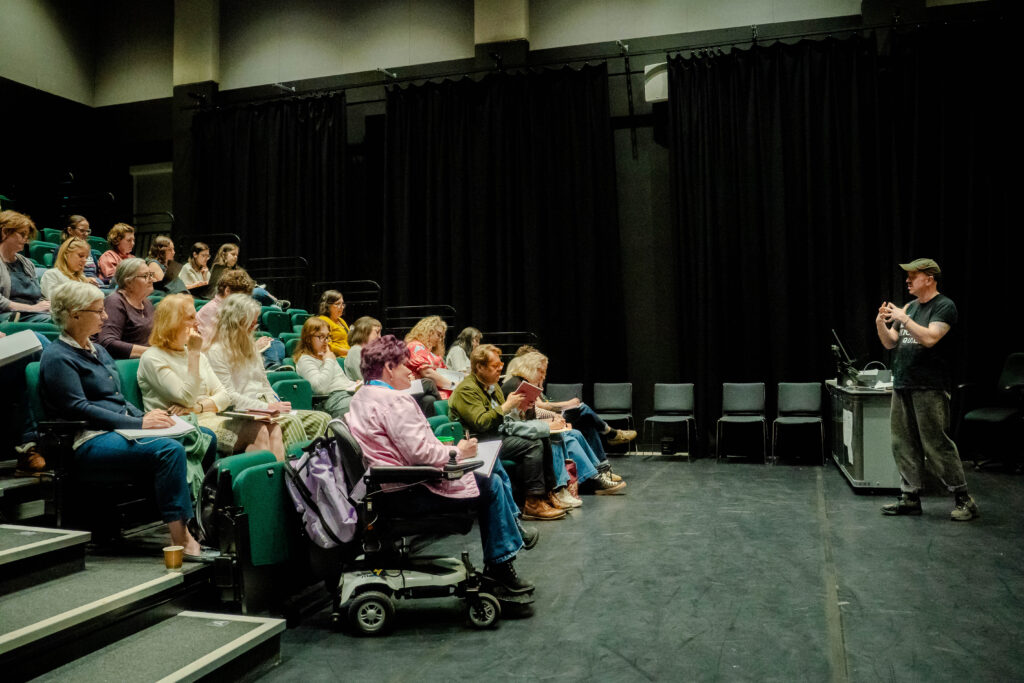
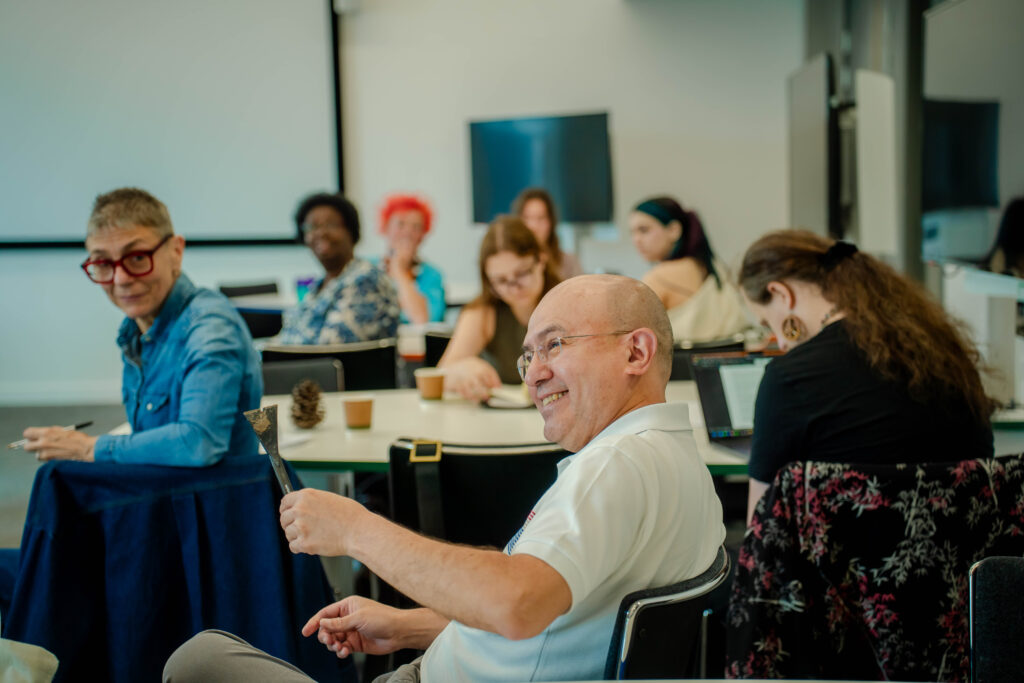
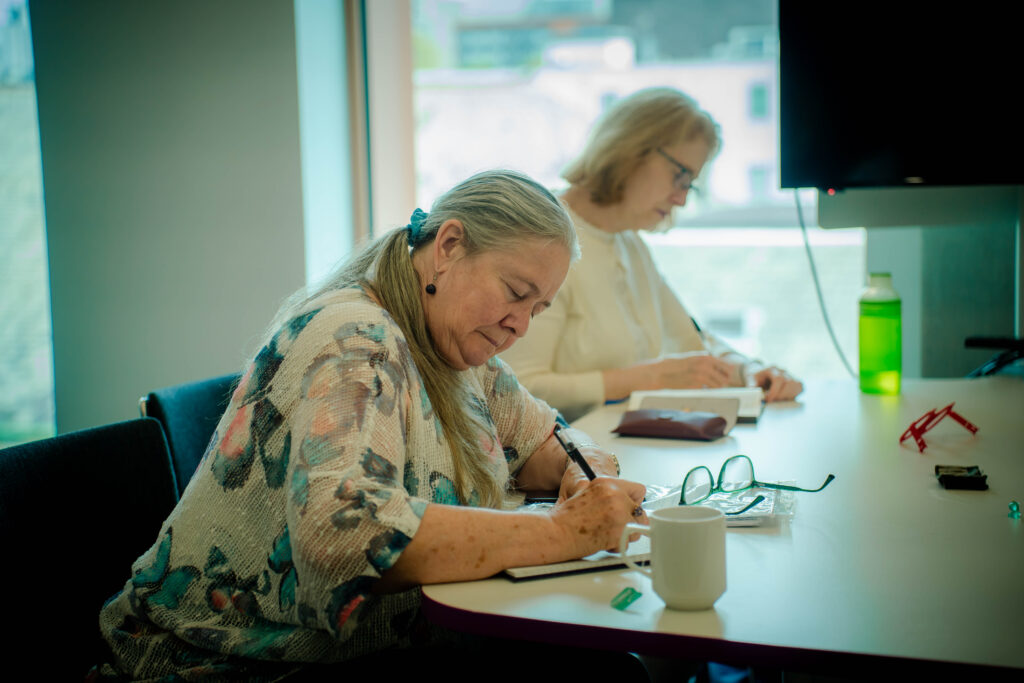
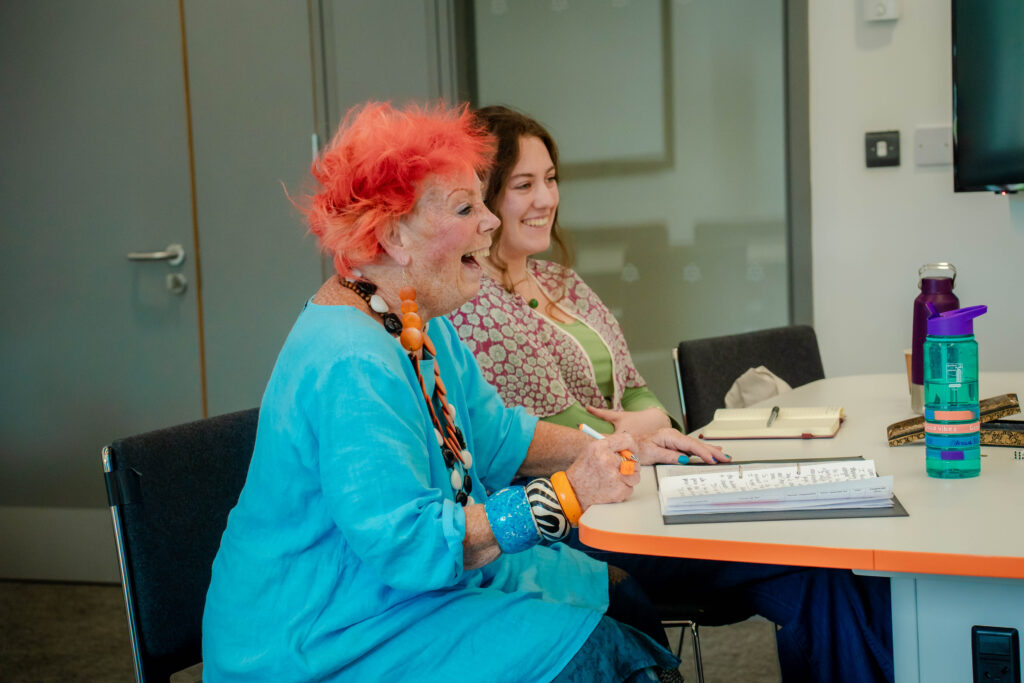
Alongside online sessions, the festival brought together students, alumni and writers from across the wider community together on campus for workshops, talks, poetry readings and conversations.
For the festival’s organisers – James Draper, Dr Kim Moore, Dr Reuben Martens, Joe Stretch and Dr Brian Sneeden – the event captures the spirit of the Manchester Writing School. Draper said: “We’re one big creative family all working together.”
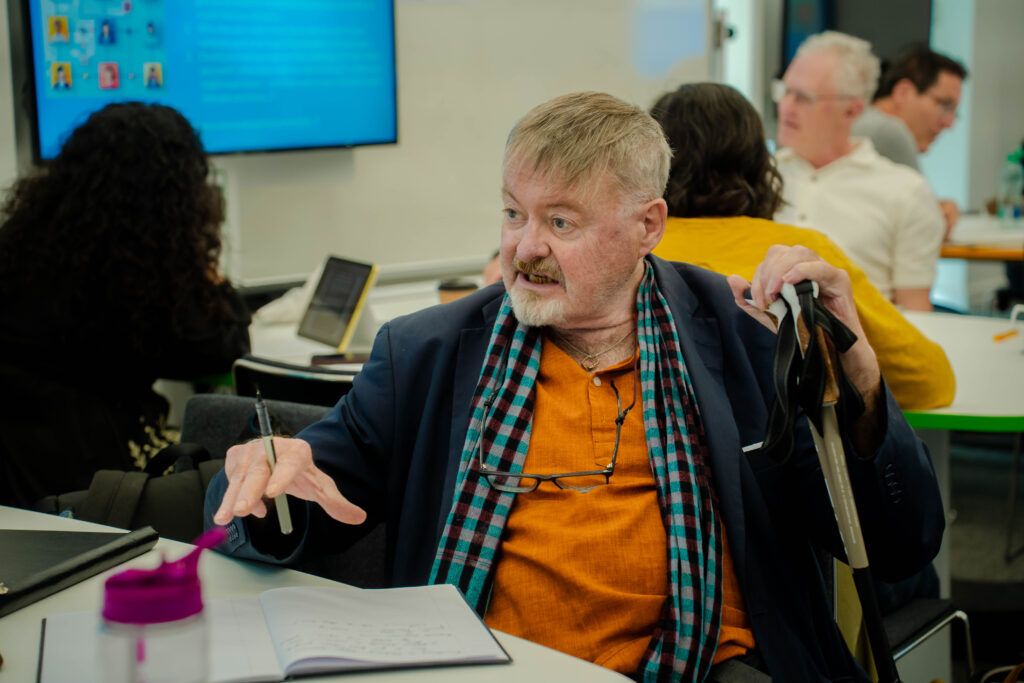
Participants arrived from a wide range of backgrounds and creative journeys. They included Creative Writing students, prospective students exploring the university before enrolling, alumni returning after many years, writers developing their first novels, and authors already working on later books or preparing manuscripts for publication. Others came to simply rediscover a creative practice that had been interrupted by work and life.
Although Julie completed her MA in Creative Writing, she found herself drifting away from writing as family and personal responsibilities took priority. She came to the festival hoping to reconnect with writing. “I thought this would be a great opportunity to be inspired again and get back to doing the writing I was doing,” she said.
For Bridie, a member of the Manchester Irish Writers community, attending the festival was originally a gift from her husband. It became much more than that. “If you’ve got that creative spirit, there’s an instant bond there. For me, these four days were like Christmas coming early,” she said with a smile.
Participant Coral missed out on higher education before later raising five children as a single parent. She eventually returned to study, first through photography and then Creative Writing. Now working on several books, she described her decision to pursue writing as “a blessing in disguise”.
June 18th: Exploration and New Perspectives
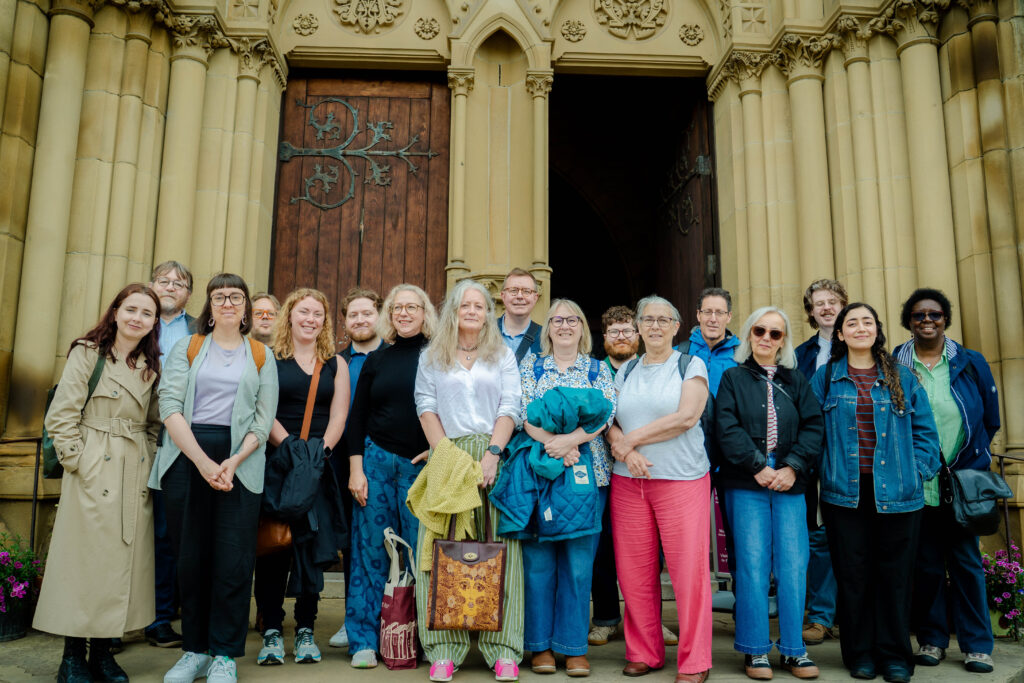
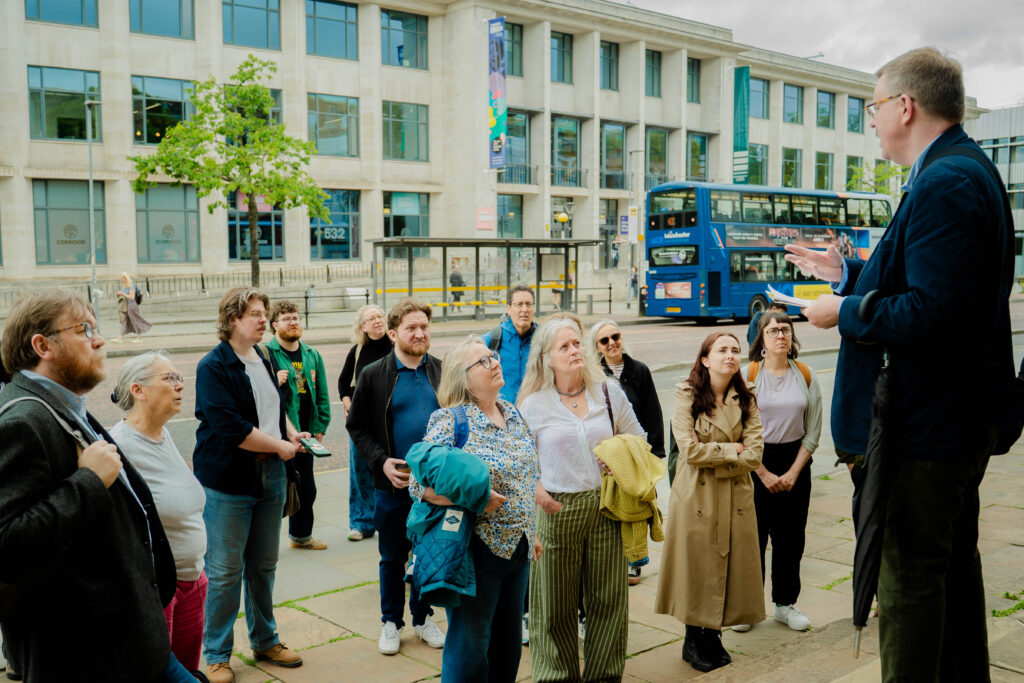
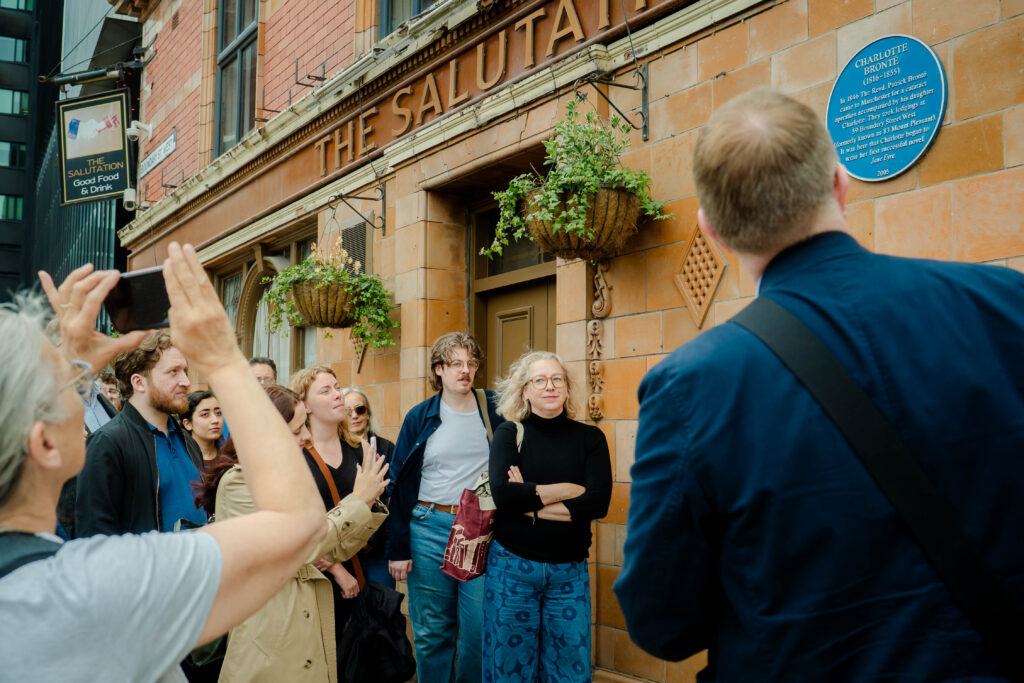
The first in-person day began with the Oxford Road Excursion, led by Professor Andrew Biswell. The literary walk explored landmarks connected to Manchester’s literary history, including the Holy Name Church, the Anthony Burgess Foundation, the Peterloo Memorial, Midland Hotel and the Portico Library.
Professor Biswell said the idea came from a radio programme he made with writer Paul Morley. “I wanted to have an emphasis on literature and creative writing. I thought a lot about the literary heritage and the history of Manchester, so the locations were chosen on that basis,” he said.
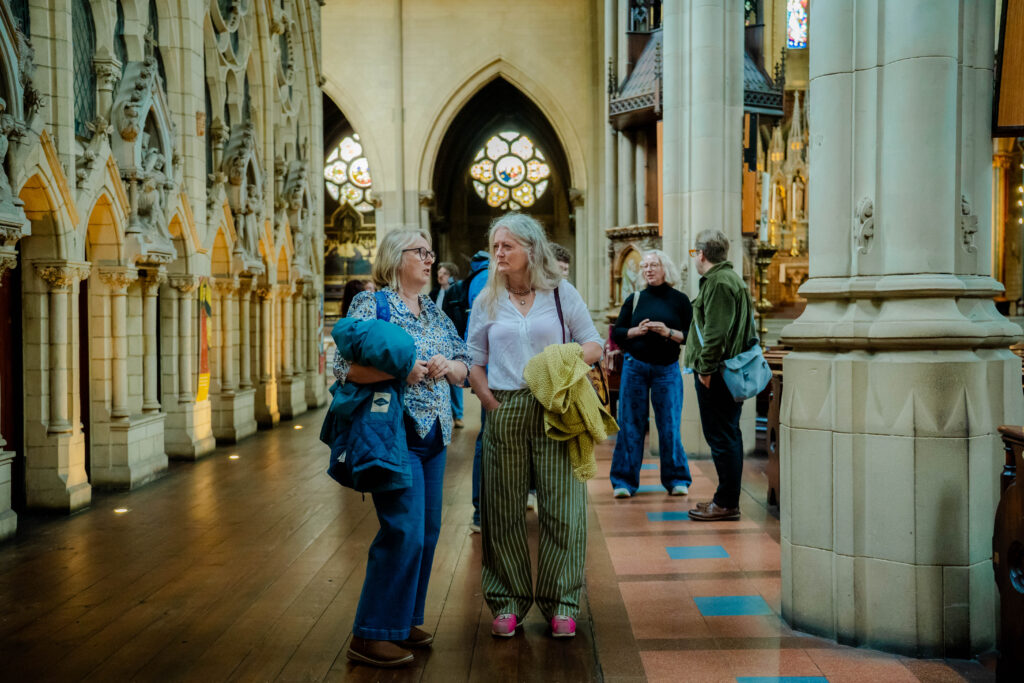
The literary walk showed that even familiar streets could still offer a fresh perspective. Participant Sylvia, who has lived in Manchester for three decades, admitted was unfamiliar with some of the locations. “I wasn’t familiar with all the little places, like the church,” she said.
Inside Holy Name Church, Sylvia was moved to realise it was the same place featured on Songs of Praise the previous weekend. Her companion summed up the experience: “This is just like being on holiday!”
Meanwhile, Turning Research Into Story, led by Zodwa Nyoni, a screenwriting instructor at the Manchester Met, explored how historical documents can be transformed into vibrant stories. The session used her play Liberation, about African activists who fought to liberate Africa, as a starting point.
Nyoni said she was fascinated by the possibilities of using research to uncover overlooked histories, and hoped participants would discover that same sense of curiosity. Her favourite moment was watching writers uncover stories of their own: “When you have a room of writers discovering at the same time, I think it’s just the best thing.”
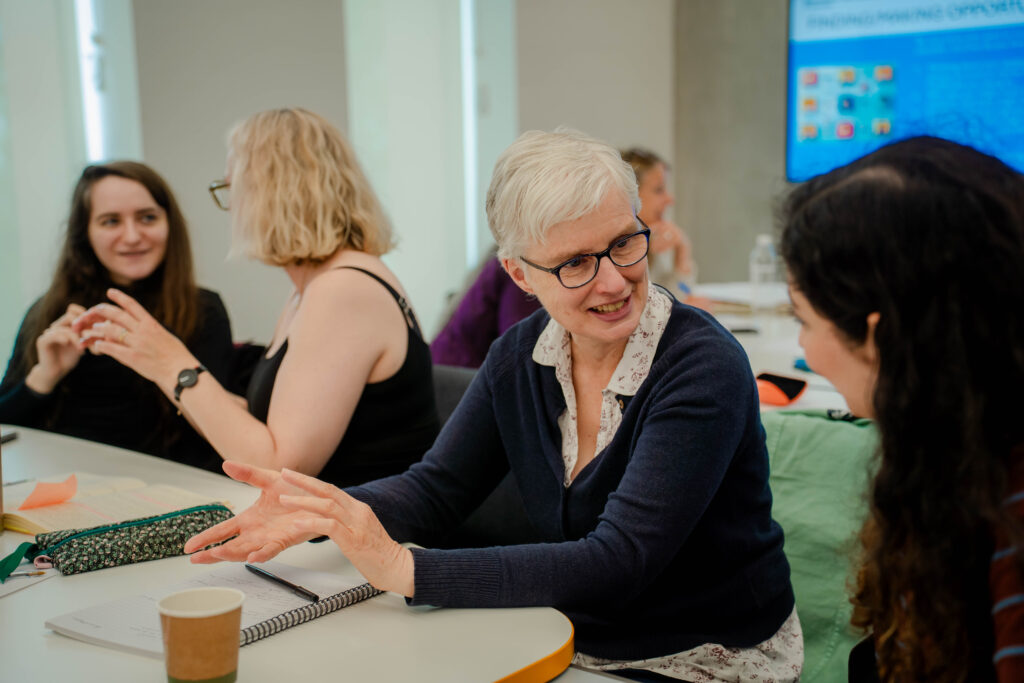
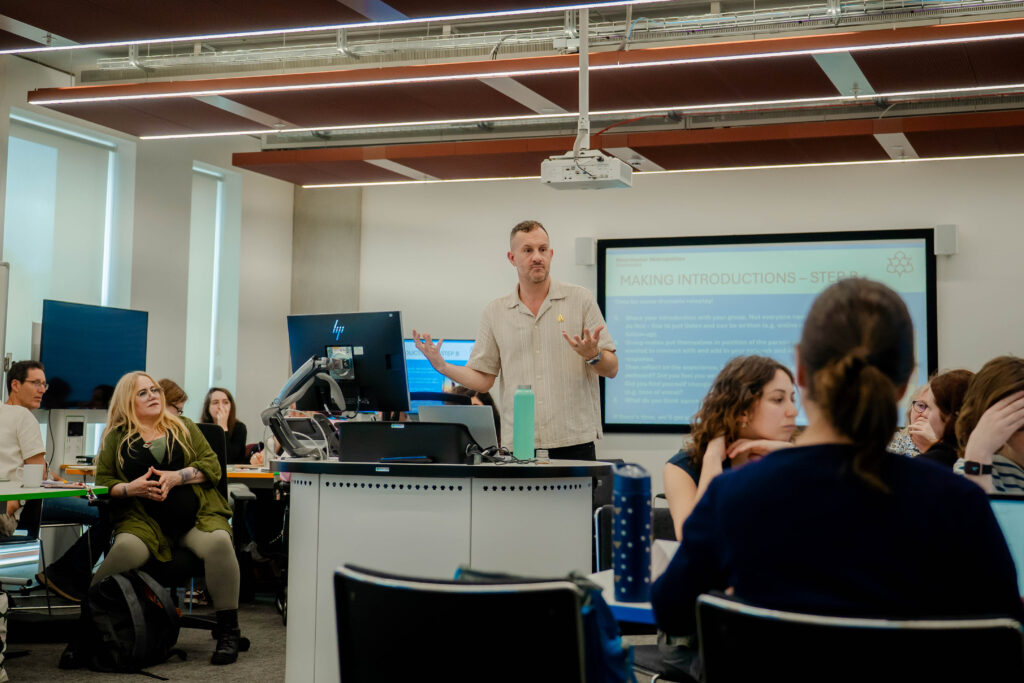
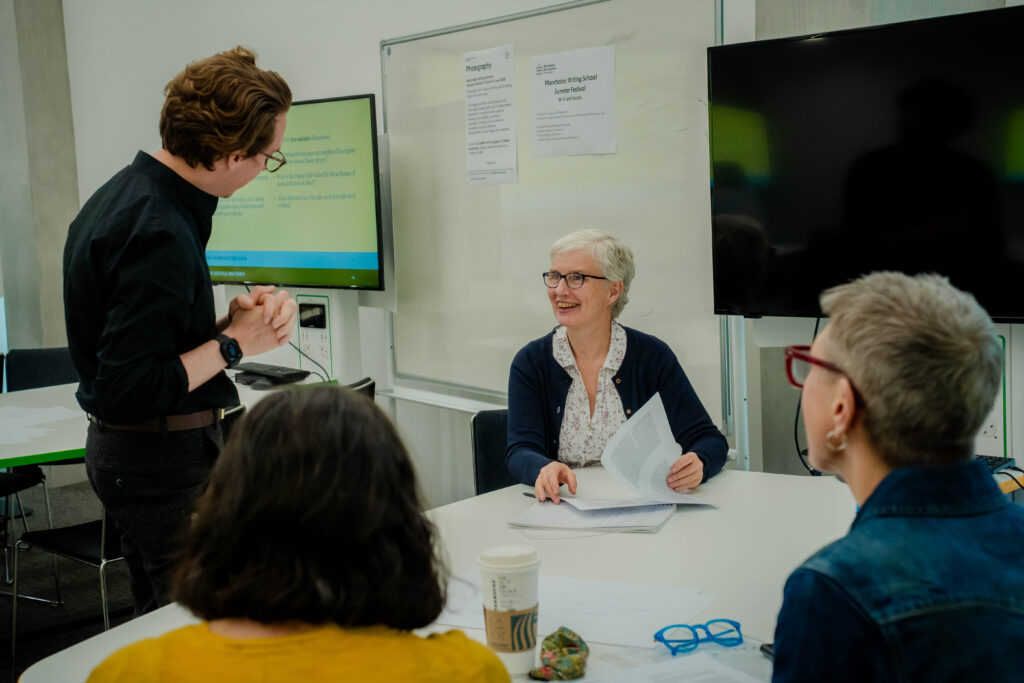
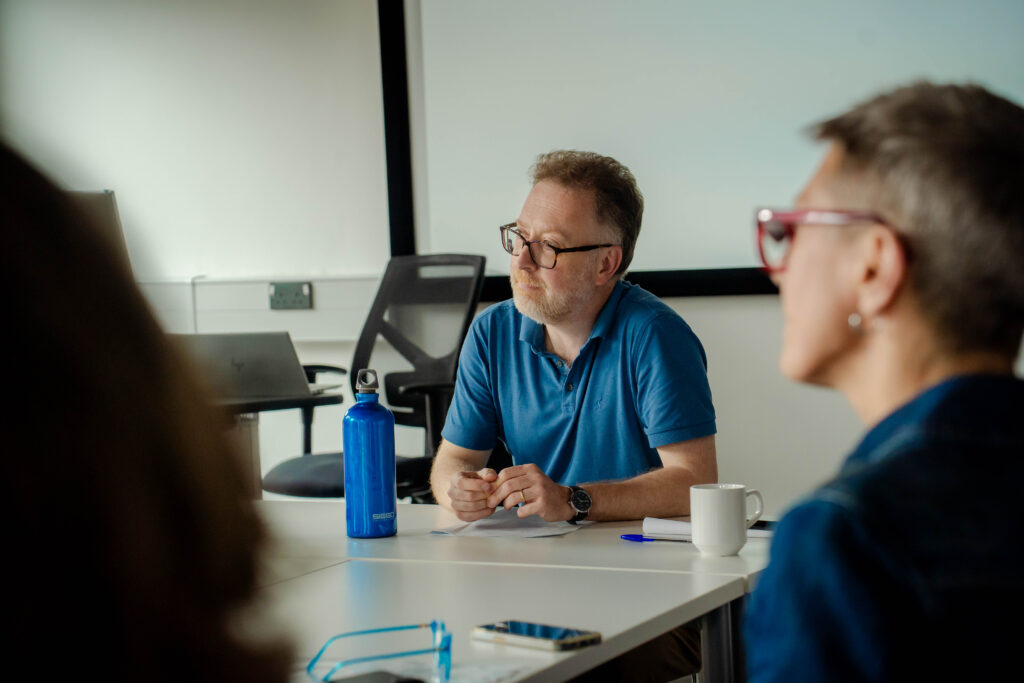
The following morning offered participants a choice between two very different sessions. “Is It What You Know or Who You Know?”: Networking Skills for Creative Writers, led by James Draper, approached professional networking as a way of building a genuine creative relationships, rather than as a calculated exercise.
Participant Julie admitted that she had initially been apprehensive about the word “networking” but the session changed her perspective. Rather than thinking about where to meet someone useful, writers can think about the people you want to connect with and find the most natural way to approach them – like a true fan.
At the Manchester Poetry Library, Elemental: Jean Sprackland in Conversation with Martin Kratz, explored Sprackland’s new poetry collection Goyle, Chert, Mire, and the process of transforming poetry into an exhibition.
Participant Radical, a poet, painter and installation artist who recently completed his bachelor’s degree, attended to explore what poetry might look like when presented standing alone in an exhibition space. He reflected: “Normally, I feel like writing poetry is a very solitary experience, I do it alone with no one watching. But every time I’m forced to write a poem in front of people, it’s always good.”
He opened his notebook and read aloud a line from the exhibition that had stayed with him: ‘Despite all these losses, we are still alive.’
In the afternoon, Ethics of True Crime, led by Multimedia Journalism lecturer and author Jeremy Craddock, examined how true stories can be transformed into narrative nonfiction without falling into sensationalism. Craddock explained one of the greatest challenges lies in the source material: “It’s not like fiction where you can make it up. Everything has to be verified and accurate,” he explained.
Reflecting on the session, Craddock said what surprised him most was the curiosity of participants who had never been exposed to the genre before.
Participant Julie had never read true crime, but the workshop the way she thought about the ethical responsibilities involved in writing about real people. Participant Edward, meanwhile, found the discussion particularly relevant to his own practice. He said: “A lot of the [topics] from the Ethics of True Crime will apply to my work.”
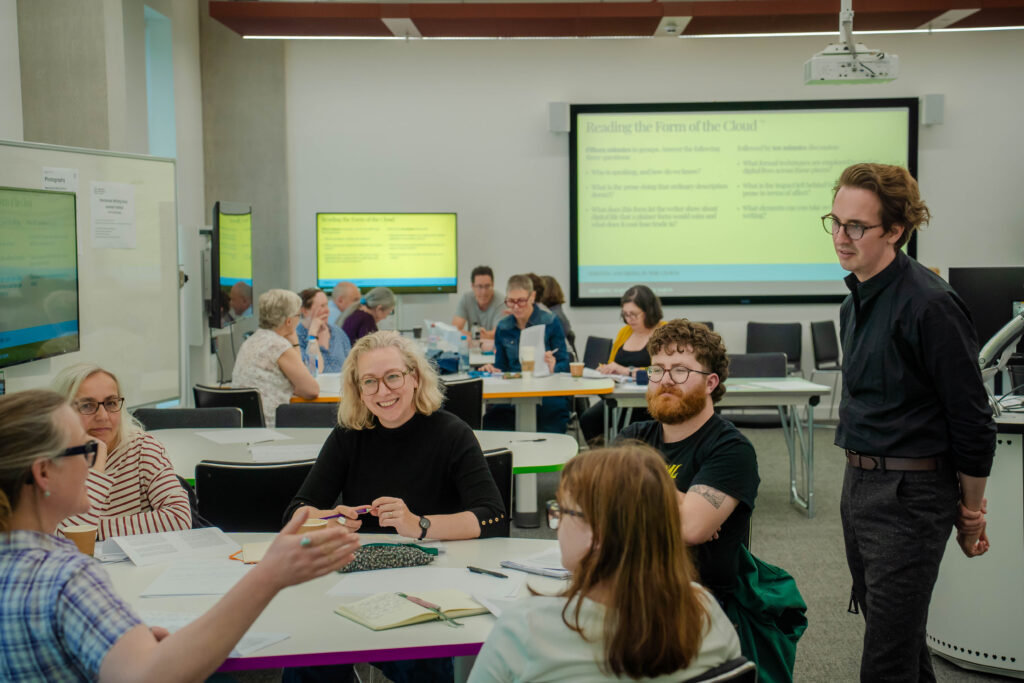
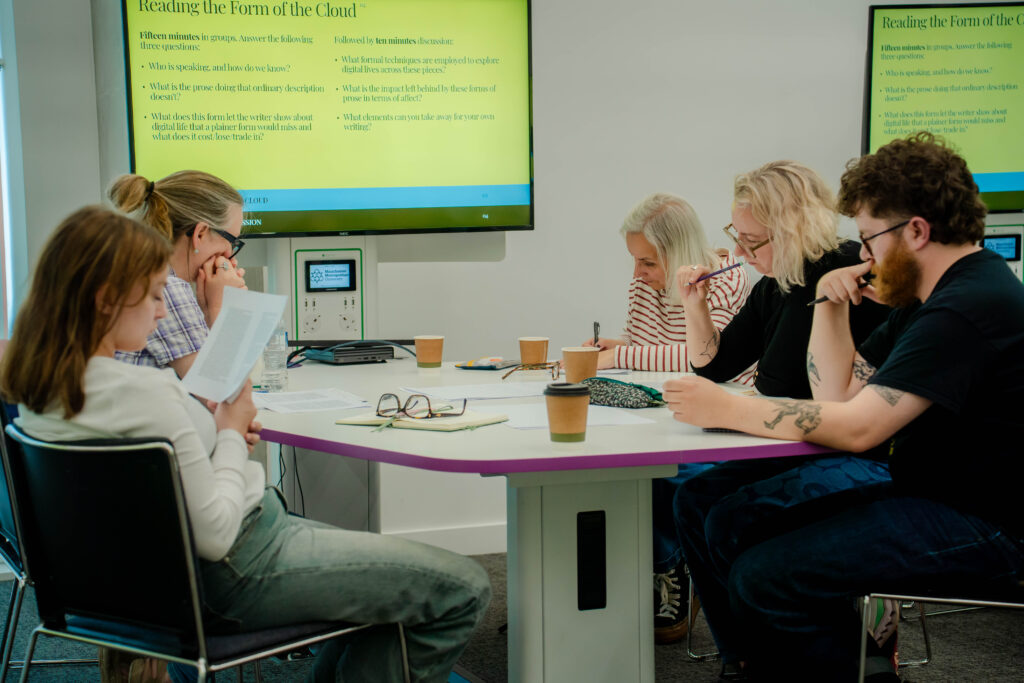
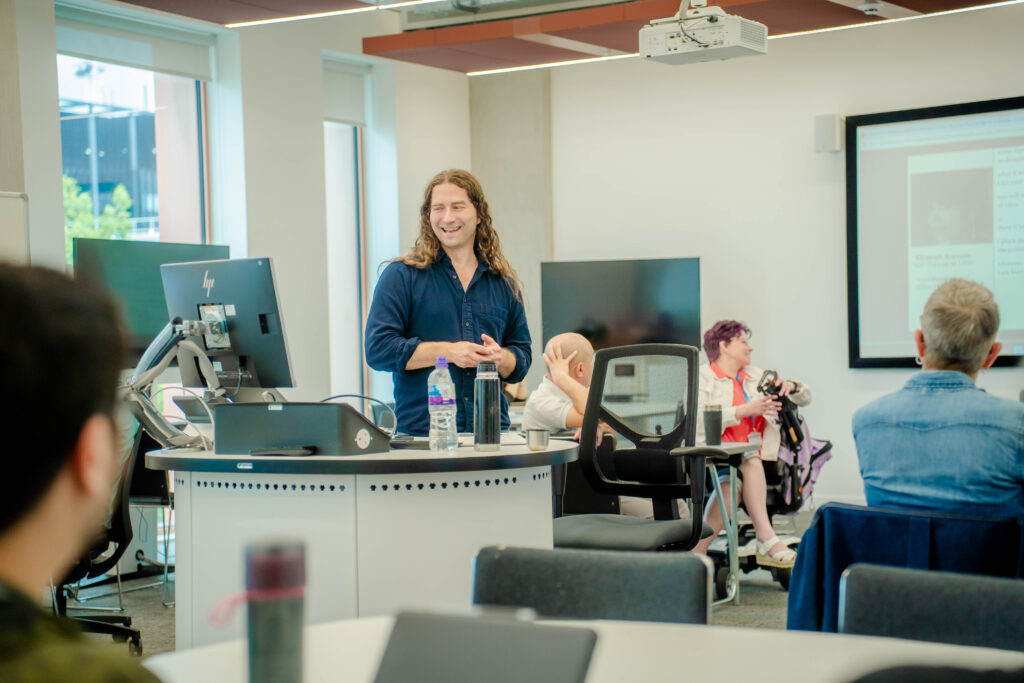
Alone in the Cloud: Fiction in the Age of Devices, led by Reuben Martens, examined how contemporary literature reflects digital life through three works: Vincenzo Latronico’s Perfection, Mary South’s You Will Never Be Forgotten, and Ben Lerner’s Transcription.
For participant Bridie, the session was also a reminder to look beyond digital life: “We’ve also got to realise that we need to go in a bit, in terms of the core of our own being, to find the truth of things.” For Niamh, the session offered a fresh perspective: “He approaches a lot of creativity from a more contemporary lens.”
The final afternoon sessions turned inward, exploring identity, memory and personal experience. The Masterclass: As If I Would Be Gone, led by poet Andrew McMillan, explored the gap between what writers dream of writing and what we actually dare to put on the page, inspired by French writer Annie Ernaux.
Participant Jane, who is currently working on her second novel, said the session stayed with her long after it ended: “I was thinking about it all night.” It also helped her make a decision about her own writing: “I’m going to try and not be embarrassed if people think it’s me. And just write anyway.”
In Moving Fiction to Non-Fiction, Gregory Normington, who recently turned to memoir after a health crisis, explored the practical questions about turning real life into a story.
Participant Rory, who drafted most of an autobiographical piece during the session, described his experience: “It’s quite touching to myself, opening some wounds of my life, but I find it quite interesting.”
June 19th: Identity, Memory and Self-Expression
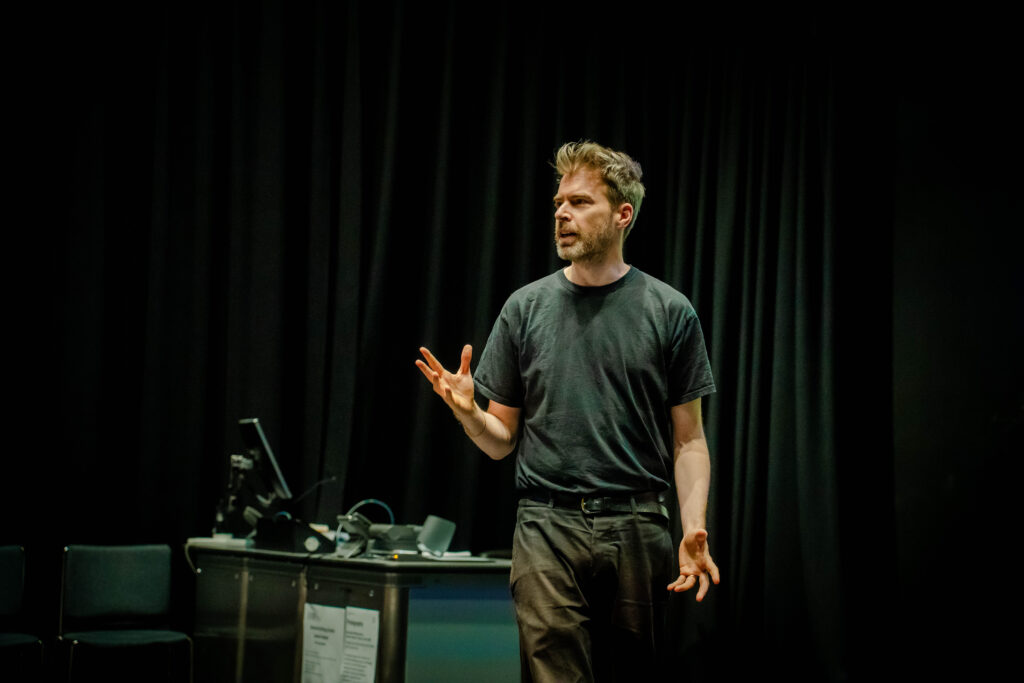
The final day began with The Power of Process: How to Write a Novel, in which author and senior lecturer and Joe Stretch focused less on technique and more on motivation, ego and control in writing.
For Bridie, the session promoted a sudden moment of self-awareness: “I’ve got such a big ego that I didn’t know. I think I can overcome and use those strategies [Joe] talked about and the shortcut to being able to write and to work hard at it.” She then laughed: “He’s got the flow. Instead of his name being Joe Stretch, he should be Joe Flow.”
Alongside this, the Inspiration Walk with Adam O’Riordan offered participants a quieter experience: a walk through Whitworth Park providing a space for conversation, reflection and inspiration.
In The Script Workshop: Creating Character, award-winning playwright Joe Ward Munrow guided participants in developing vivid characters through observation, personal experience and everyday objects.
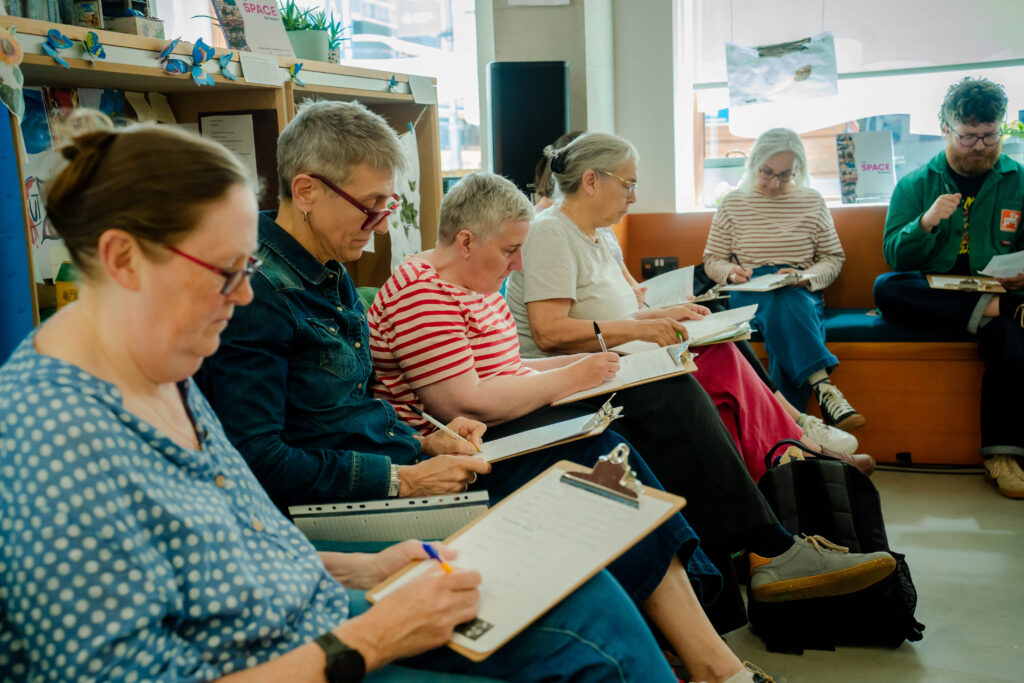
Participants chose objects from a table and used them as starting points to build their characters. Rachel chose a clothespin. “It seemed a good metaphor for the character I was describing – very upright, but with a tight spring inside them, and if another person comes along, suddenly that spring opens out.” Rory picked a child’s passport. He said the workshop helped make writing dialogue feel “fun and interesting”.
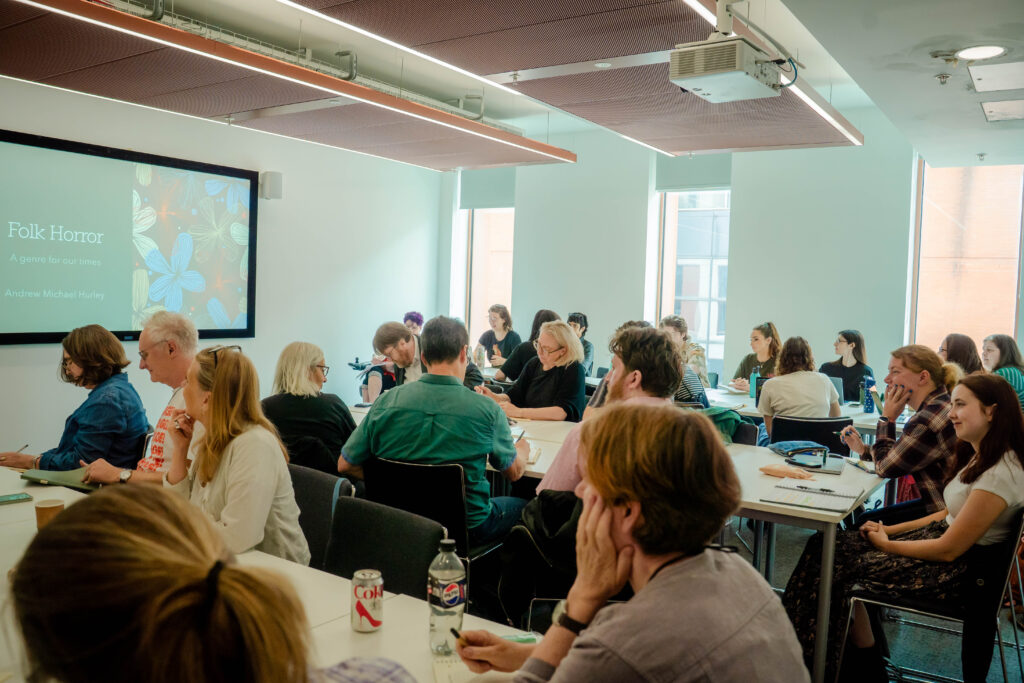
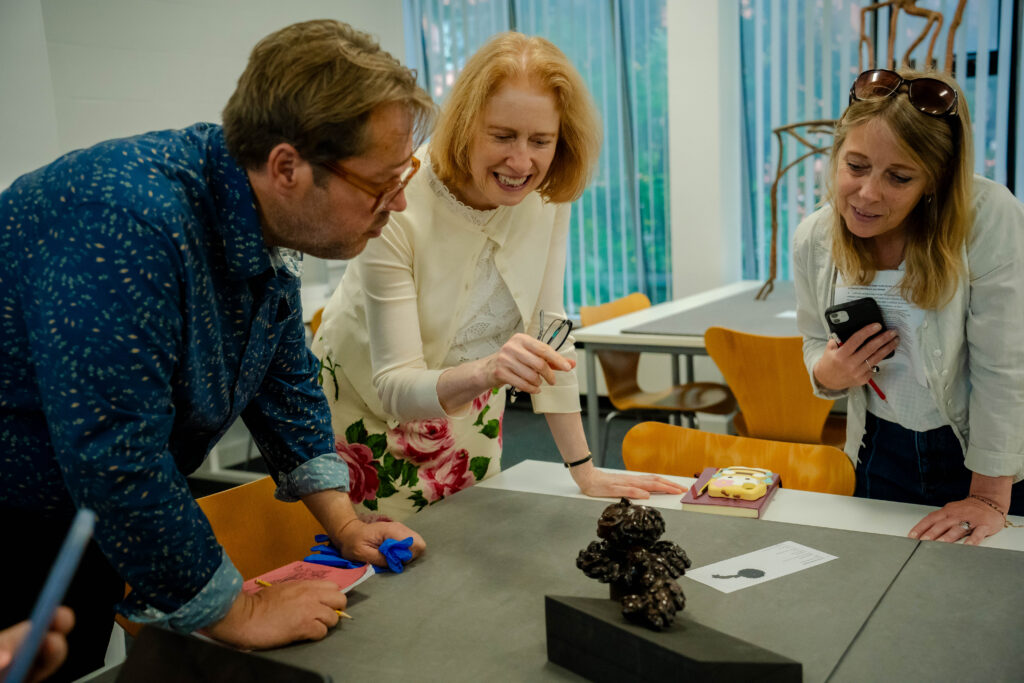
Another session, Folk Horror: A Genre for Our Times with Andrew Michael Hurley, explored how folk horror reflects contemporary anxieties around climate, identity and heritage, alongside sculptures by Australian artist Julia Robinson that examine the relationship between landscape, folklore and ritual. Rosemary, who had never been exposed to this genre before, described it as one of her favourite sessions of the festival.
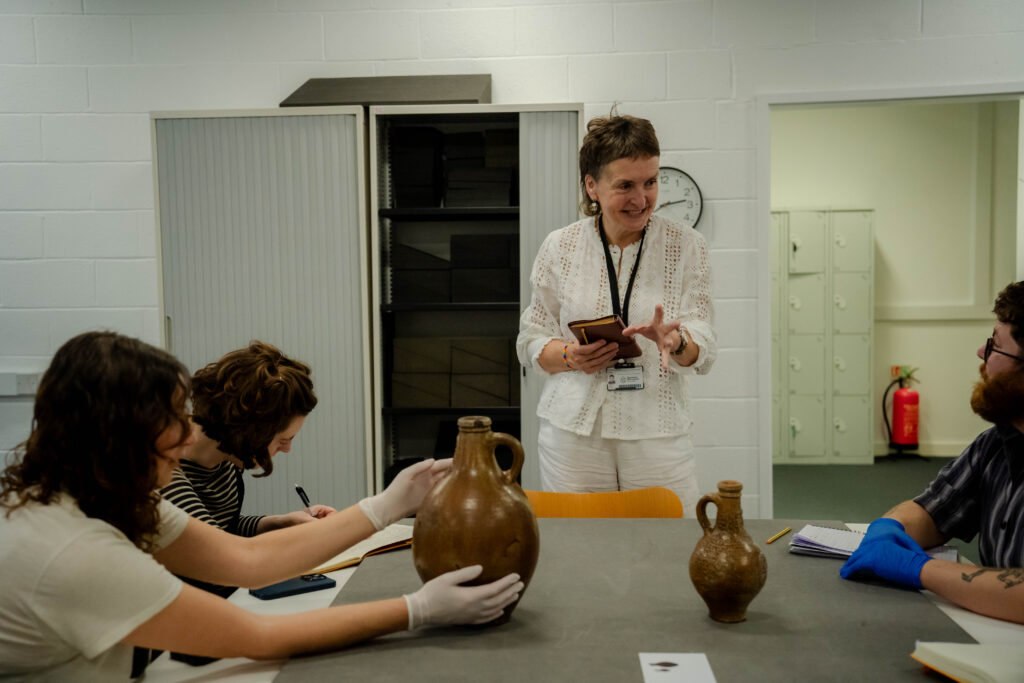
At Special Collections, The Magical Fantastical, led by senior lecturer and author Catherine Wilcox and creative engagement officer Louise Clennell, invited participants to create stories inspired by seven unusual artefacts from the collection.
Limited to 15 participants, the intimate session was ideal to those drawn to fantasy and Gothic fiction, giving them the chance to engage directly with objects carrying their own history and narrative.
Self-Portrait with a Poem, led by Brian Sneeden, invited participants to explore how poetry can capture the layered, ever-changing nature of the self.
Through close reading and guided writing exercises focused on form, detail and voice, participants experimented with different ways of revealing and reconstructing the self on the page.
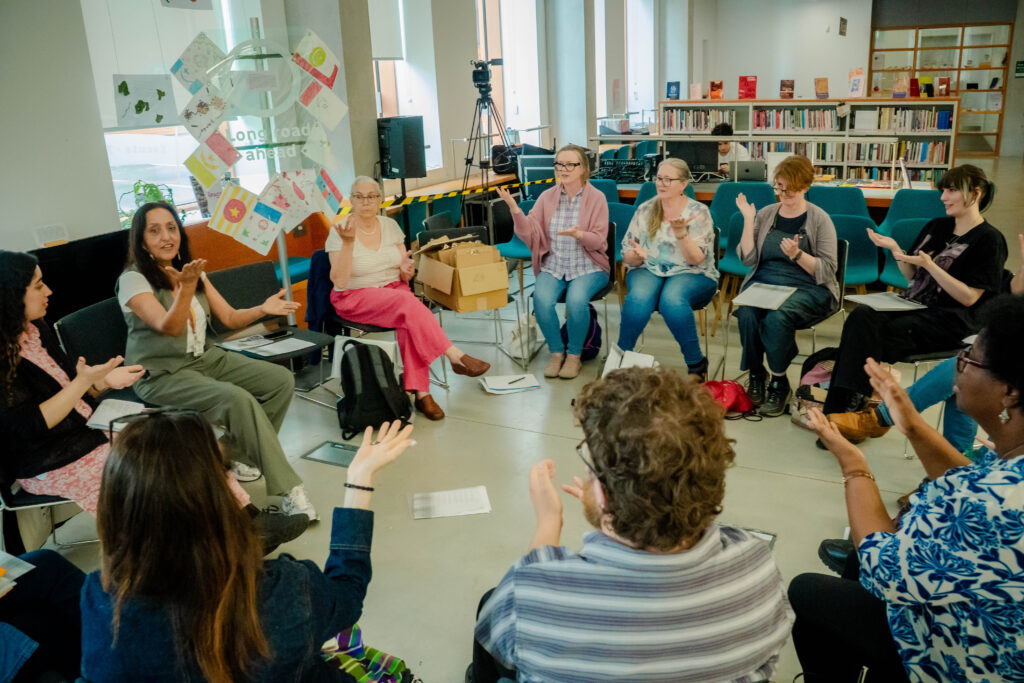
At Manchester Poetry Library, Anjuman with Anjum Malik introduced participants to the Anjuman Wah-Wah form, a poetic form Malik developed by combining the classical ghazal with the rhythm of Kathak dance.
Participants were not passive listeners. They stood, moved their hands in time with the rhythm and responded with a collective “wah-wah” as each couplet was performed. Through movement and sound, they experienced the form before writing and reading poems of their own.
Meanwhile, Confessions of a Screenwriter with Hugh Stoddart, hosted by Professor Biswell, offered an inside look at the film and television industry.
Stoddart, screenwriter of Mrs. Dalloway, The Mill on the Floss, We Think the World of You, and many other productions, discussed his collaborations with actors and directors and the highs and lows of his writing career. Video clips from his work brought those experiences to life.
The festival closed with Celebration Open Mic at Manchester Poetry Library, where participants shared what they had written over the four days: first drafts, unfinished experiments, unexpected discoveries.
Rosemary admitted she was nervous before reading her poem: “It is a bit scary when you stand up in front of people and start reading.” She added the experience had also inspired her to consider pursuing an MFA for the first time.
After more than 20 years of involvement – from the first meeting of 10 students, to a programme of 28 events – Draper and fellow organisers measure the festival’s success in ways that go beyond attendance figures or completed pieces of writing.
It is found in undergraduate students talking to MA students, alumni exchanging ideas with PhD researchers, prospective students meeting published authors, and people from completely different backgrounds connecting through a shared love of writing.
Draper believes this freedom is what makes the festival special: “We’re not within the curriculum here; we can do sessions to test out new ideas, do things that we’re excited by, and not have to worry about it being part of the curriculum or being assessed.” For him, that freedom gives the festival “a real sense of celebration and freedom” – and, ultimately, “joy”: a joy of discovering new ideas, finding a community and realising that there are still many stories left to tell.
Participants left with new ideas and connections, as well as renewed confidence in their creative voices. For some, the festival also offered a chance to return to writing, begin something new or take the next step in their creative journey.
Featured image and gallery: Hoang Phan Notebooks were carried from one workshop to another. Writers from different generations sat around tables, sharing manuscripts and listening to each other. Outdoors, small groups strolled along Oxford Road, pausing before buildings steeped in literary history. This was the scene during the Manchester Writing School Summer Festival 2026, held…
Featured image: Katja Ogrin With many sore heads and limbs this morning after the most hardcore day of the festival taking place yesterday, many are recovering from the moshing and pit brutality of the previous day’s antics. As the tradition of a morning movie in the Serpents Lair prevails, the crowd sprawls out onto the plush,…
Featured image: Abbi Draper After an electrifying start to the weekend, with temperatures slowly climbing, many lather themselves in suncream, shed their band shirts and rise from their tents to trek towards the arena. Saturday has big things incoming for the humans of Bloodstock 2026. Some pace themselves for the day and hide from the early…
Featured image: Abbi Draper After a memorable Thursday opener, Bloodstock 2026 opens its gates once again onto the Hallowed Grounds of Catton Park, kicking off day two of its 25th-anniversary celebration of metal. As the sun rises on Catton Park, festivalgoers emerge from their tents to prepare for another day of mayhem. The morning brings…




Leave a reply