You are here:Home / Culture / Features / Literature / Manchester / News / Pens at the ready as Manchester Writing Competition returns – new judges reveal what makes a winning entry
International £10,000 Poetry and Fiction Prizes are open until 5pm on 28th January 2022
One of the nation’s biggest literary awards is back as the Manchester Writing Competition 2021 invites writers to be in with a chance of winning £10,000. Established in 2008 by the Manchester Writing School’s very own Carol Ann Duffy (UK Poet Laureate 2009-2019), the competition has shone a spotlight on a wealth of talented poets and short story writers, awarding over £200,000 across its twelve years running.
Priding itself on “celebrating Manchester as an international city of writers”, the competition is focused on finding diverse new voices, creating opportunities for writer development and exploring unique and evocative unpublished fiction and poetry.
This year’s judging panels will feature Manchester Metropolitian’s lecturer Malika Booker and Reader Nicholas Royle, as well as Filipino-British poet and editor Romalyn Ante, Birmingham writer Zaffar Kunial, author and essayist Simon Okotie, and poetry and prose writer Hilaire.
But what makes a £10,000 prize-winning entry? aAh! speaks to new Manchester Fiction Prize judges Simon Okotie and Hilaire, as well as 2020 Fiction Prize winner Ian Dudley for their insight on the competition, and tips on how to be a ‘successful’ writer.
The Manchester Writing Competition is a highly influential literary showcase for new work in the country, and though the luxurious prize money would be extremely beneficial to just about everybody, the achievement of winning holds much more than its monetary value. “The most important thing about winning was that it gave me confidence, and that confidence made me much more ambitious,” shares Ian Dudley. “Winning made me want to do more and better, and really stretch myself.”
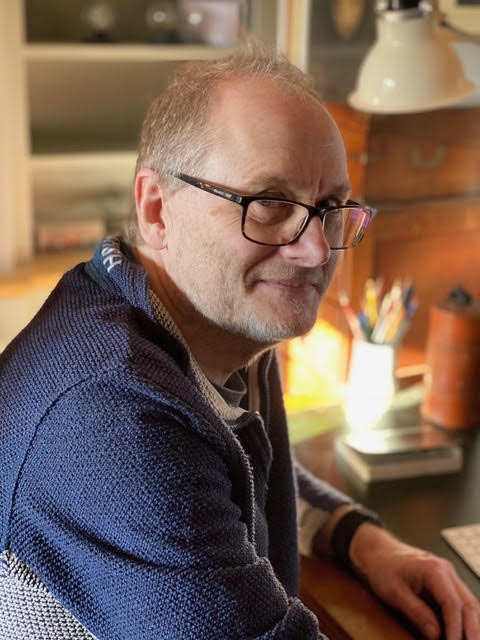
Credit: Ian Dudley
Currently studying for a PhD in Creative Writing at the University of Birmingham, the Black Country-born creative entered the prestigious competition thinking “it would be wonderful if I won”. Dudley was delighted to be shortlisted, then absolutely shocked to be crowned the prize winner. His beautifully macabre entry Exit Row impressed the judging panel for its “un-nail-down-ability”. Humble about his acclaim, Dudley commends the competition for being “welcoming to all types of poetry and prose” and “bringing great writers to a new and larger audience”.
Keep a hopeful eye out for the experimental novel Dangerous Equals [Working Title], Dudley’s first foray into historical fiction. But, being a man of superstition and not to hold empty promises, the winner didn’t want to divulge more into his upcoming work: “We plan, God laughs.”
Dudley is just one of the many success stories derived from the Manchester Writing Competition, and this year’s judges cannot emphasise the grand impact the awards can have on a writer’s career. Manchester Fiction Prize judge and author Hilaire shares that being even shortlisted raises a writer’s profile, brings their work to a wider audience, and offers “a sense of affirmation”.
This year will mark Hilaire’s first time on the judging panel. She reveals “there’s no formula” to a winning entry. She says, “I want to be moved in some way by a story, for it to stay with me, because it’s intriguing or unsettling, or slow to reveal its meaning […] Personally, I like a bit of atmosphere, a sense of place (real or imagined), and seeing the world through someone else’s eyes. But I also enjoy stories that surprise me in their approach.” The competition wants inventive, surprising entries that play with emotions, unafraid to be different and push boundaries.
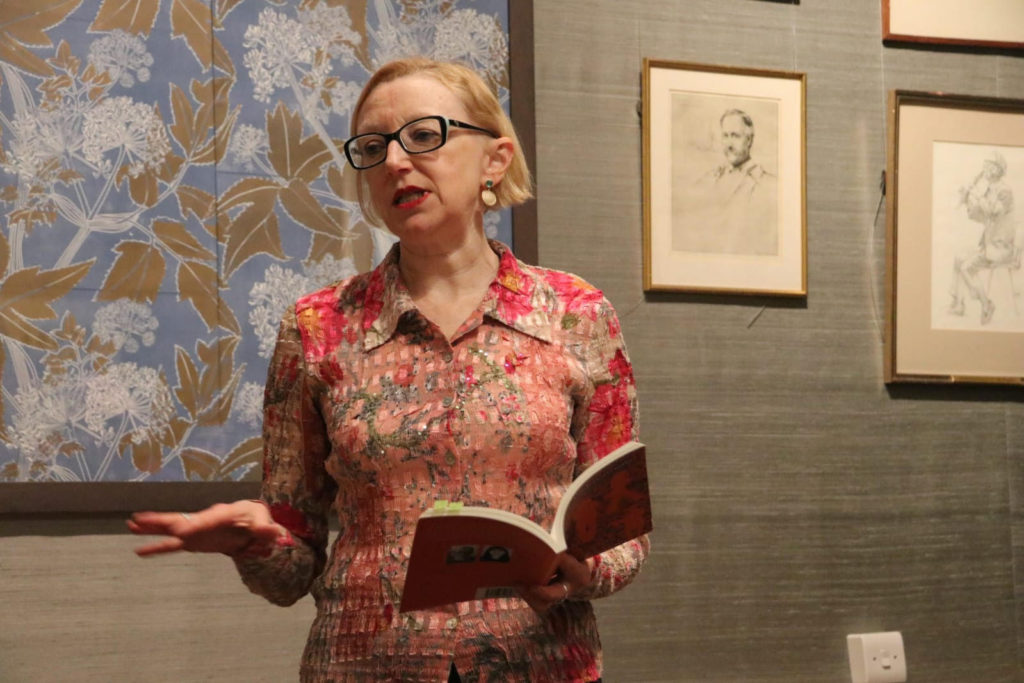
Hilaire at London Undercurrents launch. Photography: Rohima Mirza
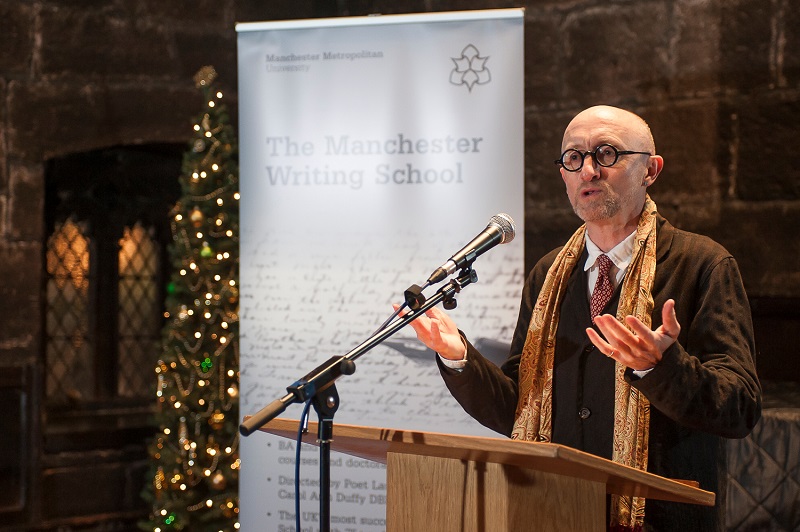
Also fresh to the judging roster is acclaimed author and essayist, Simon Okotie. For Okotie, a winning entry has “an exceptional beginning, middle and end”. He is looking for a story that grabs him from the first line and takes him on a thought-provoking literary rollercoaster. Drawing on the words of Joseph O’Connor, Okotie wants to experience “‘a quiet bomb; a moment of profound realization’”.
The Nigerian/English author holds competitions, like the Manchester Writing Competition in high regard, advocating their importance: “In modern society […] writing is important.” Literary competitions allow writers to create and sustain a notable career and have provided Okotie himself with “a useful structure throughout [his] writing life and, perhaps most importantly, a number of immovable deadlines!”
This year’s judging panel is host to a plethora of knowledgeable and celebrated authors, the pros of the prose if you will. Okotie’s ‘Whatever Happened to Harold Absalon’ was longlisted for the 2017 Republic of Consciousness Prize and is the first novel in an applauded trilogy. Hilaire’s latest work ‘indoors looking out’ features haikus and tankas surrounding her own observations made in lockdown, decorated in a collaboration with artist Stephan Graham.
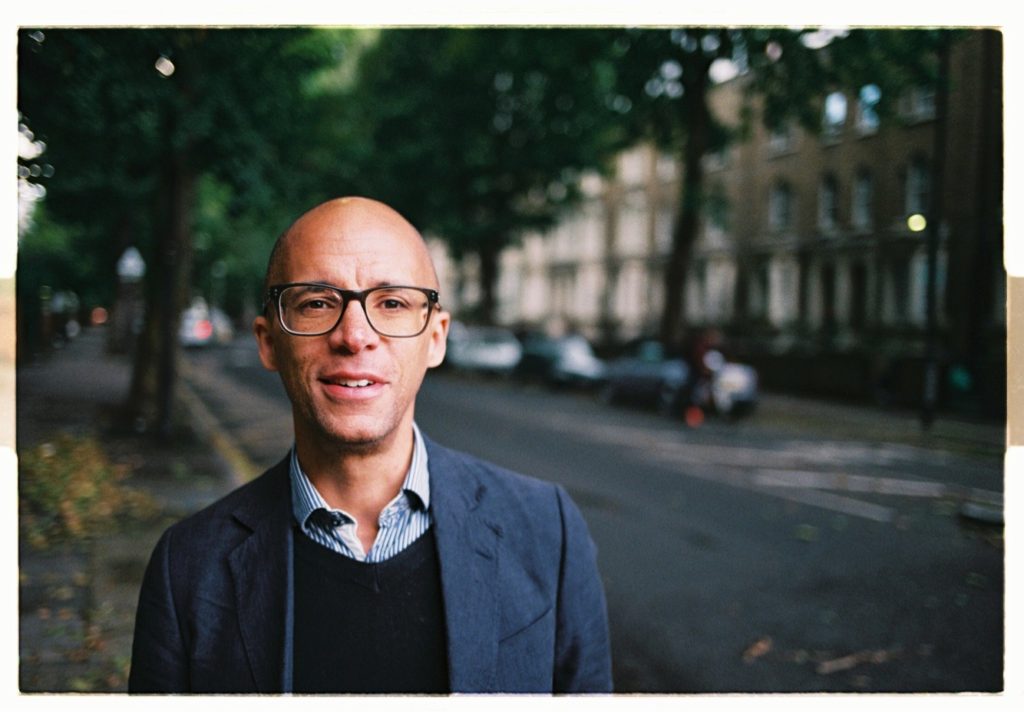
Simon Okotie. Photography: Evgeniy Kazannik
Dudley, Hilaire and Okotie all acknowledge that the journey of being a writer is not one of ease, even with career catalysts like the Manchester Writing Competition. However, with experience in the industry, they’ve acquired useful advice over the years. Dudley confesses that “becoming a writer requires hard work and perseverance” and recalls a Jeanette Winterson maxim to “be ambitious for the work and not the reward”. He also puts emphasis that every writer faces crippling doubt in their work, so you need to believe in your ability to finesse your craft even further.
Hilaire shares her top writing advice: “Read, and read widely. Read for pleasure as well as to learn from other writers.” She recommends reading your writing out loud, spending the time improving your work, and the importance of taking breaks: “It’s fine not to write.”
Okotie’s most impactful advice on writing was given to him by Nigerian poet, Ben Okri who told him: “It’s good to have something to fall back on.” But Okotie has transformed that simple sentence to have two meanings; the obvious, to have “an alternative source of income, but one that leaves sufficient time, energy and money to write and – crucially – to read”. The second is to think about what exactly you want to say. Choosing a writing path that is “sufficient” is crucial for longevity in the business.
The world of writing has changed significantly over the tumultuous years we have collectively experienced, but a common thread that arose from the darkness is this sense of community. Sometimes when the writing’s on the wall, all you can do is write. Weekly video meetings with writing groups and loved ones gave inspiration and hope to put pen to paper again and online events introduced accessibility and inclusivity to people all over the world. And of course, literary events like the Manchester Writing Competition reinvigorated people’s love for writing and highlighted how creating prose and poetry can truly change someone’s life and open so many doors.
Okotie summarises this sentiment best: “I feel excited at the prospect of starting the new year full of stories.”
Our 2021 international Manchester Writing Competition is open to entries until 28 January. £10,000 prizes for poetry and short fiction. Find out more, read previous winners and submit your poems and stories at: https://t.co/KRrtz6WUwCpic.twitter.com/BdXtuDQzKu
Find more information on the Manchester Writing Competition website including how to submit and eligibility. The deadline for the 2021 competition is Friday 28th January, 2022 at 5pm (GMT).
Follow the Manchester Writing School on Twitter and Facebook.
Writer | Student Editorial Assistant - aAh! | English Literature and Creative Writing Student | Just Happy To Be Here | Not Sure How To Change My Profile Picture |
Featured image and gallery: Hoang Phan Notebooks were carried from one workshop to another. Writers from different generations sat around tables, sharing manuscripts and listening to each other. Outdoors, small groups strolled along Oxford Road, pausing before buildings steeped in literary history. This was the scene during the Manchester Writing School Summer Festival 2026, held…
Featured image: Katja Ogrin With many sore heads and limbs this morning after the most hardcore day of the festival taking place yesterday, many are recovering from the moshing and pit brutality of the previous day’s antics. As the tradition of a morning movie in the Serpents Lair prevails, the crowd sprawls out onto the plush,…
Featured image: Abbi Draper After an electrifying start to the weekend, with temperatures slowly climbing, many lather themselves in suncream, shed their band shirts and rise from their tents to trek towards the arena. Saturday has big things incoming for the humans of Bloodstock 2026. Some pace themselves for the day and hide from the early…
Featured image: Abbi Draper After a memorable Thursday opener, Bloodstock 2026 opens its gates once again onto the Hallowed Grounds of Catton Park, kicking off day two of its 25th-anniversary celebration of metal. As the sun rises on Catton Park, festivalgoers emerge from their tents to prepare for another day of mayhem. The morning brings…




2 Comments
That helped me think more about my application Robbie, thanks – wouldn’t worry about your picture, you should see my passport photo …….
Beautiful photography