
Humanity Hallows Issue 6 Out Now
Pick up your copy on campus or read online
Final year Linguistics student David Heffer tells us about his experience of attending the Language Variation Conference at the University of Suffolk
By David Heffer
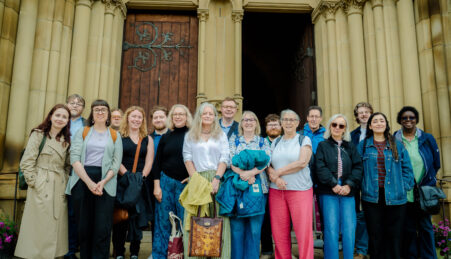
As a Linguistics student originally from Ipswich in Suffolk (who explored the influence of age and identity on the use of the local dialect in my hometown), it was a fantastic experience to attend a Language Variation Conference, hosted at the University of Suffolk. The conference was attended by a few undergraduate students based at the University of Suffolk, postgraduate students from across East Anglia and acclaimed linguists like Susan Fox and David Britain, to discuss Language Variation across the South of England.
The motivation behind my Independent Research Project was a perceived change of the Ipswich dialect, with younger speakers appearing to use less traditional dialect features, particularly so when compared to the younger population of a northern town like Wigan. This aligned with the contemporary research and topics discussed at the conference, including Multicultural London English (MLE), which inspired Manchester Met’s Rob Drummond in his own research on Multicultural Urban British English, and the disappearance of the ‘rhotic r’ in the south west of England, where speakers pronounce the consonant ‘r’ in words like hard or butter.
However, as an East Anglian boy at heart, it was most interesting to hear about current research exploring dialect attrition (or loss) in the region, with younger generations using less traditional speech features, including the use of local phrases and/or accents. The keynote speaker David Britain has published lots of research in this field, and it was a pleasure to hear him speak about his research on the pronunciation of short front vowels in Suffolk, although less of a pleasure to hear it is another feature being lost. Britain attributes the loss of dialects in the South of England to high levels of commuting, alongside ongoing ‘counterurbanisation’ with huge numbers of Londoners moving out of the city to rural areas like East Anglia, influencing the speech in the region. This has not had as much influence in Greater Manchester or across the North of England, where an array of traditional dialects are still widely spoken, although the high student population and diversity in the centre of Manchester has certainly had an impact. This has been the focus of the Manchester Voices project led by Erin Carrie and Rob Drummond, looking at accents and dialects across Greater Manchester and which I helped to collect data for. More info about this project can be found at: http://www. manchestervoices.org/.
In a more socially mobile and increasingly diverse United Kingdom, language and speech will continue to change, but the conference was a fascinating insight into current research in the South of England, with attendees acknowledging this region has often escaped the focus of linguists, unlike the North where local dialects appear to be better resisting these influences. It was an incredible experience to represent Manchester Met, the Manchester Voices project and the Linguistics section at this conference, and meet such highly acclaimed peers in the field, inspiring my own plans for future research.





Leave a reply