
La bola negra film review – Literature as a living force
By Maria Ferrero Cuadrado | Featured image: Press
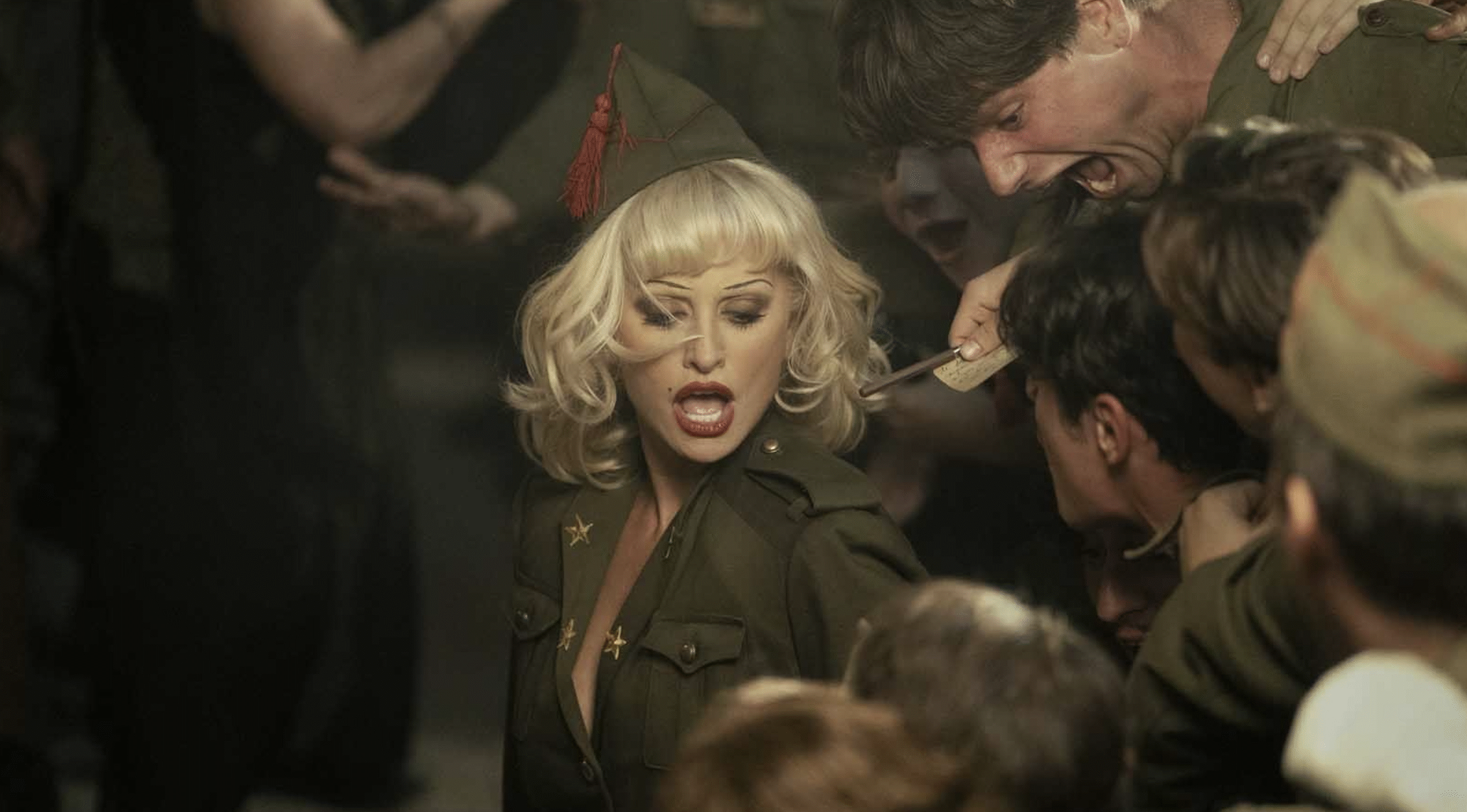
Literature is alive, capable of mutation and collaboration, even across time. Drawing on the writing of Federico García Lorca, one of Spain’s most celebrated poets and playwrights, and contemporary Spanish playwright Alberto Conejero, filmmakers Javier Calvo and Javier Ambrossi (collectively known as The Javis) created La bola negra (The Black Ball), a Spanish drama released in the UK and Ireland this November.
The film weaves together three queer timelines, all infused with the pain of the Spanish Civil War (1936-39), a conflict between Republican and Fascist forces that led to decades of dictatorship. It also depicts an intricate intertextual relationship between poetics, scriptwriting and the memories we leave behind, reviving emotive stories of love that were never realised, both because of the Civil War and the totalitarian dictatorship that followed.
Within this narrative context, desire, identity and ‘duty’ form an emotive collage. For me, as a Spaniard, it is the most important film to come out this year, not least because it engages with a historical past whose cultural influence seeps down generations.
The upcoming elections in Spain could bring a right-wing coalition government. Half-jokes are circling online about the first things that might be censored should that happen, including books and songs. Art that reclaims the shadow of the Civil War is therefore a continuous source of resistance to those aware of how conditional our rights can be.
The film’s most contemporary storyline, set in 2017, also represented some conversations with my own family. Alberto, a historian and scriptwriter, attempts to learn more about his personal history and the attitudes he has inherited, the explanations for which are obscured by shame and custom. The beauty imbued in the film, however, held my hand through the inevitable tragedies, leaving me introspective rather than devastated.
The earliest timeline of the film is set in Granada, during Spain’s Second Republic (1931-39), a democratic period preceding Francisco Franco’s dictatorship, in the years leading up to the military coup of 1936. Carlos, a young boy from a wealthy family, is ‘blackballed’: his application for membership to the city’s casino is rejected because of his sexuality. The casino worked as a gentlemen’s club, where membership was required to justify a man’s place within the bourgeoisie of the city. This ‘black ball’ gives the film its name and follows the premise of Lorca’s unfinished play.
Carlos’ story, as imagined by Lorca, is lost in the ether. The poet was shot by fascists near the beginning of the Civil War, before he could complete his work, which remains forever unfinished at just four pages long.
It seems that Lorca intended the play to be called La piedra oscura (The Dark Stone) instead. For Alberto Conejero, the film’s third screenwriter alongside the Javis, this suggests a more poetic conception of the plot’s literal ‘black ball’.
Indeed, Lorca’s poetry is explicit in the film, where snow emerges almost as a protagonist. Guitarricadelafuente, a Spanish singer-songwriter, and actor in the film, wrote ‘La Nieve’ (The Snow) for the movie, inspired by ‘El amor duerme en el pecho del poeta’ (Love sleeps in the poet’s breast). This song plays during a mesmerising sequence in which Granada is covered in deep snow.
Just as snow was a character in Lorca’s unfinished play, the snow in these scenes is a maternal entity whose emotional embrace contrasts, both visually and symbolically, the rejection of the black ball. In the subsequent timeline, which takes us back to imagined encounters before Lorca’s death, a character called Rafael tells Lorca that he will never manage to write something without poetry, as it will inevitably end up “snowing in summer”.
Rafael, who eventually fights on the Republican side, later forms a connection with Sebastián, a young Nationalist soldier, in 1937. Like Lorca, Rafael Rodríguez Rapún was a real person. Historians believe it likely that Lorca wrote certain verses of Sonetos del amor oscuro (Sonnets of Dark Love) for Rafael, who died fighting for the Republic one year and one day after the poet.
‘El amor duerme en el pecho del poeta,’ part of the poetry collection, is recited repeatedly throughout the film, particularly these lines:
“Tú nunca entenderás lo que te quiero
porque duermes en mí y estás dormido.”
“You will never understand how much I love you
because you sleep in me and are asleep.”
Our own reflection might terrify us, especially in contexts that discredit, ridicule or vilify the complicated pieces that make up our whole. In the film, this is certainly sexuality, but it is also self-expression. Being awake.
Engaging with the fear that stops us from living, and the self-censorship that keeps us asleep, is how the film urges us to live and love as much as possible. It does so through artistic interpretation of literature, the magic of poetics, and the essence of real people. How else do we accompany our mundane toils, if not with the feelings that words, colours and rhythms inspire in us?
Death is therefore not the full stop it claims to be. When we hold our heart in the opposite fist to our pen, we are empowered to refute a painful past that could still materialise as an allegorical, or literal, figure, dictating our identity over our shoulder. La bola negra, despite its depiction of emotional and social disasters, reminds us that artistic liberty, and the freedom to love and accept that love, must be cherished always.