You are here:Home / Culture / News / ‘Black in the Game’ exhibition review – a critical celebration of Black footballers and their contributions to the not-so-beautiful game
From black football pioneers to modern success stories, Black in The Game effectively portrays the challenges and triumphs of black footballers in an eye-opening exhibition.
Black in the Game is more than just a celebration of the contribution of black footballers to football. It’s also a reckoning of the challenges and prejudice that have filtered through – and often tainted – the (sometimes not-so) beautiful game.
Launched during Black History Month, Black in the Game moves through time, pairing compelling memorabilia and visuals to seamlessly guide visitors through the stories of pioneers like Andrew Watson – the first black international footballer – to modern stars including Marcus Rashford and Michelle Agyemang.
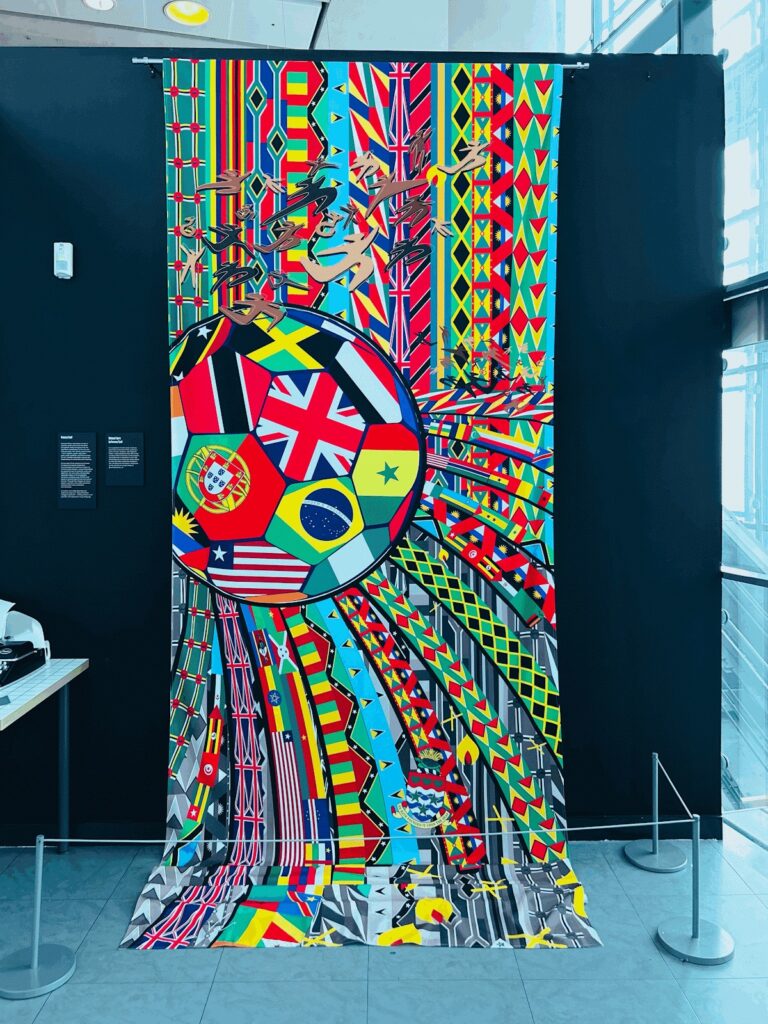
Walking into the Black in the Game, visitors are greeted by an array of colours and flags draped across the wall. Contemporary artist Venessa ‘Vee’ Scott’s, ‘National Fabric’ is a vibrant centrepiece that powerfully captures how a shared love of football can unite people of all nationalities.
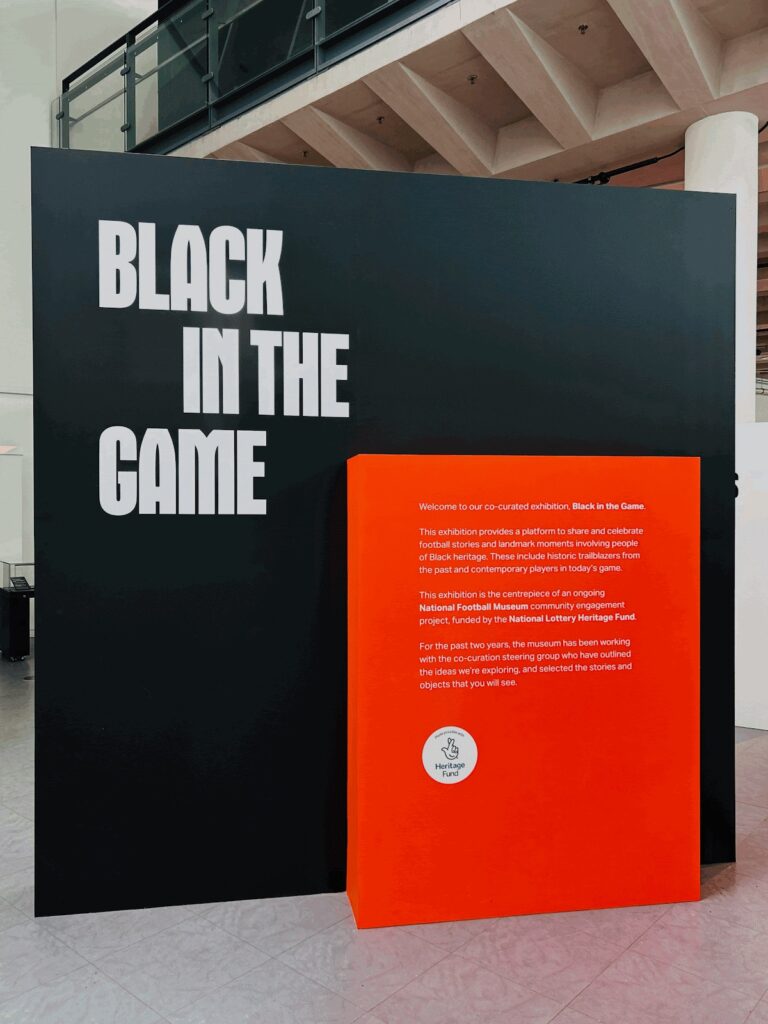
Looming large at the entrance, a bold Black in the Game sign immediately announces the exhibition’s presence, ensuring its story is impossible to ignore. This exhibition isn’t just tucked away in a corner, it loudly and unapologetically aims to tell the story of black footballers through time.
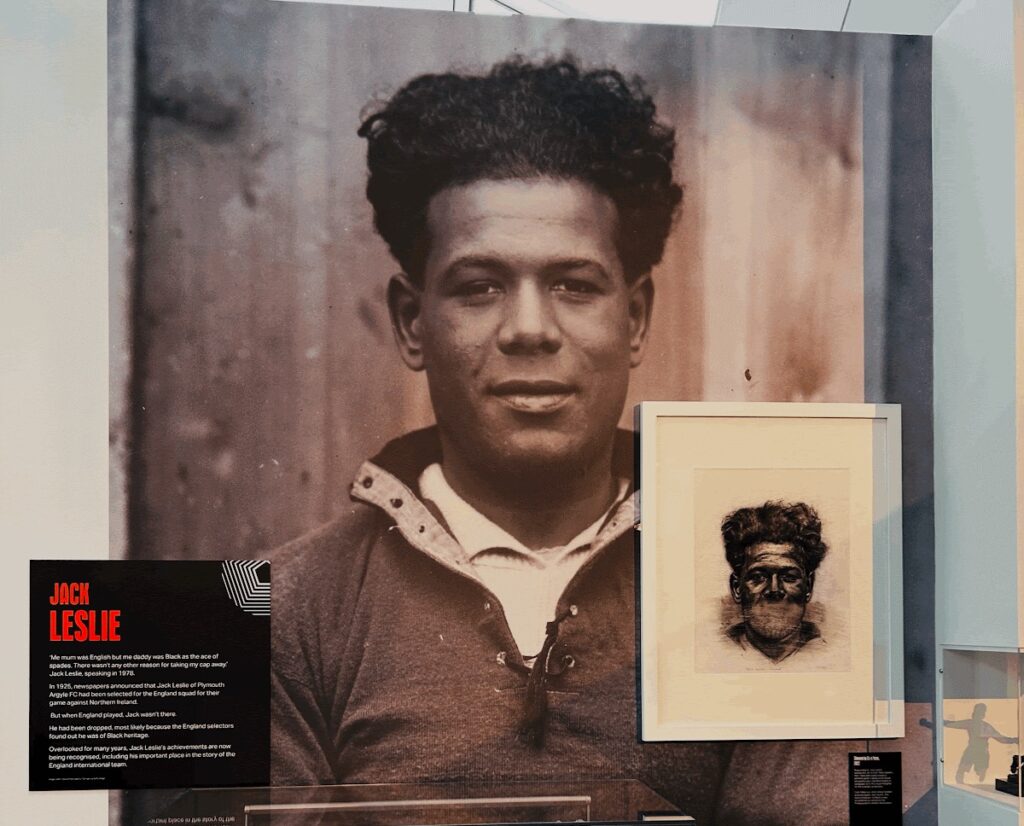
Nearby, a striking portrait of Jack Leslie dominates the wall to the left. As imposing as the portrait is, it pales in comparison to the legacy he left behind. Leslie, the first Black player selected for England in 1925, was ultimately left out of the squad, “without good reason,” likely due to his ethnicity – a stark reminder of the barriers he faced.
Fast forward 100 years to 2025, and while there is still a way to go, Black in the Game demonstrates that the playing field has levelled over time.
Showcasing this is Michelle Agyemang’s match-worn shirt from the 2025 Women’s Euros Final, proudly on display as an example of the success of black players in the modern game.
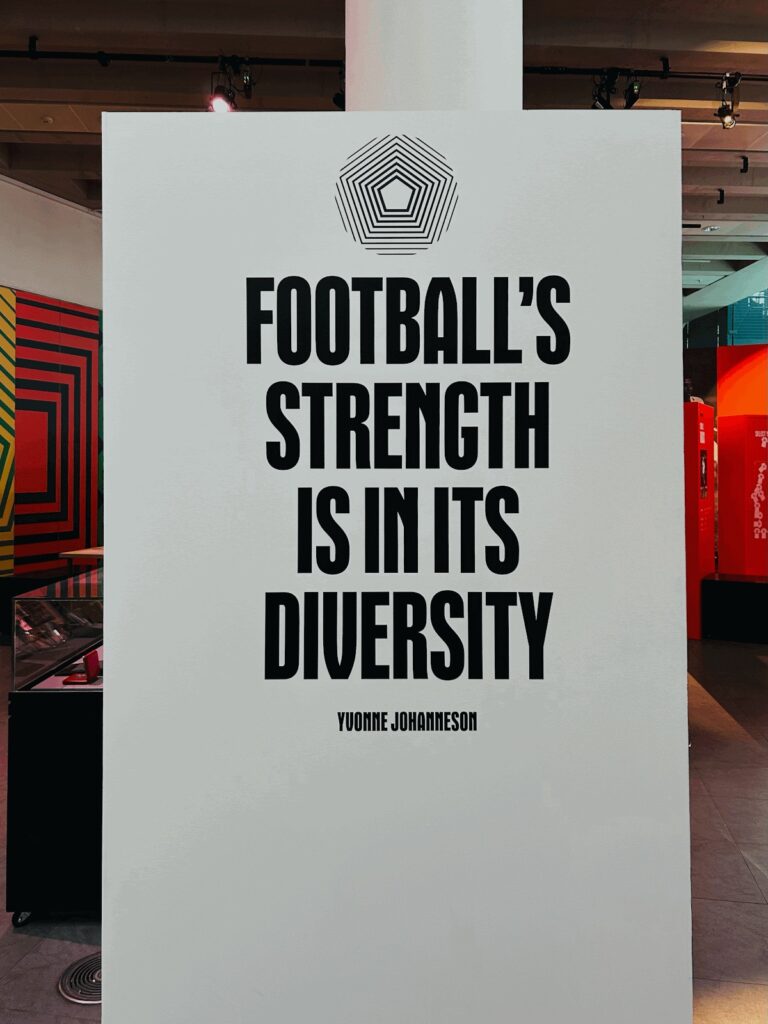
As well as black players, the exhibition creates space for other groups typically marginalised in football, including women and the LGBT+ community. To quote Yvonne Johanneson, the daughter of Albert Johanneson – the first player of African heritage to play in the FA cup final – “Football’s strength is in its diversity.”
To create this inclusive space,memorabilia, trophies and photographs from teams such as Northwood Ladies and Lady Blues FC are featured. This homage to the history of women in football is a sobering reminder of the long, hard fight women have endured to be recognised in the footballing world.
Black in the Game also makes space for the LGBTQ+ community in football. Tributes are left to Justin Fashanu, the first professional footballer in the UK to come out as gay. Displayed proudly above his England shirt is the ‘Proud Canaries’ banner, promoting the LGBT+ fan group of Norwich City, who Fashanu played for.
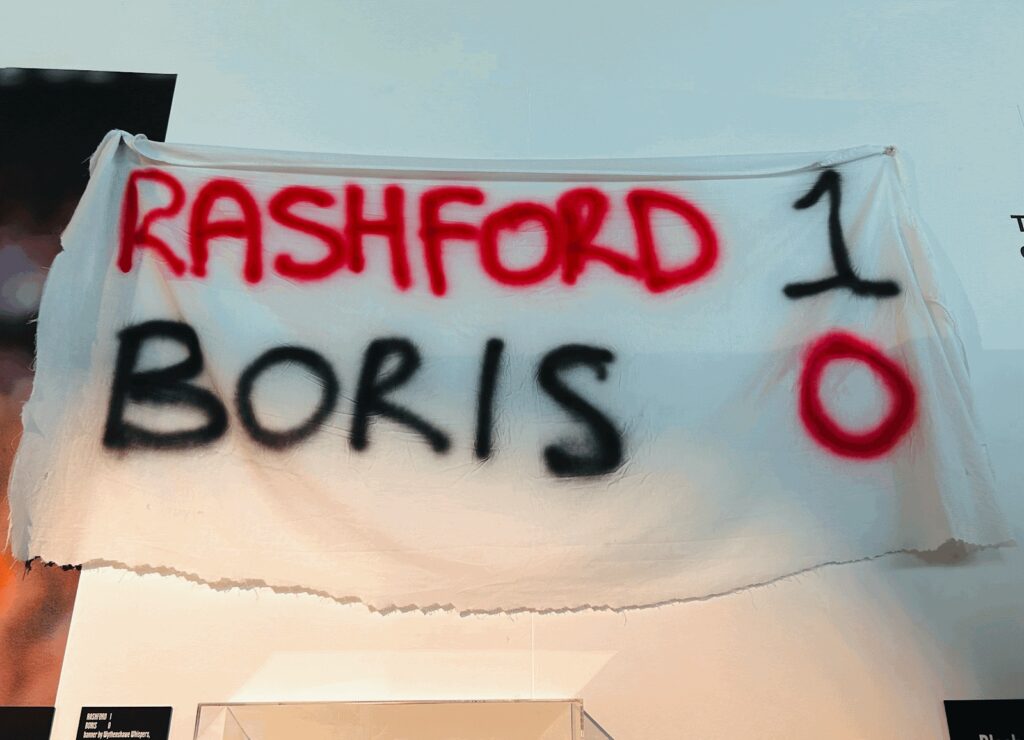
A particular highlight is the exhibitions’ emphasis on activism and social justice. Many will remember Marcus Rashford’s campaign to tackle child food poverty during the COVID-19 pandemic. Seeing the ‘RASHFORD 1 BORIS 0’ banner highlights the bizarre political landscape of the time. It’s a reminder of the significant influence footballers can have off the pitch, particularly with the power of social media.
But for all the positives that Black in the Game has to offer, there was one minor flaw. There isn’t much to interact with, which slightly takes the shine off an otherwise compelling experience.
Despite this, Black in the Game is more than a standard football exhibition. While it celebrates the achievements of black footballers over the years, it also exposes the deep-rooted injustice that one plagued football – and still, to an extent, exists today. This educational element makes it a must-see for any football fan who is part of the fight for equality and social justice.
A project two years in the making, the museum worked with its ‘co-curation steering group’ to select the stories and objects in the exhibition. The group, chaired by Dr Paul Campbell, featuring Viv Anderson, the first black player to play for England, Nikita Parris, a forward for England and the London City Lionesses, and former Lioness Kerry Davis, the first black woman to play for England, to name a few.
Black in the Game at the National Football Museum runs until 31st March.
Featured image: Georgina Hurdsfield After the considerably grey weather of the weekend, Sunday morning started with a spell of glorious sunshine to wake the people of Leeds Festival, a spot of cheer going into the dreaded final day of the weekend. But, of course, it wouldn’t be a proper festival weekend without the flash downpours,…
Featured image: Henry Redcliffe Not to be outshined by the artists performing today, the rain makes its inevitable return to the skies of Yorkshire over Leeds Festival. With the downpours hardly taking a break, Saturday is the day for the indie-heads and brats, as two of the most anticipated acts of the weekend take the…
Featured image: Georgina Hurdsfield Despite the dreary weather forecast, it seems the explosive noise of the night before has blown away the expected torrential rain, as the sun fights through the clouds to shine over Leeds Festival on Friday. With the opening of the ‘other’ stages, the first double headliner, and a very special birthday,…
Featured image: Ruby Boland As the gates of Bramham Park finally opened for the 2026 edition, so too did the heavens, with heavy rain and thunderstorms forecast for the whole weekend, you’d be forgiven for thinking this year’s instalment of Leeds Festival was a write-off. Neither the punters nor the artists would let this dreary…




Leave a reply