By Isabella Johnson and Freya Barwell Photography: Simon Webb
Manchester poet and theatre-maker Roma Havers took centre stage at Manchester Metropolitan University’s 16 Days of Activism Against Gender-Based Violence Festival, delivering a unique and empowering creative workshop. Held at the Manchester Poetry Library, Havers’ Erasure Poetry Workshop invited participants to explore gender-based violence narratives through the transformative lens of erasure and found poetry.
Following the campaign’s opening events featuring Everyday Sexism founder Laura Bates and award-winning poets Dr Kim Moore, Dr Malika Booker and Clare Shaw, which included moving readings and critical discussions, the workshop offered a different experience for attendees, where they were able to involve themselves in the therapeutic process of producing erasure poetry.
Havers opened the event with an introduction to the concept of erasure or ‘blackout’ poetry. Havers said: “It’s essentially a practice of using existing text and making it into something else. That can be anything. It can also sometimes be fun to choose a piece of work that you feel quite strongly about, like something you really hate… it can be fun to have an emotional drive over something.”
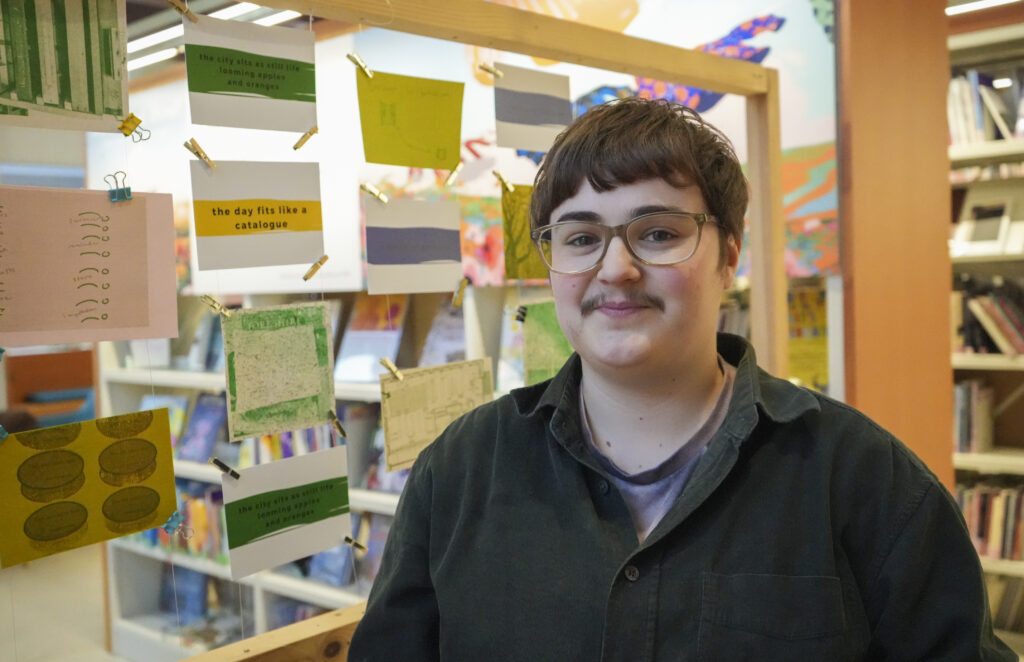
This was followed by a short tour of doctoral researcher Anita Slater’s ‘How To’ exhibition, which incorporates a multimedia approach to exploring poetry and the city, “thinking about what ‘guided forms’ might have to do with how we learn about urban space.”
The display features zines and interactive elements, as well as various manifestations of erasure poetry, which reinterprets the meaning and sensations we feel about Manchester locations from existing descriptions, articles, maps, and other guided forms. This practical demonstration of the use and impact of erasure poetry allowed the workshop’s attendees to better understand its possibilities, and thus inspire the creation of their own pieces.
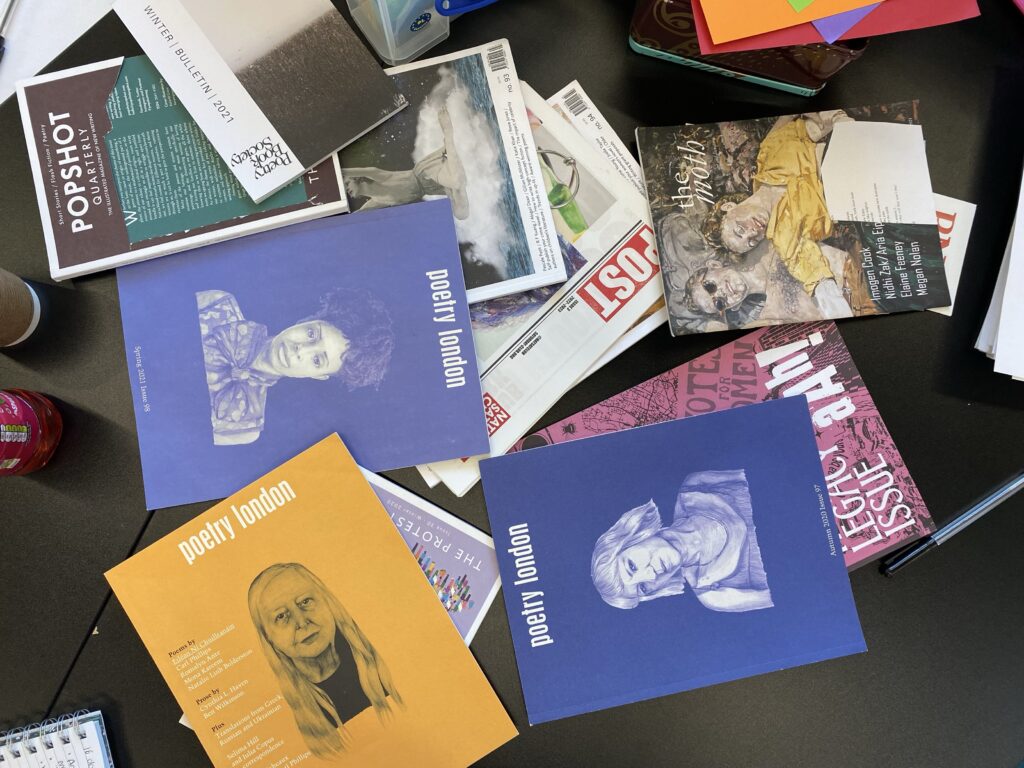
Provided with various copies of poetry collections, magazines and books, along with an array of arts and crafts supplies, Havers then encouraged participants to freely explore the content at their disposal and reimagine it into new works of poetry, thinking about the prompt: ‘What do I want to change about this narrative?’, in relation to gender-based violence.
They began by demonstrating typical ‘blackout’ poetry, using a marker to obscure words from an existing piece, but also suggested guests could be more creatively liberal, utilising ‘found poetry’ methods to collage cutouts. “This is quite a DIY form of poetry, but also there’s an undercurrent of – what do you want to change in this? How can you make these words say what you want to say?”
This commenced an hour of attendees individually assembling A4 collages of erasure and found poetry, with some also including artwork and their own writing. One attendee said, “It feels like I’m a kid again – I’ve not done something like this in so long, it just feels so relaxing to sift through everything and cut out whatever feels meaningful to me. I’m finding poetry and meaning that I wouldn’t have thought about independently, so reimagining it this way is really therapeutic.”
Upon finishing their poetry, another guest remarked, “I didn’t come into this thinking of a theme, I just included whatever stood out to me. It’s interesting how it’s sort of formed a theme on the page.” Works produced at the event focused on a variety of themes, such as the struggle of forming identity, the involuntary subscription to gender roles, as well as more abstract interpretations of the interaction of nature and femininity, and the feeling of what it means to be a woman. The variety in pieces produced, despite each participant having access to the same materials and prompt, proved the transformative power of utilising erasure poetry, and its ability to unlock and depict emotion, allowing for someone to reinterpret ideas they may have struggled to elaborate from scratch.
In terms of gender-based violence, erasure poetry can be an incredibly useful tool in processing timelines, memories and feelings that may be difficult to begin writing about. Student attendee Rhiannon Garfield-Lane said: “Using existing poetry in this way can make you feel less alone in what you’ve experienced or what you’re feeling; like we’re in this together, someone’s felt it before me, it’s not brand new.”
The workshop showed attendees the power of utilising different forms of poetry in healing and in solidarity against violence, but also in drawing attention to everyday sexism and sharing the sentiments associated with these struggles. Concluding the event, Havers said: “Amongst a programme of such difficult subject matter, as gendered violence, the Poetry Library has been a place to hold difficult truths, and sharing very personal experiences; alongside that important work, self-care and care for our community is very important.”
The 16 Days of Activism Against Gender-Based Violence is a global campaign aimed at raising awareness and driving systemic change. Manchester Met’s festival, running until December 10, brings together poets, activists and academics to spark critical conversations.
The festival is part of a global campaign that aims to raise awareness of gender based violence and highlight the importance and urgency of this.
The 16 Days of Activism Against Gender-Based Violence Festival runs from 25th November to 10th December, 2024. For more information and tickets, visit mmu.ac.uk/news-and-events.
Featured image and gallery: Lucy Elson-Whittaker It’s that time of year again: Manchester Psych Fest returns with one of its toughest line-ups yet, forcing festivalgoers to make some difficult choices about where to spend their day. With so much packed across the city, sacrifices are inevitable. Racing across Manchester, we catch four standout sets spanning…
Featured image: Georgina Hurdsfield After the considerably grey weather of the weekend, Sunday morning started with a spell of glorious sunshine to wake the people of Leeds Festival, a spot of cheer going into the dreaded final day of the weekend. But, of course, it wouldn’t be a proper festival weekend without the flash downpours,…
Featured image: Henry Redcliffe Not to be outshined by the artists performing today, the rain makes its inevitable return to the skies of Yorkshire over Leeds Festival. With the downpours hardly taking a break, Saturday is the day for the indie-heads and brats, as two of the most anticipated acts of the weekend take the…
Featured image: Georgina Hurdsfield Despite the dreary weather forecast, it seems the explosive noise of the night before has blown away the expected torrential rain, as the sun fights through the clouds to shine over Leeds Festival on Friday. With the opening of the ‘other’ stages, the first double headliner, and a very special birthday,…



Leave a reply