The Manchester Writing School’s annual Creative Writing Summer Festival (formerly known as the Summer School) returned for 2025, at Manchester Metropolitan University. Manchester Met is one of the first universities to teach creative writing and is home to one of the world’s largest and most successful writing schools.
The Summer Festival is designed to give people a real taste of what life is like at one of the UK’s largest postgraduate English and Creative Writing community. Only this year, the writing school came with a different schedule. The events were spread out over an entire week, with two days online, one day off and two days in person. This hybrid approach allowed for attendees to feel more comfortable in the writing setting, giving them the opportunity to meet each other prior to the in-person sessions.
The Summer Festival was organised by lecturers at Manchester Met: Dr Kim Moore, James Draper, Dr Brian Sneeden and Joe Stretch. The two campus days gave participants a choice between two sessions in four slots each day. This way, attendees were able to decide what fit best for them, and it gave them creative freedom to decide what they feel passionate about, and what they wanted to learn about.
Participants agreed that this way of structuring the event was helpful in making them feel comfortable enough to be their creative selves, in person. Participant Katherine Wilson said: “Poetry, for me, is a cathartic tool and way of processing. I have found the two days online really helpful, for me to get comfortable and feel at ease with the actual Writing School Summer Festival itself. I have met the people I met in the online sessions in person today. It feels like a proper community of creative people, coming together to do what they enjoy.”
Organiser Dr Kim Moore commented on the nature of the Festival and said: “It gives the tutors the creative freedom to hold sessions that they’re passionate about, where they’re not having to stick to a curriculum.”
The online events were held over two days. Co-organiser James Draper commented on the inspiring nature of the online events: “We had an inspiring time online with an exciting international cohort of attendees joining us from across Manchester, the UK and wider world. A highlight was a joint ‘open masterclass’ delivered in partnership with our friends from LASALLE College of the Arts in Singapore, which saw three of their MA Creative Writing students and three of ours from The Manchester Metropolitan University sharing first and final drafts of poems and talking about the writing and editing process.”
James also commented on the hybrid approach to the Summer Festival: “We started this event nearly 20 years ago with just campus sessions, went online in 2020, and then came back from that with a bit of both, mixing in-person and online activities in parallel over two days. It’s grown naturally over time into something bigger than just two days can hold and the way we’ve structured it this year, spreading the content over a full week, has been much better. Better for students, to be able to absorb what’s going on and to choose what they want to get involved in.”
The first on campus day began with two events that participants could pick between: ‘Writing and Meditation’ with Joe Stretch and ‘Writing the City’ with Dr Malika Booker.
‘Writing and Meditation’ was insightful in terms of how and what writing can mean for someone, exploring how writers can experience a creative block in their writing career, and how meditation can be a new way of opening their minds, to reach new levels of creativity.
Festival co-organiser Joe Stretch commented on the importance of the event: “If we don’t have community, then we’re not doing our jobs, and nothing can come from just sitting in classrooms imparting information. It has to be about cultivating community, creativity, feelings, attitudes, energies. And if we’re not cultivating those things, it’s not worth it. The classroom is just half of what we do, and the other half is the atmospheres that cultivate talent.”
Participants in Malika Booker’s session took a stroll into the city and Malika urged her group to step into a state of silence, asking them to confront silence, to see what came up for them, asking them to captivate their creativity – something that we don’t face enough, as creatives.
The day followed a relaxed and inclusive structure that allowed participants to mingle, with an abundance of refreshments in the atrium of the Grosvenor East building on campus. With opportunities to chat with the creatives who held the sessions, this made for a relaxed environment, with participants feeling able to get fully involved and speak to organisers, sharing ideas and thoughts.
Next up, ‘Writing and Grief’ explored the complicated nature of grief etiquette. In a collaborative session from Dr Jennie Dayes and Dr Catherine Wilcox, the group were asked to study celebrity case studies and to discuss how the celebrity deaths made them feel. It was an insightful conversation into why and how grief makes us respond, and how we feel as though we have to respond to it.
Jennie commented on her session and the topics covered: “I found this etiquette phenomenon in the things that people were saying during my research on grief. It seems to be something that is just everywhere. Whenever you seem to find conflict when someone has died, there is always etiquette there. When we’ve done research in this, we’ve been inundated with people wanting to be involved because they’ve related to it so much and felt like this is something, they have experienced themselves. I think as writers, that’s what we try and do, we try and capture stuff that affects us as humans. So, I wanted to create a workshop, so that people had the opportunity to write about it as a topic.”
While this was happening, ‘Screenwriting and the Art of Silence in a Script’, over a dramatic exposition, was held by Dr Reuben Martens. Inspired by being in rooms with emerging young screenwriters, Reuben commented: “The common mistake people make in screenwriting is that people tend to rely on dialogue way too heavily and it’s about getting people to realise that you can’t write for film the same way you can for a novel or for prose. A lot needs to rely on the physical queues and what people are doing with their bodies. I was hoping to address that in this workshop.”
The afternoon sessions began and so did ‘The Joy in Writing’ with Dr Sarah Butler. She began her session inviting the group to cast their minds back to a time when writing last brought them joy, to take away the pressure around writing, purely finding the joy in it. Sarah said: “I think there’s a massive narrative around writing and how it can be really tough and miserable, with common phrases like ‘writer’s block’. So, I think it’s nice to talk about the process, in a reflective space, to give people a framework to see what they can change in their writing process, to help them to enjoy it more.
Professor Jodie Matthews took students out into the sun for a walk along the Rochdale canal for ‘Canal Encounters’, reflecting on the history, textures and non-human inhabitants of the water to inspire creative work.
The first in-person day concluded with ‘Mental Wellbeing Focus’ held by Australian professor and author Katherine Firth, author of five wellbeing and writing books, including ‘Writing Well For Your PHD and Beyond’, which inspired her session. Katherine focused on transcending writer’s block, leading breathing exercises with tips on how to overcome the mental battle when it comes to academic writing.
All of the sessions of the day offered insight and tips for a sustainable creative career. In fact, the final event of the first day was held by Debbie Williams. She taught the group how to self-publish with the classic dos and don’ts of the publishing world.
After a successful first day, full of writing, community and connection, participants returned for day two of the Manchester Writing School Summer Festival, beginning with a session on ‘Soundscapes in the City’, led by Dr Reuben Martens – a session that allowed participants to explore the city and how everyday soundscapes can influence creative practice.
Susan Barker held a session titled ‘Writing the Uncanny, where the supernatural and writing about that was explored, and elements of ‘unheimlich’ were introduced and how ambiguity can scare and keep the reader interested.
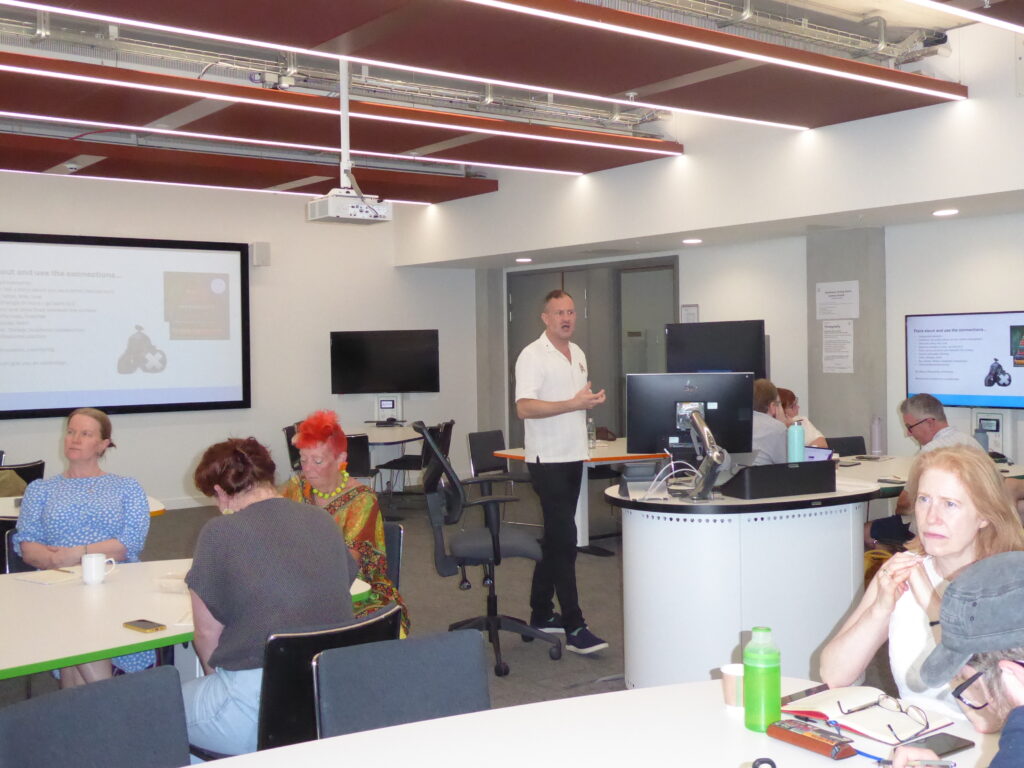
The second set of morning events were kicked off by co-organiser James Draper, and his ‘Tales from a Former Writing School Manager’. James spoke to the group about the importance of reflecting on their personal trajectories and the power of being able to articulate who they are as writers, what writing means to them, and how they can harness that thinking to build a literary community and access opportunities and support.
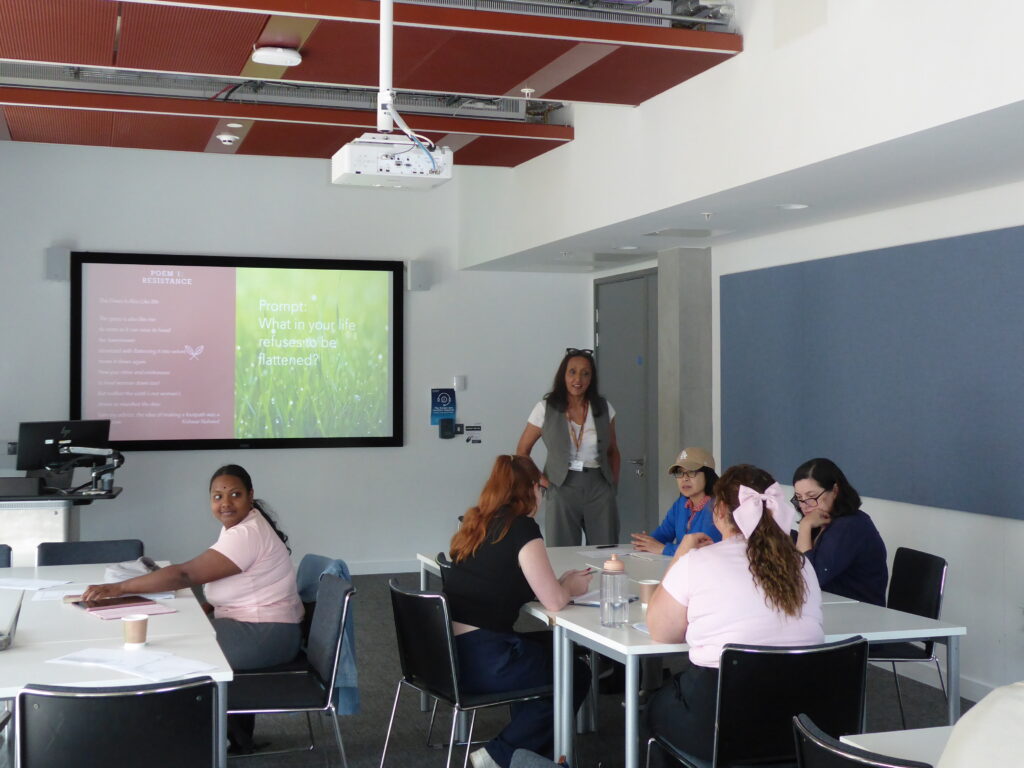
Anjum Malik explored the art of ‘Reclaiming Language’ inspired by the iconic feminist poetry anthology, We Sinful Women. This was an empowering and inclusive multilingual creative writing workshop that explored voice and language.
Afternoon sessions commenced after a leisurely lunch break, where participants were able to chat with one another and share the creative writing they had produced over the Summer Festival. Kicking the afternoon off was Malika Booker’s session ‘Writing in Response to Art’, and Martin Kratz’s ‘Solstice Walk.’
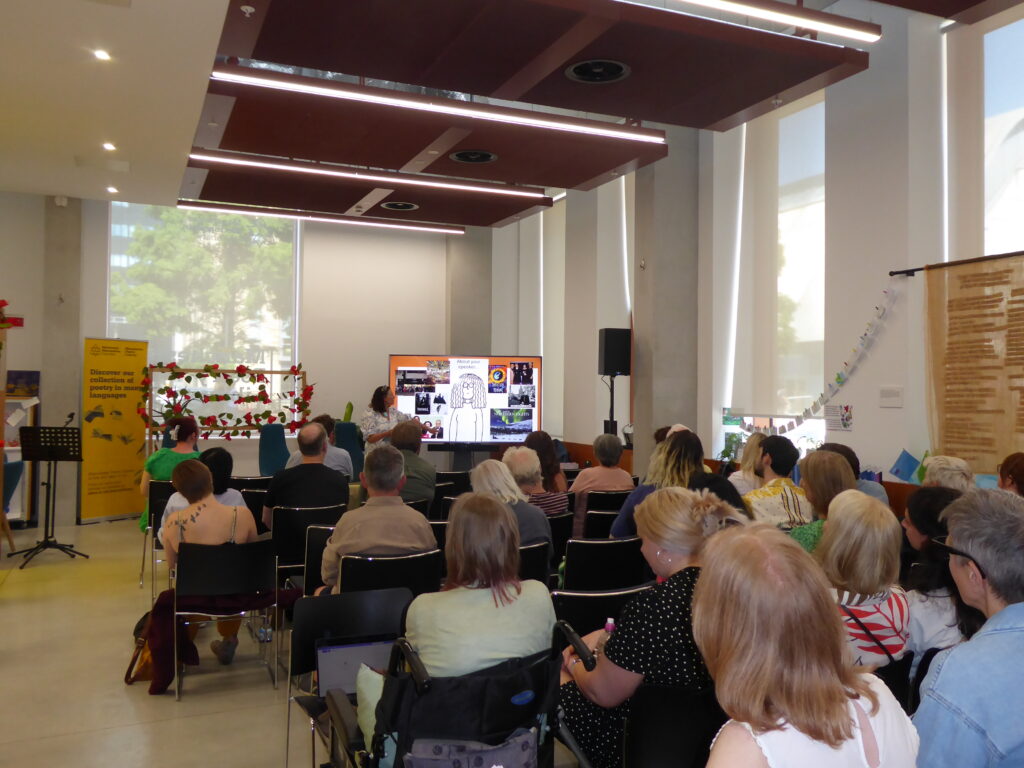
And another successful Summer Festival at the Manchester Writing School was concluded with an event held by Dr Malika Booker and Dr Kim Moore, where they shared first and last drafts of recent poems and spoke on the editorial process of poetry. The final session of the summer school held by Quen Took, ‘“I sing the body electric”: Breathwork, Bodies and the Musicality of Prose’ – a session for writing about the body, but also writing through the body, teaching participants to hear the musicality and beats of prose by reading aloud and exploring breathwork as a group.
James Draper summed the event up by saying: “I think one of the most important things about the Festival is that it brings the whole of the Manchester Writing School together, in a way that we can’t often do in term time, when everyone is working on different courses and modules. This is everybody together: undergraduates, postgraduates, master’s students, PhD researchers, prospective students, and of course staff. It’s so good to see all of those people sharing experiences and connecting, doing activities that are a bit more fun and exciting, with much less pressure because it’s not being assessed. Most importantly for me, it’s all about the community and connection made through creativity.”
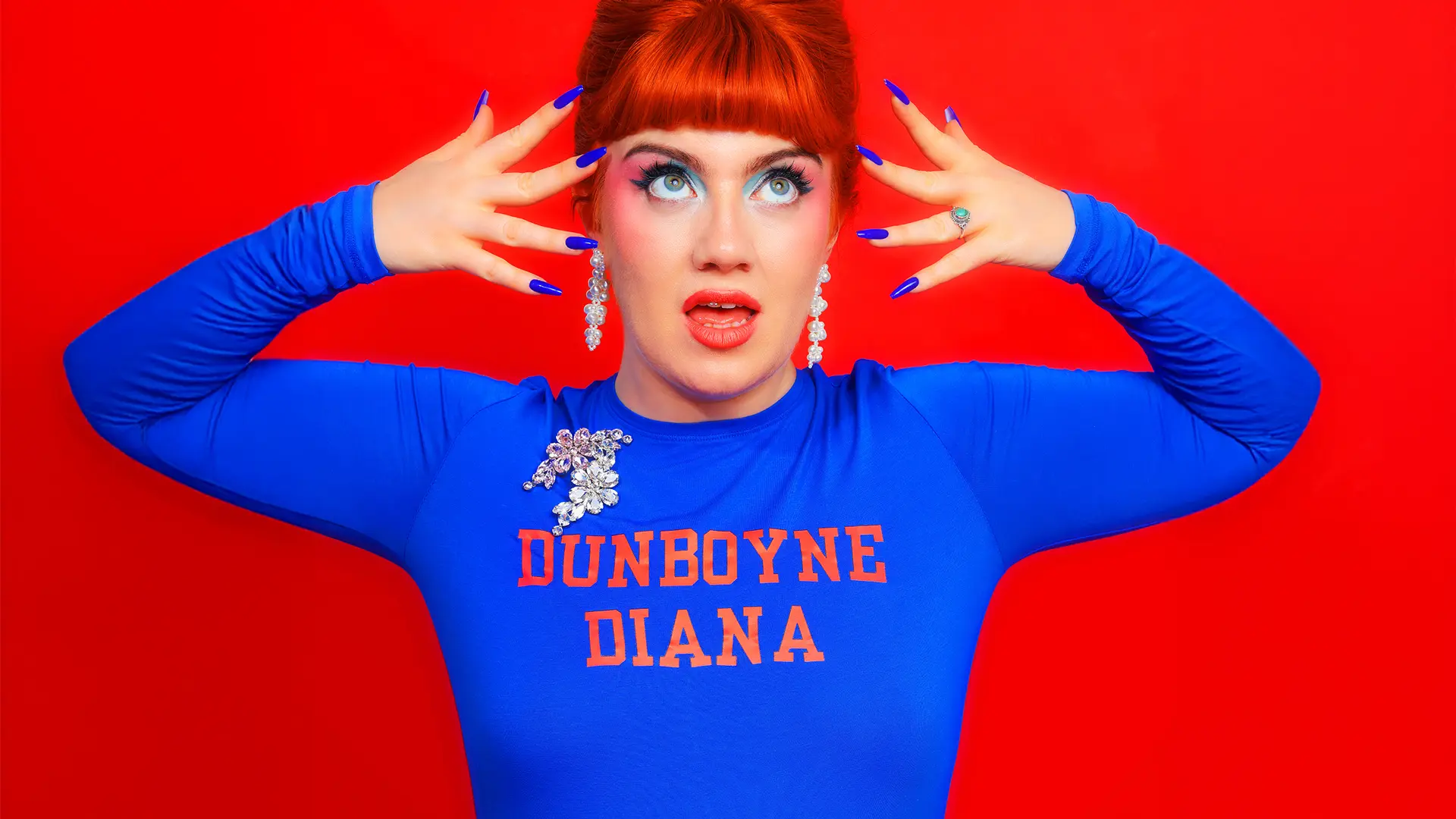
Featured image: Lucy Elson-Whittaker After CMAT’s unforgettable set on Thursday, you’d be forgiven for thinking that Truck Festival 2026 had already peaked. But with the weekend only just getting into its stride, there’s still plenty more to come. Friday is packed with a lot of artists worth catching, from The Love Buzz and My First…
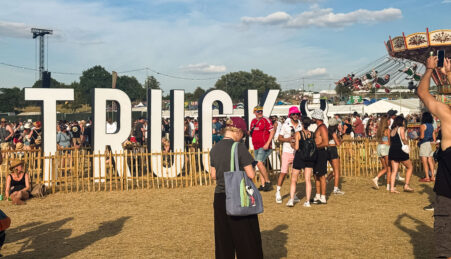
Featured image: Press The gates have finally opened for Truck Festival 2026, and for the third-year running, the weather could not be more perfect. Beneath clear blue skies at Hill Farm, Oxfordshire, the iconic Ferris wheel is spinning once again, the Truck Monster is roaming the fields, and thousands of festival-goers waste no time filling…
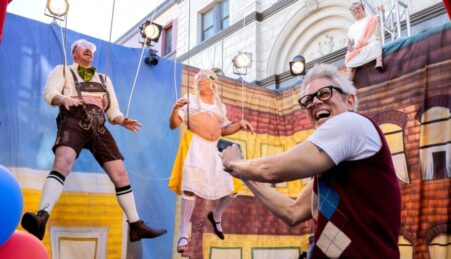
Featured image: Paramount Pictures Jackass: Best and Last is a send-off and memorial to the legacy of Jackass and all its relatives, celebrating its radical history and recapping some of its most memorable moments in a nostalgic reel that has audiences as gripped as they ever were. Whether you have been here since the days…
Featured image: Thomas Holloway Leeds Festival returns to the fields of Bramham Park this August with one of its strongest line-ups yet, celebrating genre-spanning British talent. Rebuilt from the ground up under a new “2.0” moniker, 2026 marks the next chapter in the festival’s evolution, bringing together generational pop stars, guitar music and grime for…


Leave a reply