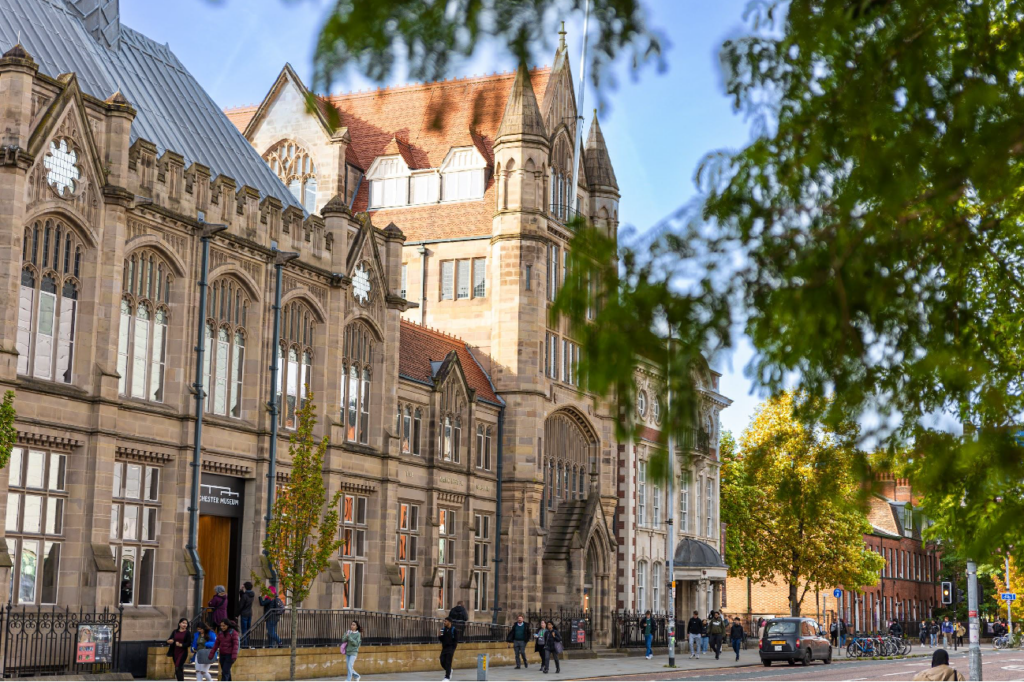
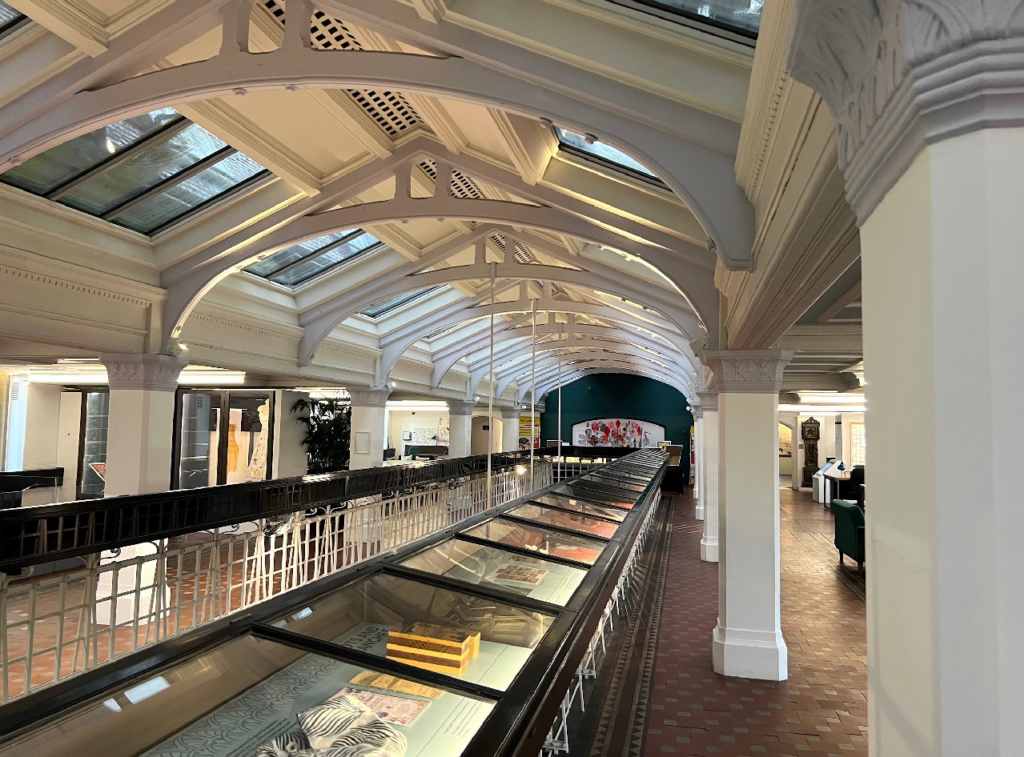
Manchester Museum has launched a Student Climate Café, offering free sessions for university students to connect in a relaxed, inspiring space while discussing the climate crisis – without the pressure of taking immediate action. Launched in September 2024, the museum holds regular meets in a low-pressure environment, supported by experienced facilitators, for students to chat about eco-anxiety, have a brew, and encounter a curated selection of the museum’s artefacts up close.
Ahead of the next session, aAh! speaks with Manchester Museum’s Environmental Action Manager, Hannah Hartley, to learn more about the initiative and how students can get involved.
Image: Jessica Bennett
What inspired the Student Climate Café?
I came across the Climate Café through Climate Psychology Alliance. They’re doing a lot of work around supporting people with eco-anxiety and creating spaces for people to talk more about climate change and how they’re feeling about it. The idea behind doing it specifically for students came about because we’re getting information from across the university that students are reporting feeling eco-anxiety. Even if they don’t use that term, there’s a sense of unease around some of the issues in the news about the potential implications for our future and how things are changing in terms of our climate, environment, and social change as well, which is all linked.
How is the Climate Café supporting eco-anxiety?
[The Climate Café] is purposely set out that it’s action and advance free. The social change and disruption we’re going to see in the not-too-distant future can feel very scary and I think building our resilience, helping people feel motivated to take action, and also making it less of a taboo to talk about is important.
What more can students gain from attending the Student Climate Café?
I’m hoping that this is an opportunity for students to spend time with their peers and meet other people. A couple of people have said that they really appreciated having something different from the content they’re covering in their lectures, and also the range of perspectives in the room, particularly having some international perspectives about what’s happening.
People have said they don’t feel they have other people to talk to about this so some people feel quite isolated. They might not be able to talk to their family, partner of friends about climate change so we’re trying to create what feels like a warm, friendly, welcoming space.
Do you need to be studying an “Environmental” degree or have knowledge on the climate to attend?
Not at all. It’s great that we’ve had a mix of different university representation. We’ve had people coming from very different subject areas and different years. There’s something quite interesting about bringing together a diverse cross section of students because there are so many types of students up and down Oxford Road.
What part do museums have to play in climate action?
Museums have a massive role to play. We’re doing a lot to support people and to build that empathy and sense of connection with nature because of the types of collections we hold and how we help people to interpret them but also encounter different perspectives.
Historically, museums have this big separation of nature and culture – you have Natural History here and then everything to do with people over here. Our newer galleries like the South Asia and the Chinese Culture gallery you see environmental themes or narratives threaded in those spaces.
What is Climate Activism?
For a lot of people, if you say activism they immediately imagine someone gluing themselves to a road or throwing soup at a painting. It can be a bit off putting for people. Actually, activism is a much broader, diverse thing, and it should show up in lots of different ways.
I think direct action plays an important role, but we need every single part of society to engage with what’s happening to see change on the level we want to see it. There’s a whole range of different skills, but just having a conversation about climate change is a meaningful action that you can do.
How can students create action against climate change?
Think about where you could potentially have more impact and focus on that thing that’s specific to you. Identify that within your friends and family, your own community.
You’re never going to motivate other people around you if you’re coming from a place of judgement. Individual action and role modelling how you want to live is important, but it is near impossible to be perfect.
Try not to forget that your voice does have power even in a very big university. There are around 150,000 students in Manchester across all of the universities – that’s huge! If there is anything you guys can do to organise yourselves and form groups then that can have that butterfly effect with the kind of ripples that have the potential to be quite big.
The next Student Climate Café is taking place at the Manchester Museum on Wednesday 26th February at 1:30pm. Book your free ticket on EventBrite.
Featured image and gallery: Lucy Elson-Whittaker Sunday may signal the final day of Truck Festival 2026, but there’s still plenty to celebrate before the gates close for another year. From rising indie stars Keyside to the long-awaited return of Rizzle Kicks, festival favourites Circa Waves and headliners The Wombats, these are the performances that define…
Featured image and gallery: Lucy Elson-Whittaker It’s Saturday at Truck Festival 2026 and, somehow, the sunshine is still holding out. The weekend’s biggest day is packed with indie heavyweights as The Vaccines, Kaiser Chiefs and Two Door Cinema Club deliver the soundtrack to a generation. In between the nostalgia, Adult DVD provide the perfect excuse…
Featured image: Lucy Elson-Whittaker After CMAT’s unforgettable set on Thursday, you’d be forgiven for thinking that Truck Festival 2026 had already peaked. But with the weekend only just getting into its stride, there’s still plenty more to come. Friday is packed with a lot of artists worth catching, from The Love Buzz and My First…
Featured image: Press The gates have finally opened for Truck Festival 2026, and for the third-year running, the weather could not be more perfect. Beneath clear blue skies at Hill Farm, Oxfordshire, the iconic Ferris wheel is spinning once again, the Truck Monster is roaming the fields, and thousands of festival-goers waste no time filling…






Leave a reply