Humanity Hallows Issue 4 Out Now!
Pick up your copy on campus or read online.
By Jacque Talbot
@Jac_Talbot
During Leon Mann’s opening presentation at the Black Collective of Media in Sport (BCOMS) ‘DWord2’ conference, the audience was confronted with appalling statistics and figures about diversity in sports media. By using a sample of 456 roles, BCOMS found that across the media coverage of tournaments:
12 out of 143 roles were given to women across newspapers (8.4%)
Only one woman out of 51 was sent to Euros (1.2%)
There are just eight black journalists (non-sports people) across 456 roles (1.75%)
There are only six roles for Black and Minority Ethnic (BAME) women across 456 (1.3%)
Out of 44 BAME roles, 19 were filled by former and current athletes (43.1%)
To summarize, if you’re an aspiring BAME, female or disabled sports journalist, it seems you have to be either an ex-professional footballer or a winning gold medallist to stand any chance of gaining employment.
There is obviously a big problem with discrimination at the top of the employment ladder but progress seemed to have been made during the conference as panellist and Head of Sky Sports News Andy Cairns talked about his ambition to see at least a 25% increase in females at the company. Channel 4 Commissioning Editor Stephen Lyle was on the panel too. As a BAME individual himself, he represented a company who have set a target to have 20% of their staff from BAME backgrounds by 2020, and 6% LGBT. However, this steady progression is countered when you learn that BAME people working within the UK television industry fell 30.9% between 2006 and 2012.
However, issues also arise when BAME, female, LGBT and disabled people are actually in their desired employment. You just have to switch on Sky Sports News and see their sexualised female presenters. In addition, presenters who were recently catalogued in Men’s Fitness ‘Top 40 Hottest Sports Presenters’ prove that, even when inside the industry, there is a pressure against the minorities to conform to society’s preconceptions.
As an audience we need to be fed information from a wider geographic which stays true to our society’s cultural diversity. Nothing is worse, it seems, than white, middle class reporters talking about racially sensitive issues in sport. However noble their ideas and efforts are, they still cannot truly position themselves to make judgement calls on subjects which they have never experienced themselves.
There are other marginalised areas which need to be addressed too, such as mental health. Depression, anxiety and addiction are all problems faced by people and by getting people who have already faced those problems into the forefront of the sports media world, it proves to others that they can achieve their goals too.
Diction, especially in broadcasting, was also brought up during the conference. For example, does a so-called ‘working class’ accent dampen someone’s chances of becoming a top broadcaster at the BBC, and if so, is that fair? This is a dialogue that needs to be opened between ourselves and the media industry. It’s not a matter or being right or wrong, the event’s true aim was to bring these ideas and facts onto the table. It shone a light on some the media’s failures where diversity is concerned, and looked at how we can amend these issues.
It was encouraging to see so many young faces at the conference, the next generation of sports media will be going into their industry totally aware of the problems surrounding diversity in sports media.
Those reading this who are looking into get into the sports media industry or even those who wish to be educated on the matter further, keep an eye out for DWord3 in a couple of years’ time, it will certainly be back to complete the trilogy at least. In the meantime, Michael McCann’s documentary The Ugly Side of the Beautiful Game gives a strong message about discrimination in football:
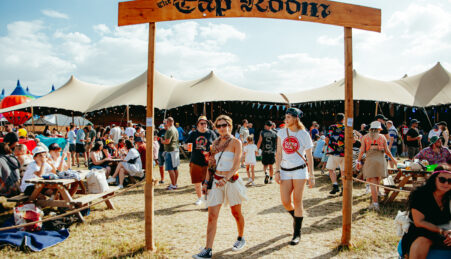
Featured image: Chloe Hashemi/Truck Festival Feeling a bit worried how you’ll survive the morning after a big night at Truck Festival? Thinking of writing off the day and hibernating in your tent until lunchtime? Sure, you could spend the day regretting that “one last drink”… or you could get yourself up and avoid missing some…
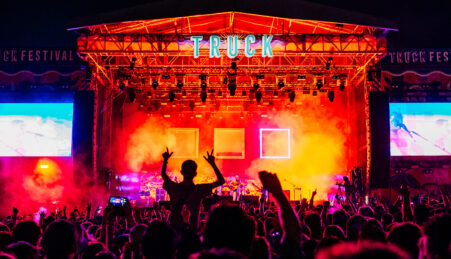
Featured image and gallery: Truck Festival For almost thirty years, set within the rolling fields of Hill Farm in Steventon, Oxfordshire, Truck Festival has been a cornerstone of the British festival calendar. Dubbed the ‘godfather of the UK’s small festival scene’, the festival continues to live up to that title, with a line-up packed with…
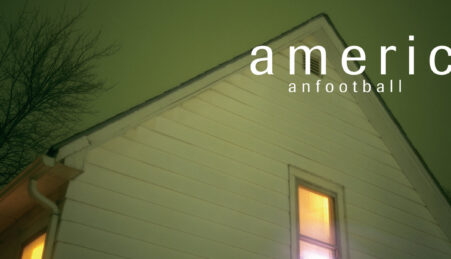
Featured image: American Football – American Football album artwork The debut album has long been treated as a baptism of fire for artists – the deciding factor that determines whether a band will ‘make it’ or not. Some debuts set the tone for what follows: Arctic Monkeys’ Whatever People Say I Am, That’s What I’m…
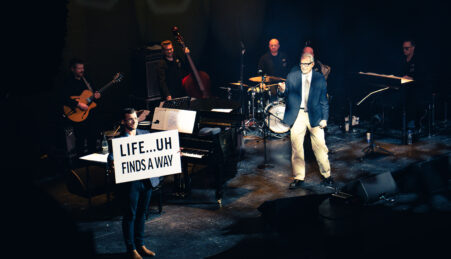
Featured image and gallery: Lucy Elson-Whittaker Jeff Goldblum & The Mildred Snitzer Orchestra come to the Palace Theatre in Manchester to celebrate the release of their new album, Night Blooms. Liverpool-based Brooke Combe opens the evening with a stripped-back set alongside her guitarist, her soulful vocals instantly captivating the crowd. Blending heartfelt performances with quick-witted…



Leave a reply