Featured image: Beck McNally
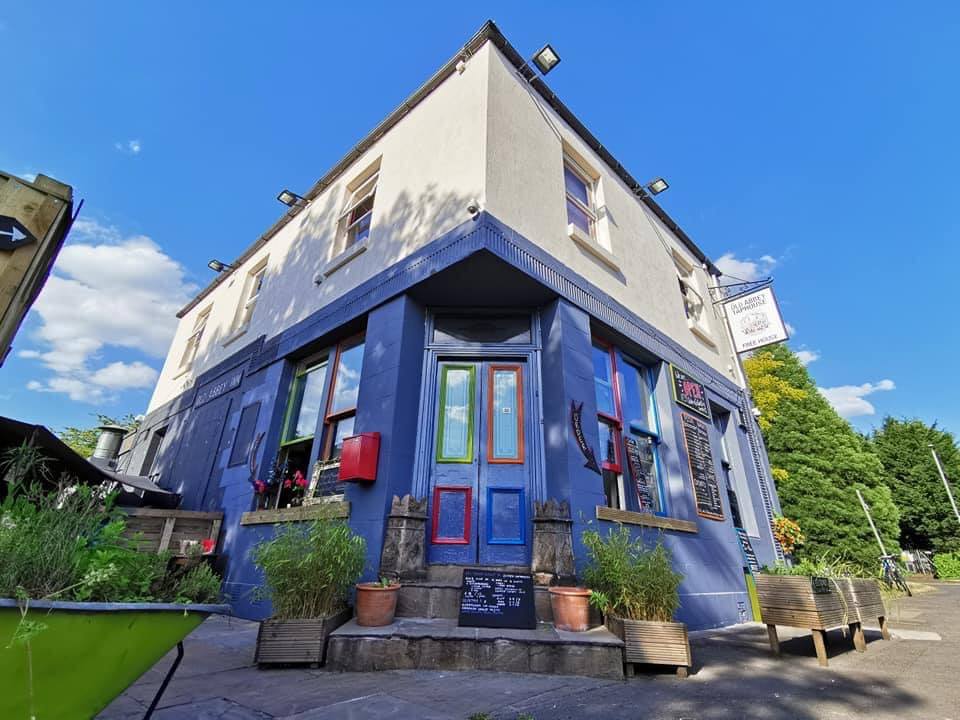
Wandering through Hulme in the south of Manchester, you once may have been intrigued to see students and party-ready punters being allured to a science park of all places. A strange place to congregate, but those familiar with the city’s best spots would tell you they were on route to The Old Abbey Taphouse, a pub and music venue situated in the middle of said science park. A night of music “wholly or predominantly characterised by the emission of a succession of repetitive beats” was sure to ensue. Call the cops.
The Old Abbey Taphouse is a special venue to me, being the location of the first ‘Burst Drums’ club night I ran back in January 2024. Over the past few years, our event has hosted DJs such as Nestor, Shadev, Roof, Sheppa and Macca.47. As a collective, smaller intimate venues have been vital to our identity, hosting events at Stage & Radio, XLR and YES Basement. We understand the importance of intimate spaces and value a diverse range of sounds, tending to not stick to one specific genre for any of our events. The team and I were instantly charmed by how out of place it felt, a stone’s throw from the city centre but nestled in the heart of Hulme. The staff were friendly, and the venue had a strong sense of community.
There is palpable camaraderie, at least in my personal experience of Manchester’s overlapping music and hospitality scenes. As Burst Drums were running our second event at Stage & Radio, another Manchester venue, one of the Old Abbey team members, Jess Coulson, recognised us from our previous night at the Old Abbey, from our debut Burst Drums night. Coulson donated some money to support us, remarking that it’s hard for grassroots promoters at the moment. This encapsulated the Old Abbey’s dedication to grassroots music. (Coulson’s recently published “Joy and chaos at the death of a music venue”, which recounts her time working at the Old Abbey, is also worth your time.)
Sadly, the Taphouse closed its doors for the last time in February of 2025, with the venue confirming its closure in March. It became one of many victims of the venue crisis that has swept pubs, clubs and gig halls across the UK. In 2023 alone, we lost 125 grassroots venues, according to the Music Venue Trust’s annual report. Their 2025 report found that over half of the surviving venues in the UK saw no profit across the year.
“The space to experiment and try different stuff”
The Old Abbey Taphouse “was there to remind you that you’re actually living in a real place,” says Ruairidh Fraser, station manager and director of STEAM Radio.
Founded as it is now in October 2020, STEAM is an “online, DIY community radio station”. The radio station also once called The Old Abbey Taphouse its home.
As he oversaw STEAM’s broadcast for the day, Fraser spoke about the pub as if it were a second home to him. “It was so integrated into its local area, a very Hulme place. There were all the elders from the estates that would come through – we actually did a show with them where they told their stories of living in the area for 50 or 60 years.”
He reflects that the Old Abbey was willing to “take a chance” on the team at STEAM. “Part of our purpose is getting people used to being on air. We’ve had people who have done their first radio show with us and have then gone on to do NTS and Rinse, those bigger stations,” says Fraser. The Old Abbey Taphouse provided STEAM Radio with space to operate within the pub, a space just for them, free of charge.
Grassroots venues like Old Abbey are vital for newer artists to hone their craft, whether in radio, club settings or live music. Fraser believes they form the “ecosystem” of a city’s cultural landscape.
With the current uneasy state of the music industry, it’s rare to see venues which can afford to provide spaces like this free of charge. The Old Abbey Taphouse team clearly saw the importance of DIY, community projects and the team at STEAM became integrated into the pub. Most venues would aim to “monetise every inch of themselves”, but the Old Abbey did the opposite. “Some of what made the Old Abbey so good is kind of why it crashed apart in the end,” says Fraser.
For venues to platform community-centric projects, such as STEAM, only to lose in the long-run is an unfair yet complex issue in the overlapping music and hospitality industries.
“Everyone is under pressure at every stage. Promoters have less money and venues have less money, so having the space to experiment and try different stuff is the first to go,” says Fraser.
“A rug being pulled from underneath music communities.”
Grassroots venues provide cheaper alternatives to the ever-increasing price of concerts at massive, established venues. Some, like Fraser, would argue that experiencing music in this way is simply more enjoyable. “I think most forms of art are better consumed in a smaller venue, I can’t think of many things that you don’t want to be intimate.”
Smaller spaces promote interaction between those in attendance, rather than being just one head in a sea of people at larger scale venues such as Co-op Live or Warehouse Project. Even when performing at the Old Abbey myself, having a smaller space helped me to understand the crowd through gauging what music they wanted to hear. Performing more, it becomes easier to notice specific reactions to whatever is being played. Certain people or groups in the crowd may cheer or dance more to a certain style of tune, and smaller spaces make understanding that reaction much easier. Being able to identify specific groups within the crowd and see them enjoying themselves definitely made the whole event more memorable.
With the soaring cost of living, working-class people are facing more and more barriers to experiencing and breaking into the music industry. Recent research found that local government arts funding has plummeted by 55% since 2010 – £539 million in 2024-25 down from £1.19 billion. This steady decline in funding, combined with the loss of venues, removes affordable options for working-class people and could, if left unchecked, lead to a world where only the upper-echelons of society have access to live music. It’s a worrying prospect, and not entirely unrealistic. Fraser described the sharp spike in live music costs as a “rug being pulled from underneath music communities.” From the point of view of someone trying to run their own event, Fraser describes “equipment, studio time and hiring an actual space” as major expenses that many working class people may struggle to afford.
Fraser and the team at STEAM feel that working-class access to music is under-discussed, a sentiment that led to them running a 12-week workshop teaching working class people to DJ and get comfortable on the radio. Supported by Ballantine’s and Soho Radio, the aim was to give working-class people a jumping-off point to break into radio. Fraser told me this led to a few people being invited to do residencies on STEAM, as well providing DJing opportunities around Manchester.
Is it all doom and gloom, or just the circle of city life?
Noel Vasquez, organiser of the Manchester-based indie night and label Akoustik Anarkhy, offers an unexpected insight on the matter.
We met at the Manchester Art Gallery Cafe, a place he described as his “go to” whenever he’s in town. With 26 years of knowledge and experience in the music industry, Vasquez has an eye for up-and-coming talent, having previously managed bands such as Holly Head, GETNER and Martial Arts. Akoustik Anarkhy has also hosted nights in Paris, Glasgow and Leeds.
“I find that, in Manchester, if one place closes another place has already opened,” Noel claims. For its former regulars, nowhere has yet fulfilled what The Old Abbey Taphouse did, but there is some truth in what Noel says. There are over 100 venues in Manchester, both big and small; catering to dance music and live music alike.
Yet not every city in the UK has the sonic heritage Manchester does. Vasquez concedes that “the story may be different in cities or towns that don’t have as rich of a music culture compared to Manchester.” What happens to the communities around venues in smaller areas, where there isn’t so much financial backing like there is in Manchester or London?
The Old Abbey Taphouse is proof that communities can form around these venues, between employees and patrons alike. If they continue to close at the rate they are, these communities will have less and less spaces to flourish. It’s not just about music, grassroots venues provide a necessary place for human interaction. While it may seem out of your control, protecting and supporting these spaces is something everyone can strive towards.
“People are prepared to pay big money for gigs at arenas, especially recently. But working-class people can expose themselves to the arts – you don’t need permission. There are cheap gigs and art things out there, you just need to make the effort to look,” says Vasquez.






Leave a reply