

Opinion: “Speed-Reading Culture has turned Goodreads into a competitive sport”
By Gabi Haincourt | Featured image: Joe Haines
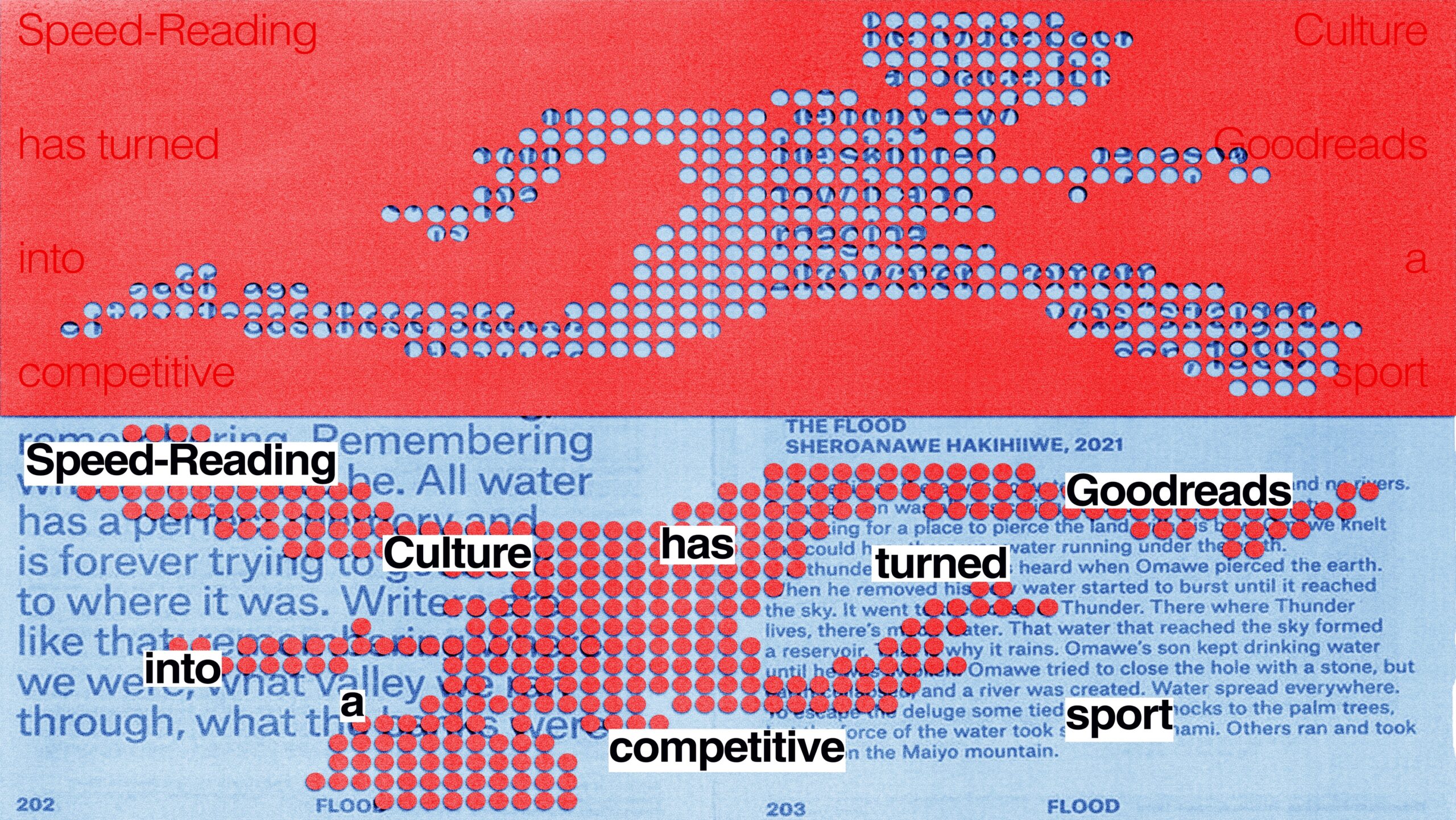
With Goodreads having just undergone a new update (thank the Lord!), more and more people I know are now ‘tracking’ their reading. Tracking?! Yes, you heard that right: users can actively track their reading progress.
Now you wake up, read for 20 minutes, and then you think, ‘Great, now I can update my Goodreads to page 47.’ Don’t get me wrong. As much as I will slate the rise of speed-reading, tracking page numbers, and choosing the shortest book possible just to tick it off within the next few days, I am also someone who has fallen victim to it. It becomes an addiction, and in my case, one too noble to curb. I know, it’s an issue.
A similar thing is happening among audiobook listeners who are, firstly, not actually reading and, secondly, setting the reading speed to 1.25x, 1.5x, or even 2x the normal speed (yeah, you guessed it, this is me too – don’t hate the player, hate the game!).
But surely reading is about reflection, intellectual exploration, and sitting with new, big ideas? Physical books allow for this – you can put the book down for a second when you read a mind-blowing sentence or simply when you need a moment for a difficult idea to sink in. Of course, you can still ‘pause’ an audiobook; it’s just not as convenient. Your phone might be halfway across the room, and you probably have rubber gloves on while scrubbing at a pan in the sink (multitasking at its finest).
The rise in productivity culture is incredible, and we’re now expected to optimise every aspect of our lives, even our hobbies. Leisure has become yet another task to ‘complete’ (that’s coming from a serial list-maker). ‘Reading’ sits as a task at the bottom of my list, one I will do when the rest of the day’s tasks are ‘completed’. The ‘aim’ of reading seems to be transforming from absorbing new and complex ideas, expanding our vocabulary, and unwinding and relaxing, to simply reading as fast as possible. But surely reading should be the reward after a long day, not another obligation to tick off.
Of course, Goodreads isn’t the sole perpetrator. There is also a rise in accessible, fast-paced fiction that lends itself to rapid consumption, meaning we can speed through stories and keep racking up that all important total book count. But Goodreads definitely adds to the culture, informing you when you’re one or two books behind in your yearly goal – and the GUILT that comes with that is astronomical. Why on earth are we feeling guilty?! Reading should be fun!
However, we should also recognise the good aspects of Goodreads. Among people who typically do not read, or read very little, it proves to be a useful tool. It offers readers accountability, motivation, and a way to view your friends’ reading choices. Which are all good things, but ‘ticking’ off a completed book feels amazing.
The psychological appeal of ‘progress’ has slotted perfectly into our current society. And the gamification it brings! Wow, that is addictive! It’s like combining other household or daily tasks. Like, how much cleaning can I get done while my laundry is in? How many emails can I finish while my pasta boils? And now… what percentage of my audiobook can I reach while I drive from A to B? But hang on, cleaning, laundry, emails… these are things we want to finish fast to allow time for other hobbies and pastimes – like READING!
The trend of Goodreads and speed-reading has skyrocketed alongside the escalation of Duolingo and its ‘streaks’, which track how many days in a row you practice the new language you’re learning. Duolingo offers badges and achievements, progress bars and leaderboards, and notifies you when you miss a day, equating to your ‘streak’ being lost. Just as Goodreads motivates reading (instead of harnessing a love for it), Duolingo encourages learning a new language; but we’re logging in to maintain the feeling of progress, not to necessarily get better at said language.
So, why are we trying to turn reading into an Olympic sport? Surely reading is the reward? Does reading 50 books in a year actually make us better than someone who reads five? No, of course not.
Goodreads measures progress by completion, when you add to your total books read, you win medals (what is that about?). But surely progress should be measured in other ways, such as exploring new genres, authors, or ideas. For example, Spotify congratulates you for listening to an array of artists at the end of the year and even breaks down the genres. If we have to track our reading, why not aim for new authors, new genres, even branching out to non-fiction if we’ve been a purely fiction-reader before, rather than tracking the sheer number of books?
In my opinion, this would be a far more beneficial way to track our reading ‘progress’. But, perhaps that doesn’t suit the current culture of productivity and bettering oneself in solidly measurable ways. And, to be honest, I will continue to tick off books, get frustrated when I fall behind, and set my audiobooks to 2x speed.