Featured image: Lottie Hughes
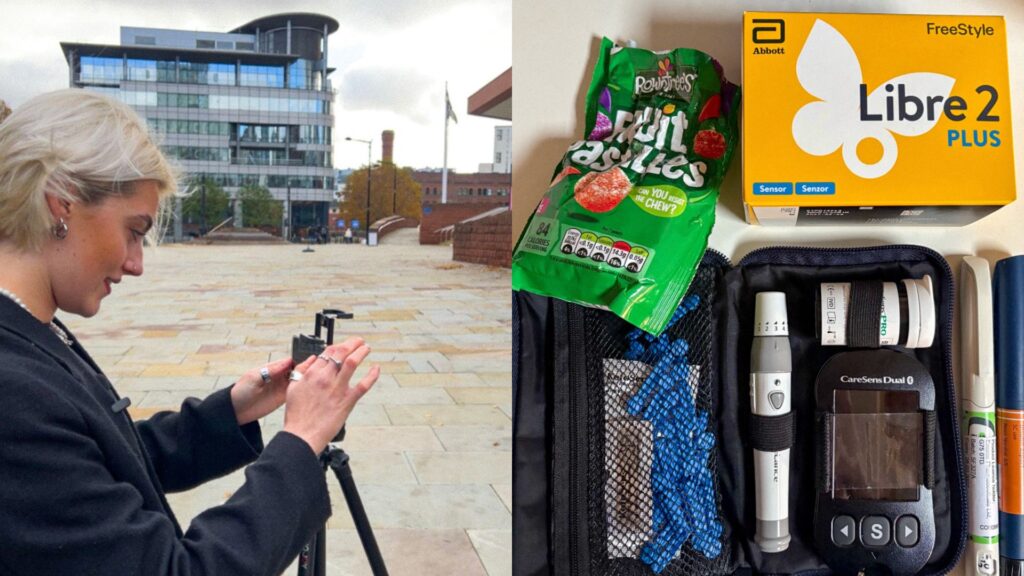
A Continuous Glucose Monitor (CGM) is not the flashiest of accessories. It isn’t packed with the tech of an Apple Watch or the prestige of a Cartier timepiece. It does, however, have the handy capability of keeping me healthy and, essentially, alive. Through an app on my phone, a CGM allows diabetics, like myself, to monitor blood glucose levels 24/7. They’re placed in different places for different people. Mine is worn on the back of my arm, strategically between tattoos.
My CGM, as a visible hallmark of being diabetic, was once something I wanted to hide away with the fear of what people might think. I used to literally hide it by wearing long sleeve tops. Now, to the elation of Smashing Pumpkins, Fontaines D.C, Red Hot Chili Peppers — and the many other band t-shirts which make up a significant amount of my wardrobe — it’s displayed with pride. I use it to open conversations with those unfamiliar with diabetes.
November is Diabetes Awareness Month and as a young person and journalist, I felt it was important to use this platform to speak about my condition. I was diagnosed with Type 1 diabetes in May 2025 after experiencing symptoms of the illness through the second semester of my first year studying at Manchester Metropolitan University.
Before I understood that I was experiencing the early stages of diabetes, I suffered intense thirst, chronic fatigue and rapid weight loss which made it difficult to get through daily tasks. I ignored my symptoms for a long time and was determined to stay in Manchester to meet my assignment deadlines, resulting in mistaking the deterioration in my health to burnout and stress.
When I returned home to North Wales for the summer break, following blood tests I was admitted to hospital shortly after with Diabetes Ketone Acidosis (DKA) — a serious illness. When I was first diagnosed I was apprehensive about my future, especially with going back to university and living away from home. I wasn’t sure how I would be able to do all my favourite things, like go to gigs, festivals and go on holiday with my insulin injections, combined with the fear of generally being unwell. After speaking to my extended family who also have Type 1 diabetes, these are common feelings to experience.
Type 1 diabetes is an autoimmune disease. It is caused when the pancreas stops working, meaning my body can’t produce insulin. This means I am unable to process carbohydrates and sugar, resulting in high glucose levels if not treated with my insulin injections. High blood sugar levels can lead to really serious long term health complications and so it is crucial that I treat it correctly
An estimated around 5.8 million people in the UK are living with diabetes. Out of this number only around 8% of those are living with Type 1. A common misconception with Type 1 diabetes is the cause. I often get asked if I’ve “eaten too much sugar” or neglected my health, which isn’t true. It is a complicated condition with a number of variables that can affect blood sugar. This means I have to give everything a little more thought to what I used to. Mainly, my relationship with food has been altered due to needing to keep count of my carbohydrate intake to ensure I take the correct amount of insulin with meals. Maths isn’t my strong point so adding up nutrition values when eating out presents its own challenge.
I am grateful to have been home over the summer, having the opportunity to get used to my insulin pens and my new way of life with the support from my close family and friends. Although I had a fear of being judged or misunderstood, my family and friends make a conscious effort to check up on me when my alarms go off and also carb count meals when we cook together.
When back in Manchester, I have regular phone calls with my diabetes team back home but I have also found community groups. Diabetes UK advertises a range of community groups on their website for all ages and locations across the country — whereas Together Type One aims support specifically for people aged 11 to 25. These groups allow young people with diabetes to connect with others, share experiences and take part in activities with their community.
It turns out significant life changes can be serendipitous. Another way in which people with health conditions, such as diabetes, can find community is through niche interests. Ian Browning is a journalist based in Brooklyn, New York. He was diagnosed 18 years ago with Type 1 diabetes and has since found friendships with other diabetics through skateboarding scenes in the USA. He expressed how sharing experiences, specifically about how diabetes affects their skating physically, has helped grow meaningful connections.
Since returning to university, it has been a challenge to adjust to my illness and also balance and enjoy being a student. I worry about my alarms going off in lectures and seminars, and sometimes I have to rush off to the bathroom to take my insulin injections or alternatively have sweets with me for when I have a hypoglycaemic episode (of low blood sugars).
Diabetes can be unpredictable which means I have to be prepared for when my bloods go out of range. I have found it really helpful to tell my close friends, as they are supportive and check in with me when needed. They have learned how to test my glucose using my finger prick monitor and I have also shown them how my insulin pens work and where to inject, in case I am not able to. This is really important as in an emergency this can be vital.
Being a student, of course, means trips to the pub and nights out with friends. I still have a social life but I have to be more mindful than most second years due to the effect on my blood sugar. Alcohol actually lowers my blood sugars and so I have to be mindful to make sure I have a post night out snack when I get home… which I’m not complaining about.
Even the process itself of writing this piece has made me feel more confident to speak about diabetes, something I hadn’t done so publicly before. As a journalist, I found connecting with another writer who is diabetic inspiring building a community. “Writing about diabetes has made it more comfortable to talk openly about a lot of stuff,” said Browning. He shared his experience of having a hypoglycaemic episode while skating with friends and having to drop everything to eat gummy bears to aid his blood sugar levels. It echoed my relationship to Fruit Pastels, my own sweet of choice because they’re cheap, delicious and vegan. “I would have internalised it a decade ago,” said Browning. “Whereas now I’m more comfortable talking openly about it.” That feeling, and a love of gummy treats, is mutual.
For support with diabetes, follow @DiabetesUK and visit www.diabetes.org.uk for information and resources.





Leave a reply