Featured image: May Farooq
“When I first moved to New York and I was totally broke, sometimes I would buy Vogue instead of dinner. I just felt it fed me more,” Carrie Bradshaw once declared.
Today, this sentiment no longer holds the same weight.
Earlier this year, Anna Wintour announced her transition into the role as Global Chief Content Officer for Condé Nast after 37 years in her role as Editor-In-Chief, signalling a broader company-wide restructuring. Chloe Malle, who has spent the last 14 years working amongst the different channels of Vogue, was named her successor.
Wintour had created an era of monoculture as American Vogue became symbiotic with Hollywood – this manifested as the character of Miranda Priestly in the 2006 comedy-drama film The Devil Wears Prada, widely believed to be based off of Wintour herself. In recent years, the magazine seemingly became a PR extension for celebrities and this has since, arguably, proven incompatible amidst the current digital-first landscape.
Some anticipate for Malle to reverse this as she foresees a future of Vogue that releases a print issue only six times a year, focusing on specific themes and cultural moments, transforming the monthly-issues into ‘collectibles’. And others have started to question whether Vogue will survive, or is it truly outdated?
Wintour’s last space-themed cover epitomised this creative identity crisis. The December star, Timothée Chalamet, was photographed by none other than the renowned Annie Leibowitz, with the creative direction causing an outrage online.
On X, the reactions were brutal — one user called it “the worst fashion magazine cover I’ve seen in years,” while another joked that it looked like “Canva and ChatGPT had their moment here.” And honestly, it’s hard to disagree.
Having a male cover star as Wintour’s final issue was already a statement, but it’s clear Vogue was chasing virality. It is a cover engineered to create online discourse rather than set a creative benchmark. Whether the reaction was negative or positive seemed almost irrelevant; Vogue appeared to be operating under the “any press is good press” philosophy. And that’s the real shame, with one of the most in-demand actors of the moment and one of fashion’s most respected photographers, the cover had the potential to be exceptional yet the execution fell flat.
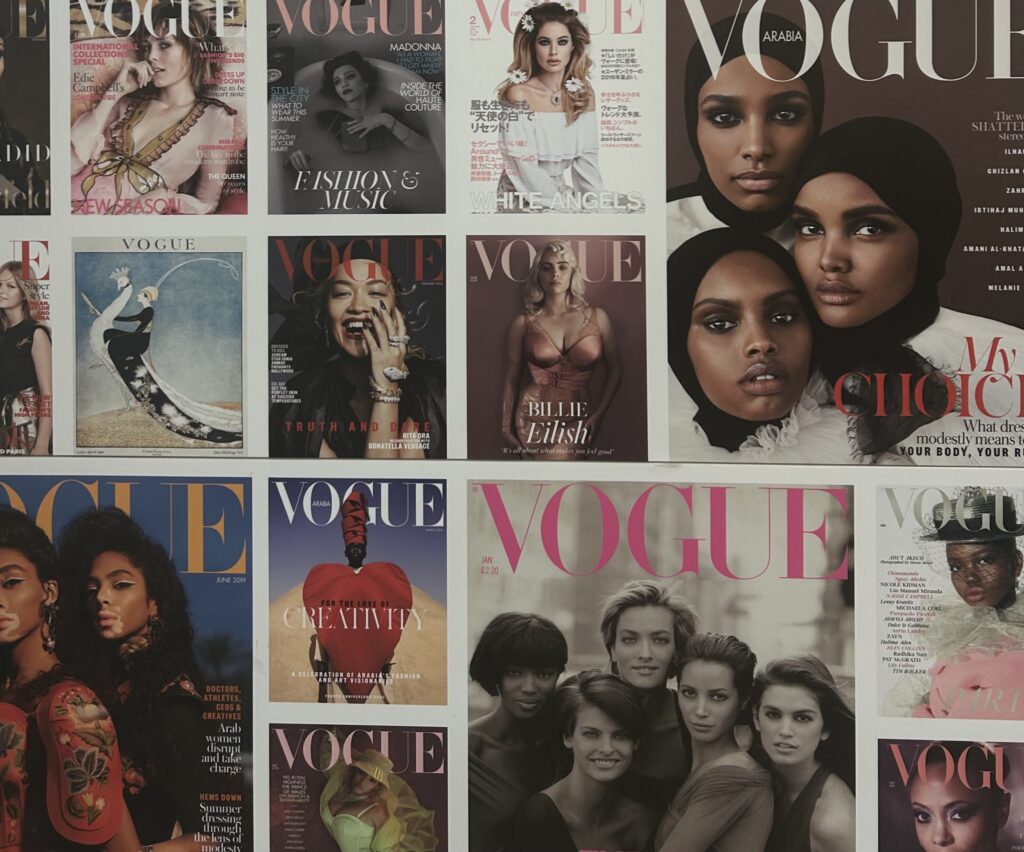
While the masses of Vogue scramble, many non-Western Vogues have quietly become the true creative leaders of the brand. None more so than Vogue Philippines who in just a few years has established itself as an industry trailblazer, known for its fluid, in-action approach to fashion imagery. Their May issue, shot actress Pom Klementieff mid-sky dive, is a perfect example. Fashion captured in motion, shown as an experience rather than a static object. This commitment to storytelling ensures a distinct identity that Western editions have long diluted in pursuit of global appeal.
Non-Western editions lean into the cultural specificity of their regions – their landscapes, their histories, their communities. Their magazines feel intentional and meaningful, offering a visual language that is inclusive and decolonial by actively challenging the Eurocentric ideals that have shaped Vogue’s early legacy. They are making Vogue feel alive and relevant in ways in which the core titles no longer do.
And this difference is even more stark when you consider how Teen Vogue has recently been folded into Vogue.com, a move that signals Condé Nast’s inability to maintain distinct editorial identities in a changing media landscape. Teen Vogue has always been viewed as one of the most progressive outlets, consistently advocating for youth voices. The move has created an incredibly profound discussion, as young people are evidently losing reliable media. Teen Vogue provided a space where political conversations could be had in an age where social media isn’t democratised and is in fact run by algorithms. Its closure leaves a noticeable gap: a generation that once had a publication willing to speak with them, not at them, is now left without refuge.
In the absence of a dedicated youth platform, British Vogue has attempted to fill the gap by tapping into nostalgia as a way to reconnect with younger readers. Whether it’s viewed as a smart pivot or a desperate move, it’s clear British Vogue are trying to re-enchant readers by offering free items such as diaries and notebooks alongside the magazines, reminiscent of childhood mags that once lured us in with glossy trinkets and toys. It raises the ultimate question – is this a sign of print’s decline, where Vogue is essentially bribing its audience to purchase an issue, or is it simply an attempt to tap into the playful, joy-filled nostalgia of its Gen-Z readers?
Vogue isn’t transforming, it is being overtaken. And unless Western editions relinquish their outdated sense of superiority, they will continue to fall behind. This impending demobilisation creates a future of fashion journalism that does not centralise Vogue, and perhaps it shouldn’t. Real relevance now lives in the voices that will replace it.





Leave a reply