You are here:Home / Literature / News / 16 Days of Activism – Day 4: Dr Frazer Heritage and poet Caroline Stancer challenge the language of incels use to help end gender-based violence
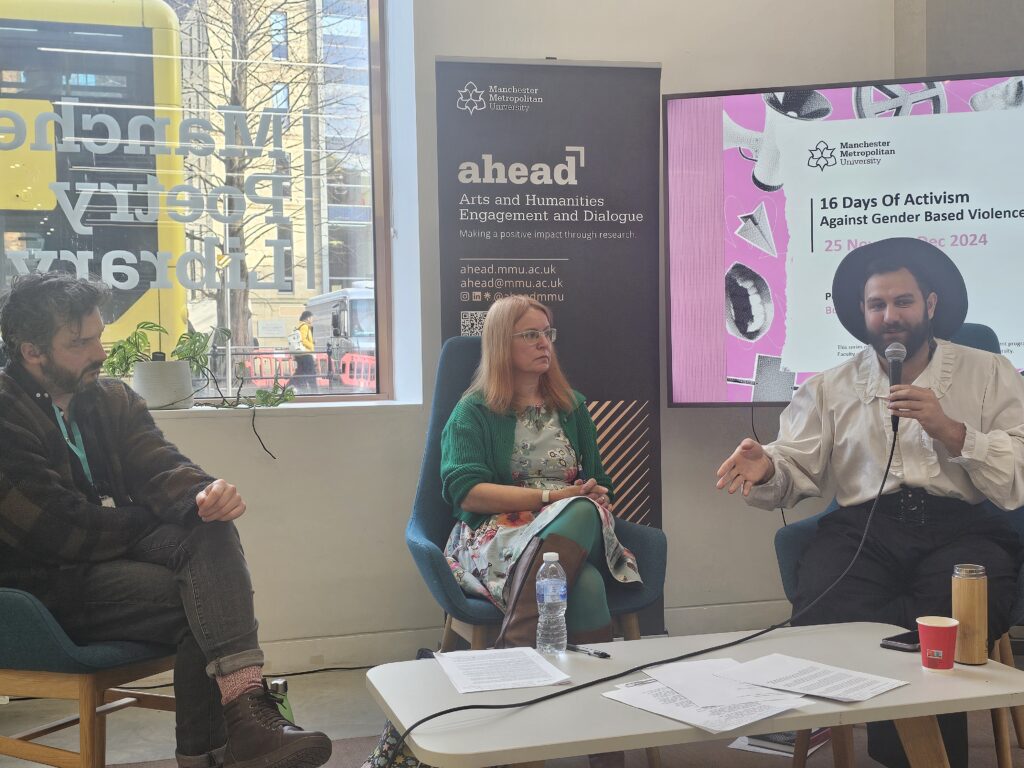
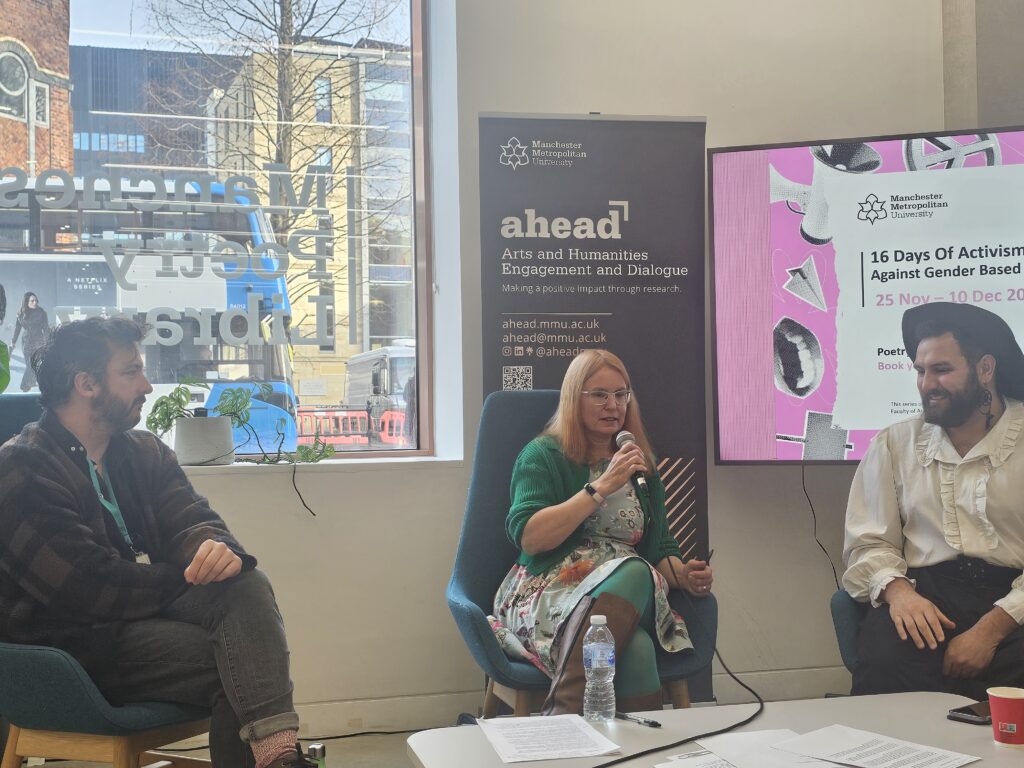
Led by author and lecturer Dr Frazer Heritage and poet Caroline Stancer, the thought-provoking discussion brought to light how the harmful rhetoric of incels seeps into our daily lives, normalising sexism and violence against women and girls. Through poetry and language analysis, Heritage and Stancer raised awareness of the insidious effects of this harmful rhetoric.
Dr Heritage began by defining incels: “An incel refers to a person who wishes to, but for reasons that they feel is out their control, does not have sexual or romantic relationships with women. This lack of ability to enter into those sexual or romantic relationships lead to feelings of frustration, and the blame for that gets placed on women and the men they have sexual relationships with.”
He explained how incels view themselves as victims of society and detailed the use of language in constructing misogynistic views about women. Heritage highlighted the prevalence of metaphors in incel rhetoric: “The different ways the incel community talk about women in dehumanising [terms] is one of the most common linguistic features we see going on in the incel community.” He added that the use of metaphors is particularly pervasive.
Heritage pointed out the normalisation of animalistic metaphors such as “bitch”, “cow” and “dog”, calling on the audience to rethink everyday language which can create and reinforce harmful rhetoric against women. In addition, Heritage addressed how the use of food-related metaphors such as “curry” to describe South Asian women, reinforce objectification and racial stereotyping.
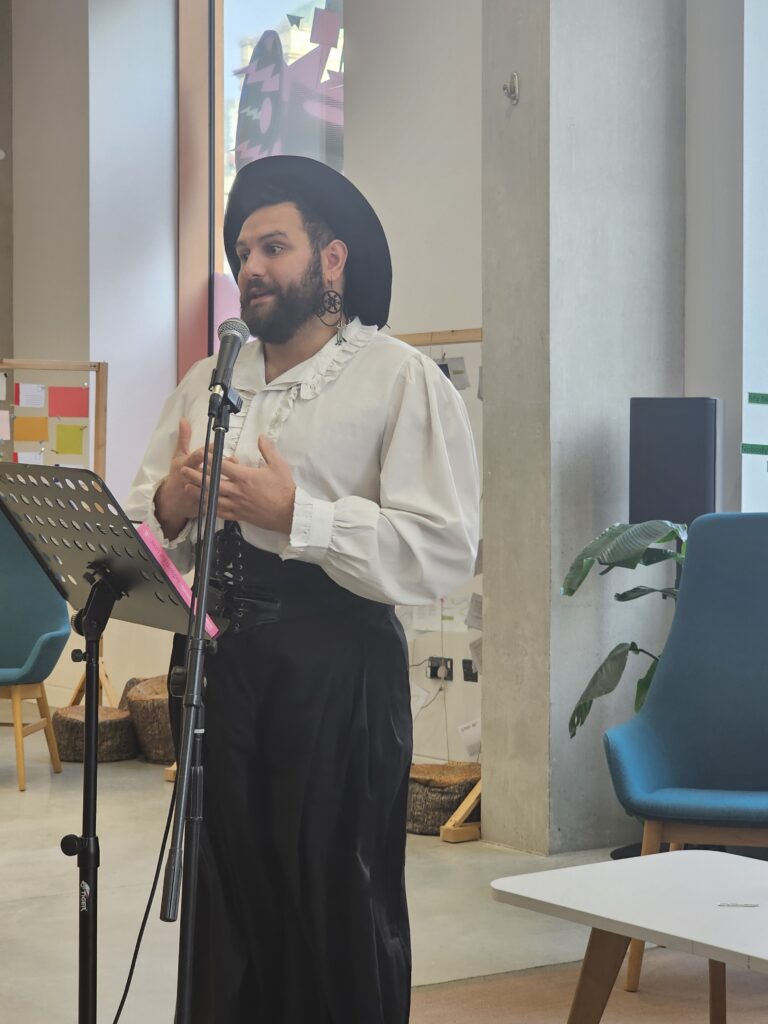
The discussion was interspersed with captivating poetry readings by Caroline Stancer. Her work provided a creative angle, tackling themes of toxic masculinity and gender-based violence. Her poems, rich with perspectives and motifs, added depth to the discussion on incel ideologies and gender inequality.
A strong and recurring theme underlying Stancer’s poetry was the issue of body image and control over one’s body. One striking line, “You should not love your body like a warrior,” resonated deeply with Heritage’s discussion on how language subordinates women, as degrading comments surrounding women’s bodies are so normalised.
One of Stancer’s poems, ‘Selkie Singing of the Sea’, explored the empowerment and individuality of women through Celtic mythology. The poem’s unique perspective showcased how gender-based violence can be challenged in different ways and that our emotions can be channelled through creative outlooks. “His hunger, a gift for damage.”
Stancer’s poignant delivery captivated the audience, who were drawn to her fresh perspective on such a challenging topic. Her poetry underscored how language can also be a force for resistance and healing.
The event concluded with a lively Q&A. One audience member asked about the connection between incel ideologies and violent sexual perceptions, including the influence of pornography. Heritage responded: “The work of researchers like Lisa Sugiora and Alessia Tranquessa have mapped out those differences in the language using incel fora and the language using descriptions of violent pornography and there’s a really clear overlap. There is quite a clear synergy between the two and a lot of commonalities.”
Heritage highlighted the importance of addressing incel ideology at its roots, calling for education and collaboration: “We shouldn’t have people talk about women and other people in those ways. What I’ve been working on lately is exploring how we can educate safeguarding experts.”
The 16 Days of Activism Against Gender-Based Violence Festival runs from 25th November to 10th December, 2024. For more information and tickets, visit mmu.ac.uk/news-and-events.
I am currently a student at studying English and Creative Writing with a passion for journalism. I enjoy writing articles on a variety of issues from helpful tips to current world news.
Featured image: FX / Disney Press Following the premiere of the limited anthology series Love Story (directed by Ryan Murphy) on Disney+ earlier this February, show protagonists John F Kennedy Jr and Carolyn Bessette have become favourites for a new generation. Almost 30 years after their real-life untimely passing, the show’s popularity has unleashed a…
By Holly Lindsay and Amelie FalconerFeatured image: Jamie Taylor Remember nestling into your parents as they read you the worlds of Harry Potter, The Faraway Tree and Charlie and the Chocolate Factory? Unfortunately, not all children get the opportunity to create a lifelong love of reading, as 1 in 8 children in the UK currently…
Featured image: Leire Ribeiro I remember a time in music when a VIP concert ticket bundled with a meet-and-greet and early entry would not cost more than £150. Today, we have artists like Harry Styles selling tickets for £725 with no soundcheck and no meet-and-greet, the only bonus being good visibility at the show, which…
Featured image: Fabiola Gonzalez Prato Every single day I hear someone complaining about not being in a relationship. I go online and watch videos of people who are tired of going on dates with those who “only want a good time,” eventually deciding that staying single is for the best. These days, the reasons behind…



Leave a reply