The Handmaid’s Tale, created by Bruce Miller, is a TV adaptation of the novel of the same name written by Margaret Atwood. Set in a dystopian America (now known as Gilead), in a not so distant future, the series narrates the story of a society ruled by a totalitarian theocracy. Gilead is plagued with institutionalised sexism and misogyny, in which biblical laws are taken literally, and, as a result, women’s civil rights are stripped. They become less than second-class citizens; mere instruments with mostly passive roles. Wives, dressed in blue, take care of the homes; Marthas, in green, are cooks and cleaners; Handmaids, in long red dresses, are forced birth surrogates. They have sex as part of the “ceremony” with their master and his wife, in allusion to Abraham and Sarah’s parable in the Bible.
An environmental disaster has caused a wave of infertility. The handmaids, a select group of fertile women, are the solution. They are tools, unable to read or go out without permission, and are only required to fulfill their “biological destinies.”
“Better never means better for everyone. It always means worse for some,” says Offred (Elizabeth Moss) a handmaid to the Commander (Joseph Fiennes) and his wife (Yvonne Strahovski). Offred, once a free woman called June, is stripped of her rights and forced to assume the passive role of a handmaid, being forbidden to read, engage with others or lead a life of her own. Although Offred does what is necessary to fit in in Gilead, she resists being brainwashed, and through her witty and angry narration, we witness her rebellious spirit.
Elizabeth Moss As Offred.
Inevitably, some critics and viewers have drawn connections with the current social climate and political situation in the United States. Not long ago, a picture of Donald Trump signing an anti-abortion executive order surrounded by white men sparked an outrage. It depicted a society in which men claim ownership over women’s bodies, an ever-present theme throughout The Handmaid’s Tale.
Some were quick to deem the show as an unnecessary jab against the current president, some applauded the move, and others called it self-entitled. In my opinion, I believe the series makes brilliant work of incorporating those elements to reflect on how the impossible can become possible, and how nothing is really permanent. “I was asleep before,” says Offred after going back from one of her multiple flashbacks, which depicts her life in a society of free women, similar to our own.
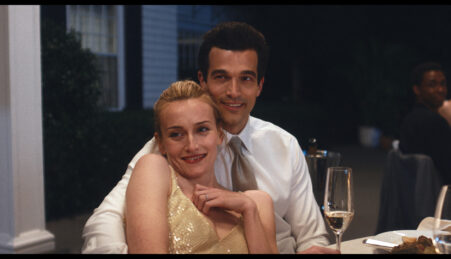
Joseph Fiennes as Commander Fred Waterford.
Regardless of the fact that The Handmaid’s Tale is speculative fiction, it was inspired by the conservative revival in the West, by the election of Ronald Reagan in the United States and Margaret Thatcher in the UK. This was a time when religious conservatives condemned what was perceived as the excesses of the ’60s sexual revolution. However, despite its fictional status, the series explores the realities of women in non-western countries. It highlights how women are restricted from doing simple things such as driving; how homosexuality is considered a sin and how FGM (female genital mutilation) is a common practice.
Not only does it depict sexism and misogyny exercised by powerful men, but it also shows how women can turn against each other, exemplified by the commander’s wife and “the aunts.” Through violence and absurd speeches, The Handmaid’s Tale depicts a world of nightmares. However, it does a great job at portraying the rage, hopes, fears and the spirit of rebellion in women; which is ultimately one of the major themes of the narrative.
The Handmaid’s Tale features a talented cast, led by Elizabeth Moss. Moss gives an outstanding performance as Offred/June. She embodies the submissive image of the handmaid while feeling claustrophobic in an environment where a little mistake can cost her life. Yet Offred still possesses the fire of someone who hasn’t yet given up; a woman determined to survive this misogynistic regime.
Alexis Bledel as Ofglen.
Sexuality is also a major theme in the show, with Samira Wiley (Orange Is The New Black) and Alexis Bledel (Gilmore Girls) playing Moira and Ofglen respectively. Wiley and Bledel play queer women who are deemed “gender traitors” due to their sexuality. Moira resists the regime from the beginning, and Oflgen doesn’t plan on staying passive, either.
Hulu’s The Handmaid’s Tale is a great adaptation of Atwood’s novel and goes beyond the source material to construct a story which resonates with current issues.
Featured image: Old Abbey Taphouse Wandering through Hulme in the south of Manchester, you once may have been intrigued to see students and party-ready punters being allured to a science park of all places. A strange place to congregate, but those familiar with the city’s best spots would tell you they were on route to…
Featured image and gallery: Sally Stretch Hungry, Cutscene and Funeralcare take centre stage for Manchester and Liverpool-based BOOT Magazine’s 14th issue launch, showcasing some of the most exciting emerging music from the North West. Manchester band Funeralcare open the night at The Rat & Pigeon, drenched in deep red lighting in the small yet lively…
Featured image: FX / Disney Press Following the premiere of the limited anthology series Love Story (directed by Ryan Murphy) on Disney+ earlier this February, show protagonists John F Kennedy Jr and Carolyn Bessette have become favourites for a new generation. Almost 30 years after their real-life untimely passing, the show’s popularity has unleashed a…
By Holly Lindsay and Amelie FalconerFeatured image: Jamie Taylor Remember nestling into your parents as they read you the worlds of Harry Potter, The Faraway Tree and Charlie and the Chocolate Factory? Unfortunately, not all children get the opportunity to create a lifelong love of reading, as 1 in 8 children in the UK currently…






Leave a reply