
Opinion: “Music should be our sixth love language”
Featured image: Joe Haines
Music is engraved into our lives. Every day, we listen to music through our earphones, go to gigs or play it out loud as we clean the house. A song can remind you of someone, transport you back to a childhood memory or express feelings you’ve never quite found the words for. Music has a remarkable ability to connect us to the people we love, often in ways we don’t even realise.
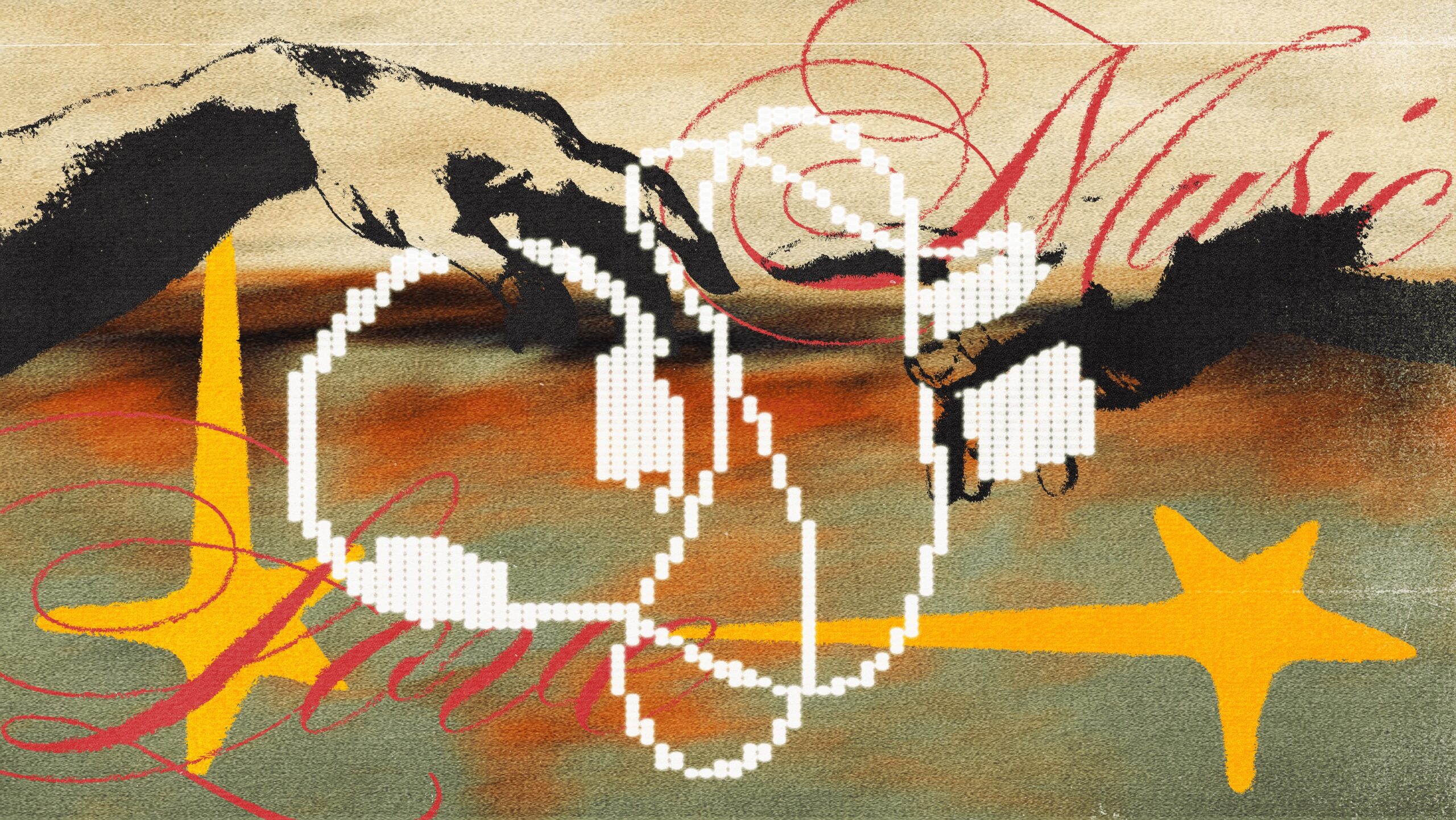
We’re familiar with the idea of love languages: acts of service, quality time, words of affirmation, physical touch and receiving gifts. Yet there’s a sixth love language we’ve been overlooking: music.
For me, I made that connection through Belgian singer-songwriter Pierre De Maere‘s album ‘Ave De Maere’. It’s an album that is explicitly vulnerable, exploring his first experiences of love, desire and disillusionment. You feel love throughout the album, expressed in so many different ways. ‘J’aurais Fini Par Te Plaire’ is my favourite track, with its title translating to ‘I would have ended up pleasing you’. It’s beautiful in its melancholy and captures what De Maere would have done for his lovers if they had just let him love them.
Music is regularly used to embody love. We play music at weddings, where couples select the song they have their first dance to. It’s a beautiful moment when a song describing the couple’s love for each other is played to a crowd of their nearest and dearest. We also play music at funerals to mourn our loved ones who have passed away, choosing their favourite songs so we can remember and celebrate the people they were and the impact they had on our lives.
Throughout our childhoods, family members pass down their favourite songs and artists. For me, it’s memories of car journeys to Southport, pitchily singing the ‘whoo-hoos’ of The Rolling Stones’ ‘Sympathy for the Devil’ with my grandma and grandad to annoy my mum, something we’d all laugh about later on in the day. For you, it may be something else, such as Radiohead or AC/DC, yet it still achieves the same thing. The idea that our love for an artist could be passed down to us feels like an expression of love in itself. Being able to inherit that from our families during childhood is something wonderful.
There are hundreds of thousands of songs dedicated to love, and that is a marvellous thing. Thousands of people have created songs dedicated to those they love; a partner, a family member or even close friends. These are songs used to serenade partners in the romance films we love to watch. They’re also sung at karaoke nights in bars across cities, as punters attempt to hit the high notes in ‘I Will Always Love You’ or ‘My Heart Will Go On’. But there are so many more ways in which music can be a love language. Whether it’s taking the time to create a playlist for someone with their favourite songs or listening to a song and instantly messaging somebody to say it reminds you of them, music is a love language. We can use it to show people close to us that we care and love them.
Although music might not feature in the traditional list of love languages, we definitely have space for a sixth. We use music for so many acts and declarations of love, so why not consider it as a language of love? The next time you’re wondering what to do with free time on your hands, why don’t you do something nice for someone. Whether it’s your friend who’s feeling down, or just someone who you want to show your appreciation to, ask them about their music taste. Take an interest in what they listen to, make them a playlist, or organise a karaoke night at your mate’s place, where you can all sing ‘Viva La Vida’ long into the night.